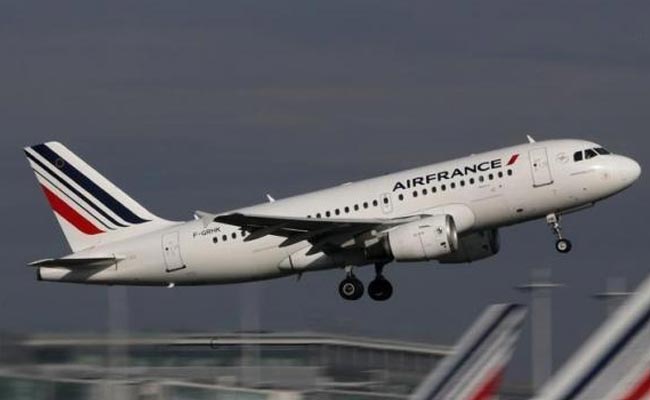
On June 1, 2009, Air France Flight 447 vanished into the Atlantic Ocean during a storm, killing all 228 people on board. It took two years to find the wreckage and the black boxes in the abyssal depths. When a French court finally handed down its verdict years later regarding manslaughter charges against Air France and Airbus, the judicial system delivered an acquittal that stunned families and aviation experts alike. The legal system ruled that while mistakes were made, a direct causal link to criminal negligence could not be proven. That verdict missed the point entirely. The tragedy of Flight 447 was not an isolated stroke of bad luck, but the inevitable intersection of automated system failure and inadequate pilot training.
To understand why Flight 447 fell from the sky, one must look beyond the official court documents and look at the cockpit philosophy that dominates modern aviation. For a closer look into similar topics, we suggest: this related article.
The Three Minutes That Redefined Aviation Safety
The final minutes of Flight 447 were a chaotic blur of alarms, conflicting data, and sheer panic. While cruising at 35,000 feet through an equatorial storm system known as the Intertropical Convergence Zone, the aircraft’s Pitot tubes iced over.
These Pitot tubes are small, forward-facing probes that measure airspeed. When they clogged with ice crystals, they stopped working. The aircraft's computers suddenly received contradictory speed data. Unable to resolve the conflict, the autopilot disconnected, handing control back to the human pilots in the dark, amidst severe turbulence. To get more information on this issue, detailed coverage is available at TIME.
What happened next highlights a systemic failure in how modern pilots interact with highly automated machinery.
The junior pilot flying the aircraft pulled back on the side-stick control. This pitch-up command caused the heavy wide-body jet to climb rapidly, losing forward energy. As the speed dropped, the aircraft entered an aerodynamic stall. The wings lost lift. The airplane began falling out of the sky at 10,000 feet per minute.
For three and a half minutes, the stall warning blared repeatedly in the cockpit. Yet, the crew never fully understood what was happening. They kept pulling back on the controls, which kept the aircraft trapped in the stall all the way down to the ocean surface.
The Irony of Automation Dependence
Modern aviation relies heavily on computers to keep flights smooth and efficient. Under normal conditions, an Airbus aircraft operates under normal law, meaning the flight computers prevent the pilot from making extreme maneuvers that could stress the airframe or cause a stall.
This automation has made flying incredibly safe. It has also introduced a dangerous side effect known as automation complacency.
When automation suddenly switches off, pilots are thrust from a state of passive monitoring into a high-stress crisis requiring manual flying skills they rarely use.
When Flight 447’s Pitot tubes failed, the aircraft reverted to alternate law. In this mode, the computer strips away many of the safety protections, including the absolute stall protection. The pilots were suddenly flying a raw airplane in the dark, by hand, without reliable airspeed indicators.
The industry had spent years training pilots to manage systems rather than fly airplanes. When the systems died, the human backup failed because the training had not prepared them for the sudden degradation of the aircraft's handling characteristics.
The Paper Trail Airbus and Air France Ignored
The defense argued during the trial that the accident was entirely down to pilot error. They claimed the hardware failure was brief and that the crew had ample information to save the flight. This argument ignores a mountain of corporate intelligence that existed long before June 2009.
Airbus knew its Thales-manufactured Pitot tubes were prone to icing. There had been a string of incidents involving temporary losses of airspeed data on A330 and A340 aircraft in the months leading up to the disaster. Air France had also noticed these anomalies. In fact, a fleet-wide replacement program for the Pitot tubes had been approved, but the parts were not installed on Flight 447 before it departed Rio de Janeiro for Paris.
| Date Range | Identified Issue | Corporate Action Taken |
|---|---|---|
| 2003–2008 | Multiple reports of Thales Pitot tubes icing over in high-altitude storms. | Issues logged; monitored as isolated technical glitches. |
| Late 2008 | Air France notes an increase in airspeed inconsistencies on long-haul routes. | Internal discussions begin regarding a fleet-wide hardware upgrade. |
| April 2009 | Airbus issues a recommendation to replace Thales probes with upgraded Goodrich models. | Implementation schedule left to individual airlines; no grounding ordered. |
| June 2009 | Flight 447 crashes with the older Thales probes still installed. | Corporate legal defense shifts focus toward crew performance. |
This timeline reveals a slow-moving corporate bureaucracy that treated a critical sensor vulnerability as a standard maintenance issue rather than an urgent safety hazard. The courts found that while the companies showed negligence in their handling of the Pitot tube defects, it did not meet the high threshold required for a criminal manslaughter conviction.
The High Cost of Judicial Absolution
The acquittal of Airbus and Air France sent a chilling message through the aviation world. It reinforced a system where corporate entities can absorb systemic risks, suffer a catastrophe, and shield themselves behind the legal technicality of pilot error.
Assigning the blame entirely to the dead crew is a convenient escape hatch. It protects corporate reputations and stock prices. It does nothing to solve the underlying systemic flaws that caused the panic in that cockpit.
The pilots of Flight 447 did not wake up that morning intending to fly a perfectly good airplane into the Atlantic. They were caught in a trap created by a combination of vulnerable hardware, confusing cockpit ergonomics, and a training regimen that treated manual flying skills as an afterthought.
When the airspeed indicators failed, the stall warning behaved in a way that defied intuition. As the pilot pulled back and the stall deepened, the airspeed dropped so low that the computer deemed the data invalid and turned the stall warning off. When the pilot occasionally pushed forward to lower the nose—the correct recovery action—the speed rose back into the valid range, causing the stall warning to blast through the cockpit again.
This meant doing the wrong thing silenced the alarm, and doing the right thing triggered it. Expecting a stressed, disoriented crew to troubleshoot this software logic at 2 a.m. in severe turbulence is an absurd expectation.
Rewriting the Rules of the Cockpit
The legacy of Flight 447 did eventually force changes within the industry, despite the lack of criminal accountability in court. Regulators could not ignore the glaring gaps in pilot readiness exposed by the investigation.
Airlines were forced to change their training protocols. High-altitude stall recovery, which had been largely ignored in flight simulators for decades, became mandatory. Pilots are now trained specifically to handle unreliable airspeed indications and to recognize when an aircraft's automation has degraded to a lower operational law.
Airbus also updated its cockpit software to provide clearer indicators of pitch and angle of attack, ensuring that pilots have a direct visual representation of whether their wings are stalling, regardless of what the airspeed sensors say.
These fixes came at the cost of 228 lives. The legal system may have cleared the manufacturers and operators of criminal guilt, but the historical record shows that Flight 447 was the product of a design and training philosophy that cracked under pressure. True safety requires acknowledging that when automation fails, the human being at the controls must be given the tools, the clarity, and the training to fly their way out of the darkness.