You leave everything behind to chase a dream, expecting hard work and long hours. You don't expect a bathroom to become a death trap. Yet, that's exactly what happened to a Gujarati family in Wooster, Ohio.
Hiteshbhai Suthar, his wife Hinaben, and their 20-year-old daughter Ishani died of suffocation inside an Econo Lodge motel room. They moved from Nadiad in Gujarat's Kheda district to the United States two years ago. Hiteshbhai worked at the motel, and the family lived on the property. What started as a regular Wednesday night turned into a horrific nightmare because of a single piece of disastrous advice.
The 1:30 AM Call for Help
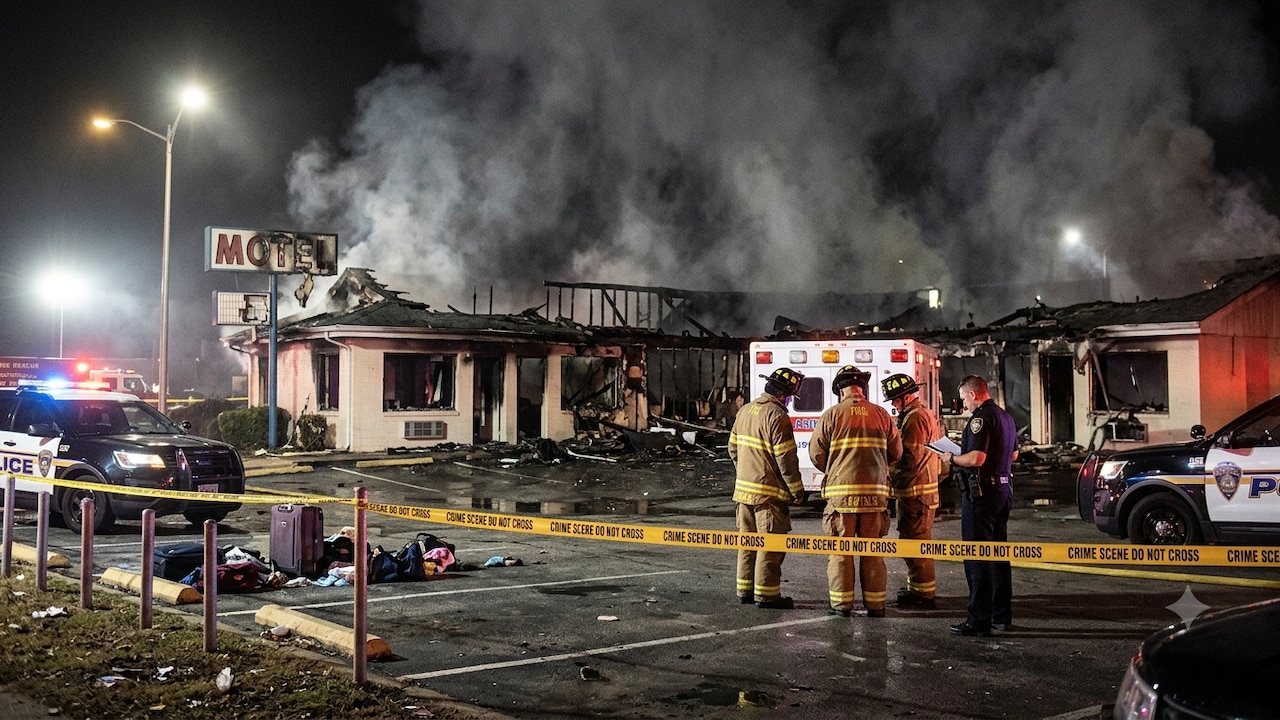
The fire broke out around 1:30 AM local time. Smoke quickly filled the hallways of the motel, located about 96 kilometers south of Cleveland. Trapped inside their room and unable to find a clear escape route, Hiteshbhai did what anyone would do. He called the front desk.
April Graser, the motel employee on duty, answered the phone. The conversation was pure terror. Hiteshbhai was begging for help, stating they couldn't get out of their apartment. Graser later recalled hearing the family screaming and crying in the background. While Graser called 911, the family received instructions from the motel staff to turn on the bathroom water supply and wait inside for rescue.
They followed the instructions. They locked themselves in the bathroom, hoping the running water and closed door would protect them from the approaching flames. It was a fatal mistake.
Why Staying Put is a Deadly Strategy
When a building catches fire, toxic smoke moves much faster than the actual flames. The advice to hide in a bathroom and run the water is an old myth that routinely kills people.
Fire safety experts from organizations like the National Fire Protection Association (NFPA) consistently warn against hiding in bathrooms during a fire. Here is why that tactic fails:
- No Fresh Air: Bathrooms rarely have windows that lead directly outside, leaving you with zero ventilation.
- The Smoke Exhaust Vent Risk: Most motel bathrooms rely on mechanical exhaust fans. When the power fails or smoke enters the ventilation shaft, the vent acts as a vacuum, pulling toxic fumes directly into the room.
- Carbon Monoxide Accumulation: Water doesn't stop smoke or carbon monoxide. It just creates a hot, humid environment that accelerates suffocation.
By the time firefighters arrived, the roof was already compromised, and thick smoke poured from the building. Emergency crews made multiple rescue attempts to reach the Suthar family, but the intense smoke made it impossible. Hiteshbhai, Hinaben, and Ishani all died of suffocation before anyone could reach them. A single firefighter suffered minor injuries during the rescue attempts, but no other guests were killed.
The Growing Vulnerability of the Diaspora
This tragedy highlights a painful reality for many recent immigrants from the Indian diaspora. Thousands of families move to the US to run or work in independent motels, gas stations, and convenience stores. They often live directly on the premises to save money and keep the business running around the clock.
Living where you work blurs the line between commercial liability and personal safety. Older budget motels often lack the updated, interconnected sprinkler systems found in modern high-rise hotels. When a fire breaks out late at night in these older structures, occupants living in staff quarters have mere seconds to react.
Local police and fire marshals in Ohio are still investigating what triggered the blaze. Meanwhile, relatives back home in Nadiad are working with the Indian embassy to navigate the legal paperwork required to bring the bodies of the three family members back to Gujarat.
Surviving a Hotel Fire When Seconds Count
You cannot rely on a front desk clerk or a standard building layout to save your life during an overnight emergency. If you stay or live in an older motel structure, you need to change how you approach personal safety the moment you check in.
First, identify the exits yourself. Never assume the hallway will remain clear or lit. Count the doors between your room and the nearest exit stairwell so you can find it in pitch-black smoke.
Second, if an alarm sounds, leave immediately. Do not stop to gather passports, cash, or luggage. If the hallway is already filled with heavy smoke, feel the door with the back of your hand. If it is hot, do not open it.
If you are truly trapped, stuffing wet towels under the main entry door is a temporary measure, but your primary goal must be reaching a window that opens to the outside air. Never retreat deeper into an interior room like a bathroom, where you have no way out and no access to fresh oxygen.