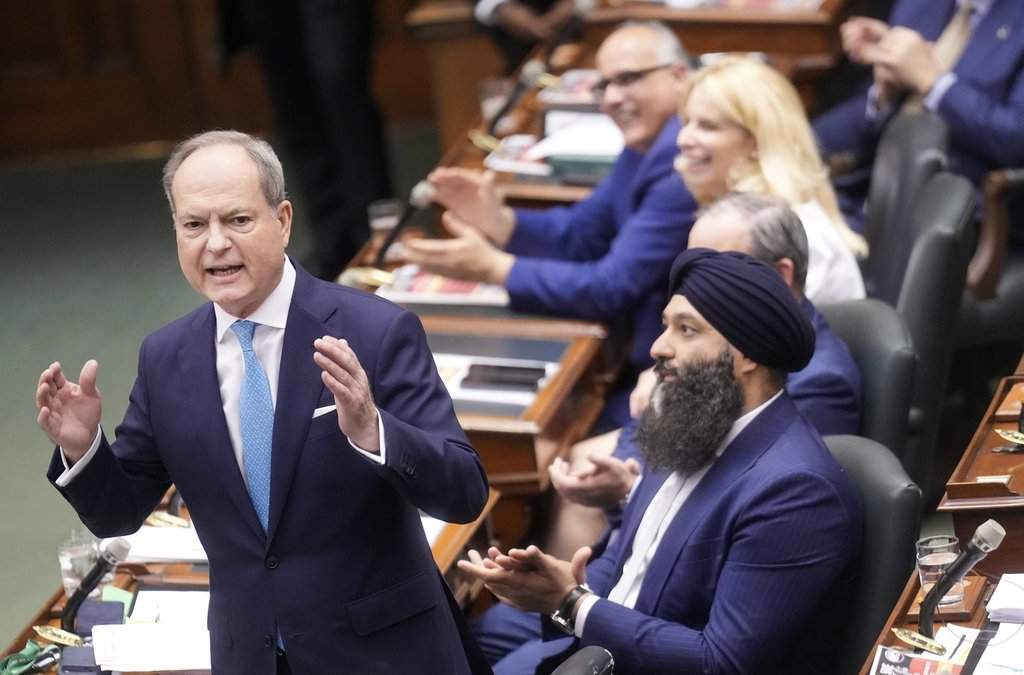
Every autumn, Queen's Park stage-manages a predictable circus. The Finance Minister walks out, holding a thick binder labeled the Fall Economic Statement, while pundits frantically scramble to analyze whether the deficit shrank by two decimal points or expanded by three. Media outlets pump out breathless coverage about "fiscal prudence," "prudent reserves," and "balanced roadmaps."
It is a complete farce.
The entire ritual of the mid-year economic update exists to distract you from a uncomfortable truth: government budget updates are not about economics. They are about narrative management.
For fifteen years analyzing public finance and sitting in backroom briefings, I have watched administration after administration play the exact same shell game. They inflate revenue projections during boom cycles, overestimate risk to create artificial "beats" later, and throw temporary tax rebates at voters to buy compliance.
If you want to understand where Ontario's economy is actually heading, you need to stop reading the minister's talking points and start looking at the structural rot they are actively trying to hide.
The Myth of the "Prudent Reserve"
Watch how the government frames its fiscal buffer. Every fall update features a line item called the "contingency fund" or "reserve." The press corps treats this as evidence of sober, adult management.
Here is how that mechanism actually works in practice.
Politicians build massive, bloated reserves into early fiscal forecasts for one reason: to create guaranteed good news six months later. When economic growth turns out to be mediocre—or even slightly below average—the finance ministry simply dissolves part of the reserve back into general revenue.
Presto. Suddenly, the government "beat expectation" and reduced the deficit.
It is financial engineering 101. If a private sector CFO ran their accounting books this way—hiding revenue in slush funds to artificiality hit quarterly targets—shareholders would launch class-action lawsuits. In government, it gets you a glowing headline about fiscal stewardship.
The real danger isn't that this practice is sneaky; it's that it hides structural deficits. While the cabinet pats itself on the back for "finding" an extra billion dollars in reserve savings, the underlying spending trajectory remains completely unsustainable. Government operational expenses continue to outpace population growth plus inflation year after year.
Why Handing Out Checks Is an Admission of Failure
Whenever a government feels the heat over the cost of living, they reach for the oldest, cheapest trick in the populist playbook: direct rebate checks.
Whether it is mailing back license plate renewal fees or sending out $200 taxpayer-funded checks right before an election cycle, the logic presented to the public is always the same: “We are putting money back in your pocket.”
Think about what that statement actually means.
First, the government taxed you. Then, it built a multi-million-dollar administrative machine to process, manage, and collect that tax. Then, when public anger reached a boiling point over affordability, it spent millions more on administrative infrastructure to print and mail a fraction of that money back to you.
That isn't relief. That is a transaction fee on your own wealth.
If the state actually cared about your purchasing power, it would structural reduce income taxes or slash the tax burden on supply chains. But doing that means giving up long-term control. Mailing a one-time check allows politicians to play Santa Claus while preserving the high tax baseline for the future.
Every time a government announces a one-time rebate in a fall update, you are not watching a dividend payment. You are watching a confession that they have no structural answers for economic stagnation.
The Infrastructure Delusion: Building Everything, Fixing Nothing
Expect the usual chest-thumping around record capital spending. Millions for highways, billions for transit, endless press releases showcasing hard hats and shovels.
Here is the dirty secret of public capital allocation: building new infrastructure is easy; maintaining existing assets is political death.
Ribbon-cutting ceremonies win votes. Sewer replacements, bridge rehabilitations, and transformer grid upgrades do not. As a result, Ontario has built a catastrophic asset management gap. We pour billions into expanding suburban highways and shiny light-rail lines while municipal water mains rot underground and local transit systems operate on borrowed time.
Consider the math behind mega-projects. When a government commits $10 billion to a transit expansion, that number only represents the initial capital expenditure. It completely ignores operations, maintenance, and state-of-good-repair costs over the 50-year lifecycle of the asset.
By front-loading capital commitments in economic updates without establishing dedicated, long-term operational revenue streams, the province is mortgaging its future. In fifteen years, when those new lines require massive overhauls, the budget will have zero flexibility left. The maintenance bills will land on your children's tax invoices.
The Real Numbers Nobody Wants to Talk About
To cut through the noise of any fall economic update, ignore the deficit target entirely. It is a politically manufactured number that can be shifted with a tweak of an interest rate assumption or a delayed capital project.
Instead, track these three metrics:
- Net Debt-to-GDP Ratio Trajectory: Is the province actually deleveraging, or are they relying on inflation to make debt look smaller relative to nominal GDP?
- Interest on Debt as a Percentage of Revenue: Every dollar spent servicing past promises is a dollar taken directly out of healthcare, education, and infrastructure maintenance today.
- Program Spending Per Capita (Adjusted for Real Inflation): Is government actually getting leaner, or is the bureaucracy expanding faster than the population it serves?
When you run Ontario's numbers through this lens, the picture changes dramatically. The province remains one of the largest non-sovereign debt holders in the world. Interest payments are consistently one of the largest single line items in the budget—ranking alongside major ministry budgets.
We are spending billions annually just to pay the interest on dead choices made decades ago. Yet, the fall update will spin a fraction-of-a-percent reduction in interest costs as a triumph of modern fiscal policy.
What You Should Actually Do With Your Money
Stop waiting for Queen’s Park to solve affordability or stabilize the economy. A government update is an exercise in public relations, not a financial roadmap for your household or business.
If you operate a company in Ontario, prepare for prolonged structural friction:
- Assume energy costs will rise: Capital spending on grid modernization and green energy transitions will inevitably be passed down to commercial rate-payers, regardless of temporary subsidies promised in economic updates.
- Ignore headline tax promises: Look at the regulatory burden. A government that keeps taxes flat while increasing regulatory compliance costs is still extracting wealth from your enterprise.
- Build your own contingency: Do not rely on government relief programs, grants, or rebates. They are designed to be slow, bureaucratically complex, and politically volatile.
The autumn budget ritual will end. The cameras will pack up. The ministers will retreat back to their offices. And the fundamental economic realities facing this province will remain completely untouched.
The next time you see a headline announcing a new fall economic statement, do not look for what the government is promising to give you. Look closely at what they are quietly taking away.