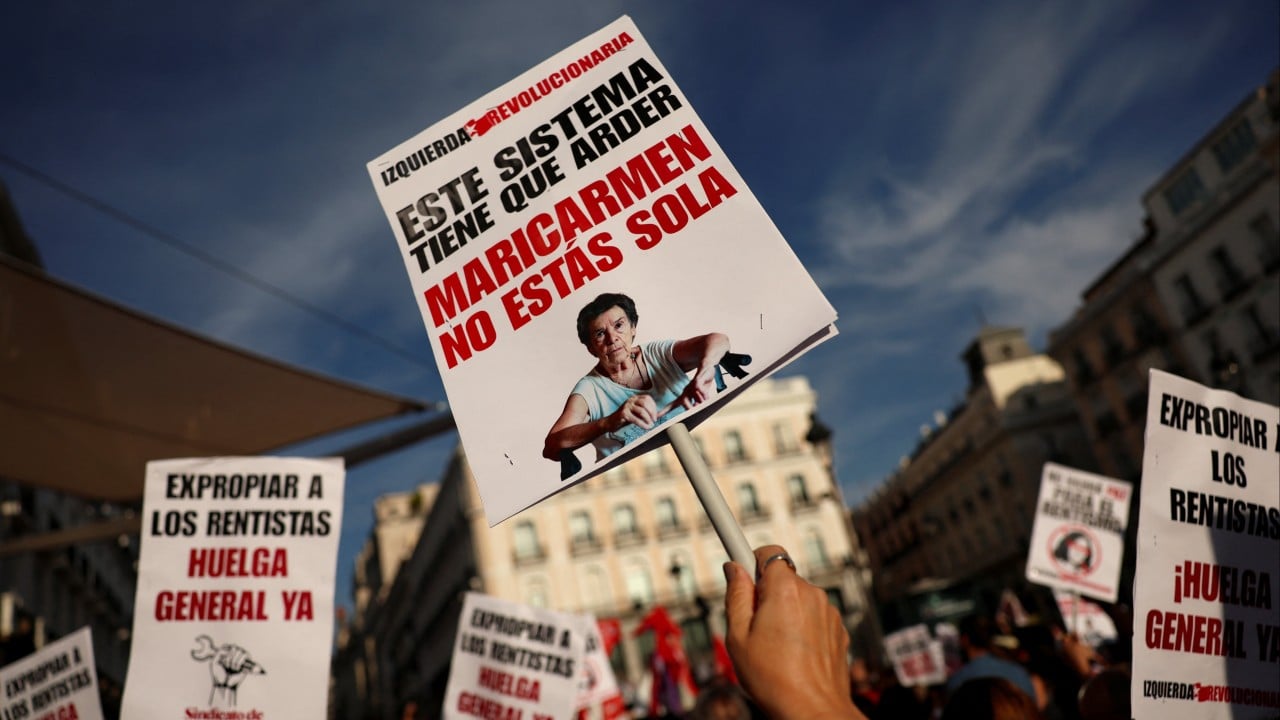
When 87-year-old Maricarmen Abascal was carried out of her Madrid apartment on a stretcher on September 23, 2026, the Spanish housing crisis crossed a psychological Rubicon. Abascal had lived in the same flat in the upscale Retiro district since 1956, maintaining a tenancy inherited through decades of family occupancy under older legal frameworks. Her monthly rent of roughly 500 euros—backed by a modest pension—collided with modern corporate real estate ambitions when a property firm acquired the building and sought a staggering rent hike to 1,650 euros, or outright vacancy.
She never missed a baseline payment. She fought the eviction through every available judicial channel for years, supported by a mobilized network of neighbors and the Madrid Tenants Union (Sindicato de Inquilinas). Yet, law enforcement executed the court order regardless, transferring the wheelchair-bound octogenarian directly to a hospital. Two weeks later, Abascal passed away.
Her death transformed an individual tragedy into a national fracture.
The Anatomy of a Systemic Failure
To view Abascal’s case as a localized landlord-tenant dispute is to misunderstand the structural decay of European urban housing. Over the past decade, rents across Spain’s major metropolitan centers have nearly doubled while wage growth has remained stagnant. Institutional investors, private equity groups, and speculative real estate vehicles have treated residential housing stock as a high-yield financial asset class, systematically acquiring residential blocks to convert them into short-term rentals or re-lease them at rates detached from local purchasing power.
Old-rent contracts (rentas antiguas), which once provided stability and generational continuity for aging urban populations, have been phased out or overridden by legislative changes designed to liberalize the property market. When corporate landlords inherit tenants protected by legacy agreements, the standard playbook involves legal attrition—exhausting elderly occupants through prolonged court battles until they either capitulate or are physically removed.
In Abascal's situation, even eleventh-hour offers from private benefactors willing to cover the financial shortfall were summarily rejected by the property company. The message was clear. The square footage held greater economic value vacant than occupied by a pensioner paying sub-market rates.
Political Shockwaves and the Streets
The public reaction was immediate and fierce. Within hours of the eviction, hundreds of protesters converged on Madrid's central Puerta del Sol plaza, erecting an encampment that quickly swelled to over a thousand tents. Similar protest camps sprouted up spontaneously in Barcelona, Málaga, Valencia, and Seville.
The movement fused tenant unions with labor organizations in a rare display of cross-sector solidarity. By early October, demonstrations brought hundreds of thousands of people into the streets. Slogans chanted outside parliament made direct targets of political figures across the spectrum, accusing both municipal and national authorities of enabling predatory speculation.
Faced with mounting civil unrest and the imminent collapse of parliamentary support for emergency housing decrees, Prime Minister Pedro Sánchez took a dramatic gamble. Blaming conservative opposition parties for voting down previous anti-eviction extensions, Sánchez dissolved parliament and called a snap general election.
The Limits of Legislative Band-Aids
The political fallout highlights a deeper dilemma. Passing emergency decrees to ban evictions of vulnerable tenants until 2030 or attempting to cap temporary leases addresses the symptoms while leaving the underlying mechanics of financialized housing untouched.
Critics from tenant advocacy groups point out that regulatory frameworks consistently favor property rights over social reproduction. When municipal governments offer emergency shelter solutions, they are frequently located on the distant periphery of cities, effectively uprooting elderly residents from the social fabric, medical networks, and communities they have inhabited for an entire lifetime.
The tension between urban housing as a human right and housing as a global financial instrument is reaching an unsustainable threshold. Maricarmen Abascal’s face now adorns murals, banners, and makeshift shrines from Madrid to Catalonia. Her legacy is not merely that of a victim, but the catalyst for a fundamental reckoning over who controls the modern city.
The ballot boxes will open soon, but the tents in the plazas remain.