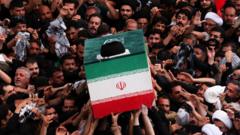
The sight of a coffin moving through the crowded streets of Najaf isn't unusual, but the box riding in the back of that truck on Wednesday carried a different kind of weight. It contained the remains of Ali Khamenei, the late Iranian Supreme Leader who ruled with an iron fist for nearly four decades. Months after the February 28 US-Israeli airstrikes that ended his life, his six-day funeral marathon finally wound its way into neighboring Iraq. This wasn't just a religious ceremony. It was a calculated, aggressive piece of political theater meant to project power at a moment when the region is literally exploding.
While the crowds packed the courtyards of the majestic shrine of Imam Ali, the actual reality on the ground told a much messier story. The Islamic Republic wants you to look at the sea of mourners and see total Shia unity. They want the world to think the "Axis of Resistance" is as rock-solid as ever. Don't buy it. Behind the tears and the official public holidays, this procession highlights massive structural fractures within both Iran and Iraq. If you found value in this post, you might want to look at: this related article.
The Hypocrisy of Forced Unity During Khamenei's Funeral Procession in Iraq
The official narrative coming out of Tehran is all about strength. Iran's first vice-president, Mohammad Reza Aref, went as far as calling this funeral the most important event of the century. They timed this multi-city tour to prove that killing their top leadership didn't break the system. But look closer at what happened right before the coffin arrived at Najaf International Airport.
During the earlier legs of the funeral in Tehran and Qom, the illusion of unity cracked wide open. Hardline factions didn't use the moment to mourn quietly. Instead, they weaponized the crowds. They turned on their own government officials. Videos quickly spread online showing furious mourners swarming Iranian President Masoud Pezeshkian, screaming "Death to the compromiser." Foreign Minister Abbas Araghchi got it even worse, with crowds chanting "Death to the traitor" directly at his security detail. For another angle on this event, refer to the latest update from BBC News.
Iran's Internal Political Fractures (July 2026)
├─ Government Faction (Pezeshkian / Araghchi) -> Seeking diplomatic off-ramps & sanctions relief
└─ Hardline Faction (IRGC / Ultra-conservatives) -> Demanding total war & shouting down "traitors"
Think about that for a second. The supreme leader is dead, the country is locked in a broader regional war, and the regime's ultra-conservative base is busy attacking their own president in the streets. They are furious about diplomatic talks and want total vengeance. The reformists are pushing back, claiming these outbursts ruin national dignity, but the damage is done. The political establishment in Iran is terrified, divided, and bleeding authority from the inside.
Shifting Sands and Shrines in the Holy Cities
Bringing the coffin to Iraq was a strategic choice, but it also carries massive risks. Iraq is a Shia-majority country, yet its relationship with Iran has always been deeply complicated. People forget that back in the 1980s, these two nations fought a brutal eight-year war that left a million people dead. Today, Iranian influence heavily dictates Iraqi politics, but regular Iraqi citizens are deeply split on whether they actually want Tehran pulling the strings.
Iraqi authorities declared Wednesday a public holiday to ensure the streets were filled when the convoy moved from Najaf to Karbala. For some attendees, showing up was about honoring a man who helped them fight off ISIS years ago. For others, it was purely about standing against the West. One mourner openly admitted to reporters that while he hates Iranian interference in Iraqi politics, he still stood in the blistering heat because he views the US and Israel as the greater enemy.
This isn't a unified bloc of loyal followers. It's an alliance of convenience held together by shared trauma and common enemies.
Najaf also happens to be the home of Grand Ayatollah Ali Sistani, Iraq's top Shia authority. Sistani represents a quietist school of Islam that directly opposes the Iranian concept of Velayat-e Faqih—the rule of the Islamic jurist. Sistani believes clerics should stay out of day-to-day governance. Khamenei spent his entire life enforcing the exact opposite. By parading Khamenei's coffin through Sistani's backyard, Tehran is trying to claim spiritual dominance over the entire Shia world, even as Sistani's camp maintains a calculated, chilly distance.
A Funeral March Accompanied by Rocket Fire
You can't separate this funeral procession from the immediate military chaos happening right now. As hundreds of clerics in white and black turbans waited to pray over the remains in Najaf, the US military was busy executing heavy airstrikes in the Strait of Hormuz.
Washington launched massive strikes hitting over 80 Iranian targets after Tehran allegedly attacked three commercial ships in the strategic waterway. Iran's Islamic Revolutionary Guard Corps didn't back down. They retaliated almost instantly, hitting US military installations in Bahrain and Kuwait.
Strait of Hormuz Conflict Escalation
┌────────────────────────┐      ┌────────────────────────┐
│ Iran Attacks 3 Ships   │ ---> │ US Strikes 80+ Targets │
└────────────────────────┘      └────────────────────────┘
                                            │
                                            v
                                ┌────────────────────────┐
                                │ IRGC Hits US Bases in  │
                                │ Bahrain & Kuwait       │
                                └────────────────────────┘
The regime is using the funeral to keep their population mobilized for a war that is actively happening. The imagery is deliberate. Alongside Khamenei's casket were the tiny coffins of his family members killed in the initial February blast, including his 14-month-old granddaughter. Showing those small caskets stirs up intense emotional fury, transforming a political failure—letting your supreme leader get assassinated in his own capital—into a religious rally for holy war.
What Happens After the Burial in Mashhad
The marathon ends Thursday, July 9, when Khamenei will finally be buried at the Imam Reza shrine in his hometown of Mashhad. Once the caskets are under the ground, the theatrical distractions end, and reality sets in.
If you are tracking this region, stop looking at the manufactured crowds and start focusing on these concrete dynamics:
- Watch the Interim Leadership Council: Iran is currently being run by a temporary committee. The battle to permanently replace Khamenei will be vicious. If the hardliners who heckled Pezeshkian take over, expect the regional war to expand drastically.
- Monitor the Strait of Hormuz: The shipping lanes are a global choking point. If the IRGC keeps targeting commercial vessels to project strength during this transition, global oil markets will react violently.
- Track Iraqi Backlash: The public holiday forced people out of school and work, but Iraqi nationalism is growing. Watch for anti-Iran protests in Baghdad and Basra once the foreign dignitaries pack up and leave.
The regime wants you to think this funeral proves their system is unbreakable. In reality, it shows a fractured leadership using dead bodies to cover up the cracks in a failing empire.