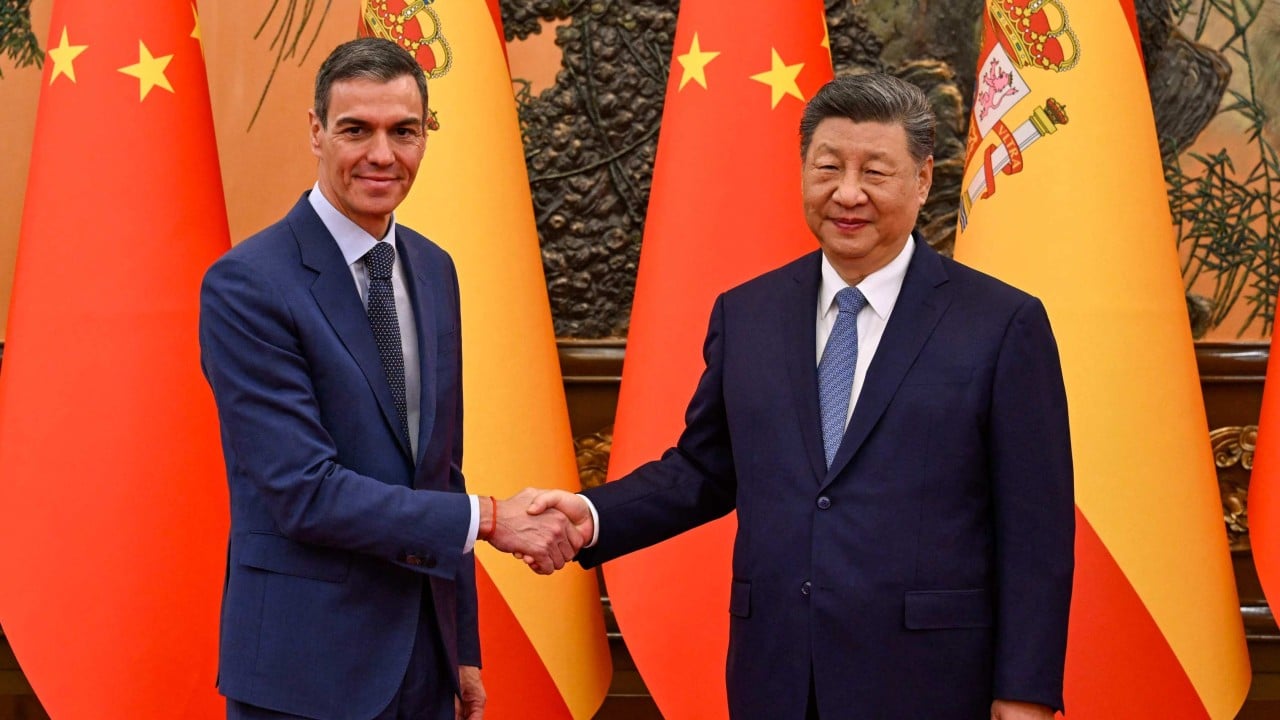
Spain is currently obsessed with selling snacks to a superpower. You've seen the headlines about "fruit bowl diplomacy" and the high-level handshakes between Madrid and Beijing. It sounds like a win on paper. Spanish Prime Minister Pedro Sánchez makes his fourth trip to China in four years, signs a flurry of agreements for persimmons and almonds, and we're told it's a new era of prosperity.
It isn't.
The reality is that Spain is stuck in a massive trade hole. In 2025, the trade deficit with China hit a staggering €42.3 billion. To put that in perspective, that single gap accounts for roughly 74% of Spain's entire national trade deficit. We're sending over crates of oranges while they’re sending us the entire infrastructure of the future. You can't bridge a multi-billion euro chasm with fruit salad.
The Great Fruit Illusion
The logic behind "fruit bowl diplomacy" is simple but flawed. The idea is that by opening up niche agricultural markets, Spain can chip away at the deficit. Recently, we’ve seen new protocols for cherries, pistachios, and dried figs. It's great for the farmers in Extremadura or Aragon, don't get me wrong. But look at the numbers.
In 2025, Spanish fruit and vegetable exports to China actually plummeted by over 60% in some categories. Oranges, the supposed crown jewel of this strategy, dropped from over 8,000 tonnes a few years ago to less than half of that today. Why? Because China isn't a charity. They have their own crops, and they have neighbors like Thailand and Vietnam who don't have to ship a plum halfway across the globe.
When you factor in the logistical nightmare of cold-chain transport through the Red Sea or around the Cape of Good Hope, the "freshness" of Spanish produce becomes a expensive marketing pitch rather than a competitive advantage.
Pigs and Politics
If fruit is the sideshow, pork is the main event. Spain is the top exporter of pork to China, a trade worth billions. But even this is a fragile glass house. When the EU slapped tariffs on Chinese electric vehicles (EVs) in late 2024, Beijing didn't blink. They immediately opened an anti-dumping investigation into European pork.
It was a classic hostage situation. Spain, caught between its loyalty to Brussels and its need to sell ham, had to play a delicate game. While other EU nations took a hard line, Sánchez went to Beijing to talk "partnership." It worked, sort of. By December 2025, China cleared Spanish pork exports even after an African Swine Fever scare in Barcelona, and the final tariffs on Spanish ham were set at a manageable 9.8%—far lower than what others faced.
This "special relationship" is why Spanish leaders keep visiting. They're terrified that if the pork trade dies, the agricultural sector collapses. But relying on the whims of a single buyer who uses your ham as a geopolitical bargaining chip isn't a strategy. It’s a vulnerability.
The High Value Trap
We're selling them ingredients; they're selling us the kitchen. Spain’s exports to China are dominated by raw or semi-processed goods:
- Pork products
- Olive oil (which saw a price crash in late 2025)
- Copper and zinc
- Fruit and nuts
Meanwhile, what's coming the other way? BYD, Chery, and MG are flooding the Spanish market with EVs. Chery even set up its European headquarters in Barcelona. We’re importing the technology that will define the next fifty years and paying for it with things people eat and throw away.
Spanish officials talk about "high-value-added" products like pharmaceuticals and cosmetics. That’s where the focus needs to be. If Spain doesn't pivot from being China's orchard to being its tech partner, the trade imbalance will only get worse. You can't maintain a modern economy on the back of almond exports.
How to Actually Move the Needle
The "priority country" status China gave Spain for 2026 is a nice gesture, but it’s a PR win for Beijing more than a financial win for Madrid. They want to show the rest of the EU that if you play nice, you get to keep your ham market.
If you're a Spanish business looking at China, stop thinking about volume and start thinking about brand.
- Forget the mass market: Local Chinese producers will always beat you on price for basic fruit. Focus on the luxury "Iberian" lifestyle.
- Tech integration: Follow the lead of companies like Gestamp. Don't just sell parts; integrate into the Chinese supply chain.
- Diversify or Die: Use the "gateway to Latin America" pitch to bring Chinese investment into Spain, but don't let it be a one-way street.
Stop celebrating the opening of a new cherry market as if it’s a national victory. It’s a drop in the bucket. The real work is in closing a €42 billion gap that fruit won't fix.
Start looking at the tech and green energy sectors. If Spain doesn't become a hub for EV battery production or green hydrogen, it will remain just a very pretty, very sunny farm for a much more industrious superpower.