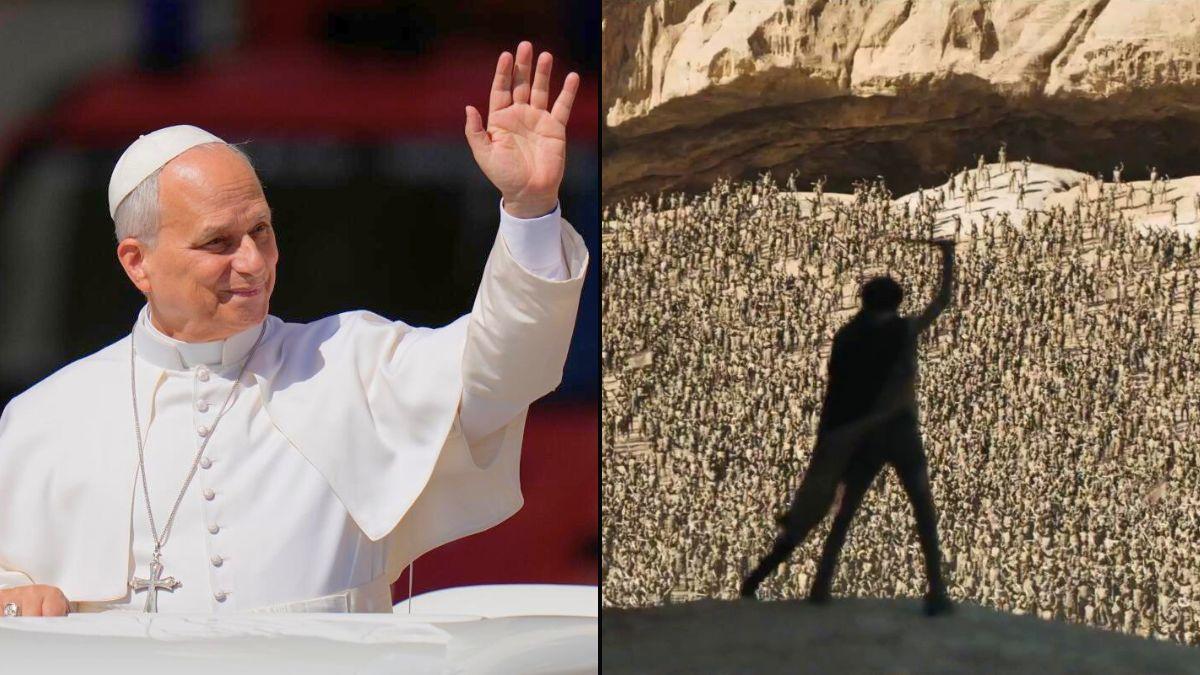
When Pope Leo XIV dropped his first papal encyclical, Magnifica Humanitas, the internet didn't talk about theology. It talked about science fiction.
The 43,000-word Vatican document takes a direct shot at Silicon Valley, demanding the immediate "disarmament" of artificial intelligence. It blasts tech monopolies, condemns autonomous drone warfare, and shines a harsh light on the hidden underclass of exploited data labelers. But tech circles and sci-fi fans immediately noticed something deeper. The language coming out of the Holy See sounds exactly like the philosophical core of Frank Herbert’s Dune.
Specifically, people are talking about the Butlerian Jihad.
In the Dune universe, this wasn't a war against aliens or monsters. It was a total human uprising against "thinking machines." Pope Leo isn't calling for people to smash their laptops with sledgehammers, but his moral argument is structurally identical to the fictional crusade written sixty years ago. We've officially reached the point where papal doctrine and peak sci-fi worldbuilding are saying the exact same thing about our tech-obsessed future.
The Prophecy From 1965 That We Are Living Right Now
To understand why the internet is buzzing with Dune quotes, you have to look at what Frank Herbert actually wrote. Most people think Dune is just about giant sandworms and space royalty. But the entire backdrop of that universe hinges on a historical event that happened centuries before Paul Atreides ever set foot on Arrakis.
The primary commandment left behind by the Butlerian Jihad is simple: "Thou shalt not make a machine in the likeness of a human mind."
Herbert’s genius was that he didn't envision a Skynet-style robot uprising. The machines didn't rebel against humans. Instead, humans willingly handed over their minds to the machines. In the lore of Dune, humanity became lazy, passive, and entirely dependent on algorithms to make decisions, run economies, and govern daily life. This gave immense, unchecked power to the select few individuals who owned and controlled those machines.
The jihad wasn't a war to save humans from killer robots. It was a war to save human agency from human tech billionaires.
What the Pope Actually Said About Silicon Valley
Now look at Pope Leo’s 2026 encyclical. He isn't worried about Terminator models walking down the street. He’s worried about what happens to the human soul when we outsource our thinking to a handful of massive tech companies in California and Seattle.
The Pope warned that opaque algorithms controlled by a tiny elite are creating "new forms of dehumanization." He noted that these systems merely imitate human intelligence without experiencing reality. They don't have bodies, they don't feel pain, and they don't understand responsibility.
When you strip away the theological phrasing, Leo is making the exact same critique as Dune. He argues that letting private monopolies build the "invisible infrastructure" of our lives forces humanity into a state of digital dependency.
The Hidden Cost of the Algorithmic Supply Chain
One of the sharpest parts of Magnifica Humanitas exposes the physical reality behind the cloud. The tech industry loves to market AI as a seamless, magical entity that exists in the ether. The Pope dragged that illusion back down to earth.
He specifically called out what he terms "digital slavery." This refers to the brutal, low-wage human labor required to make these systems work. Thousands of workers in developing nations spend long hours sorting through horrific, violent content to train safety filters. Others label data for pennies just so a chatbot can spit out a clean answer to a user in New York or London.
Add to that the massive environmental toll. Data centers are swallowing up local water supplies and burning through electricity grids at an unsustainable rate. Pope Leo noted that the bodies of marginalized people are being worn down just so computational flow can continue without interruption. It turns out that our "thinking machines" rely heavily on exploiting real human beings.
Why a Moral AI Controlled by a Few Is a Trap
Tech CEOs love to talk about "alignment" and building "ethical AI." They spend billions hiring safety teams to make sure their models don't say anything offensive. Pope Leo sees right through this PR move.
His absolute best line in the document cuts straight to the core of the problem: "A more moral AI is not enough if that morality is determined by a few."
If a couple of tech executives get to program the moral guardrails for a tool used by billions of people, they aren't creating a neutral utility. They are imposing their own specific worldview onto global culture. It homogenizes human thought. It erodes local traditions and cultural diversity. When you rely on a single system to summarize knowledge, write your essays, and give you life advice, you stop doing the messy, vital work of seeking truth yourself.
How to Disarm the Technology in Your Own Life
We aren't going to launch a literal space crusade to ban microchips. That's not the takeaway here. But the alignment between a papal encyclical and a legendary sci-fi novel shows that the anxiety over losing our humanity to corporate algorithms is completely mainstream.
You don't have to wait for global governments to regulate these companies. You can start reclaiming your own mental real estate immediately.
- Audit your information intake. Stop letting algorithmic feeds dictate what you read, watch, or think about. Actively seek out independent sources, physical books, and long-form writing that hasn't been optimized for engagement.
- Keep human spaces human. If you're a manager or business owner, don't rush to replace creative human work with cheap automated text generators. Value the friction, the mistakes, and the unique perspectives that only a real person brings to a project.
- Support data privacy legislation. Push for regulations that treat data as a public good rather than private corporate property. The Vatican is explicitly calling for data ownership to be stripped from exclusive corporate hands, and that starts with policy pressure.
The ultimate warning of both Dune and Magnifica Humanitas is that technology becomes dangerous the moment we use it to avoid the hard work of being human. Don't hand your thinking over to a machine.
This video explores the Vatican's official stance on artificial intelligence and breaks down the major ethical warnings issued in the papal document. Pope Leo warns AI must be 'disarmed' to stop domination and death
,webp/024/329/201/v2/2560x1440.212.webp)