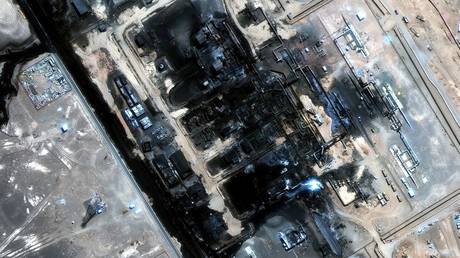
Every desk on Wall Street is currently pricing in a kinetic disaster. The lazy consensus dominating the financial press right now is that Washington and Tehran are sliding inexorably into a regional conflagration, oil is heading to one hundred and fifty dollars, and every risk asset needs to be shorted into oblivion.
It is a lazy, unimaginative narrative spun by people who have never managed risk through an actual structural shock and whose only playbook is recycled 1970s oil-shock trauma.
I have watched desks blow up millions chasing phantom supply shocks while the actual mechanics of modern energy markets quietly ate their lunch. The market is pricing the headline, not the reality. The reality is that this friction is not a march to total war. It is a managed friction, an expensive piece of theater executed within tightly bounded tolerances by actors who have everything to lose from an actual systemic break.
Let us dismantle the panic.
The Supply Disruption Myth
The entire bearish thesis for risk assets rests on a single faulty premise: that a military clash automatically closes the Strait of Hormuz and chokes off twenty percent of global petroleum supply.
It sounds terrifying on a cable news graphic. It also ignores how global supply chains have re-engineered themselves over the last decade.
First, look at spare capacity. OPEC plus is sitting on enough idle output to swamp any temporary maritime bottleneck within forty-eight hours. Second, look at the physical routing of global trade. Shippers have spent billions building redundancy into alternative pipelines that bypass chokepoints entirely. When a tanker gets harassed or a drone hits a facility, algorithmic traders panic-buy crude futures because their models equate smoke with structural shortage.
They are confusing volume volatility with structural destruction.
Real supply destruction looks like the 1973 embargo—an absolute, unyielding choke on production quotas driven by ideological unity. What we have in the Middle East right now is a fractured, highly calculated proxy contest where every single participant—including Tehran—needs oil revenue to survive. An economy dependent on petroleum exports does not intentionally detonate its own revenue pipeline. It punches right up to the velvet rope, makes a massive media spectacle, and stops before crossing the line that triggers total financial annihilation.
The Safe Haven Trap
When the mainstream media screams about escalation, retail investors and panicked institutional allocators stampede into the traditional safe havens: gold, the US dollar, and short-duration government paper.
This is where the herd gets slaughtered.
Buying gold at the height of geopolitical hysteria is the financial equivalent of buying an umbrella when the hurricane is already tearing your roof off. You are buying at the absolute peak of the fear premium. The smart money built its gold position eighteen months ago when nobody cared. By the time the headline-driven trader decides it is time to buy safety, the geopolitical risk premium is already fully priced into every ounce.
Worse yet is the blind faith in sovereign debt during a supply-side inflation shock. If a conflict actually did disrupt global energy markets in a sustained way, the resulting spike in input costs would be inflationary, not deflationary. Central banks would not ride to the rescue with rate cuts; they would be forced to keep policy restrictive to anchor inflation expectations. Buying bonds because "there is a war" is a strategy designed by someone who has forgotten basic macroeconomics.
The Energy Markets are Betting on the Wrong Shock
Let us look at the petroleum curve. Traders are bidding up front-month contracts while the back end remains relatively anchored. That steep backwardation is not a sign of an impending permanent supply apocalypse; it is a clear market signal telling you that smart capital expects a short-duration spike followed by a rapid mean reversion.
The structural trend in energy is not scarcity driven by war; it is demand elasticity and efficiency gains that the doomsayers refuse to acknowledge. Every time crude spikes on geopolitical posturing, two things happen simultaneously: alternative supply taps open faster than anticipated, and high prices destroy marginal demand.
You cannot maintain an artificial price floor through fear alone. The market always reverts to the cold math of supply and demand.
What You Should Be Doing Right Now
Stop trading the noise. Stop reading the breathless morning notes from analysts who have never left Manhattan.
If you want to make money while the crowd panics over geopolitical headlines, you exploit the mispricing. Look for companies with fortress balance sheets, zero debt maturities in the near term, and pricing power that allows them to pass input costs straight through to the consumer. These equities get indiscriminately hammered every time a missile is test-fired in the Gulf, creating generational entry points for investors who understand the difference between tactical noise and structural trend.
The people losing sleep over a regional war are the ones who do not understand that modern geopolitics is an exercise in managed escalation. Nobody wants the house to burn down. They just want to control the thermostat.
Position for reality, not the headlines.