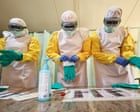
Panic sells. Calm competence does not. Whenever a wire service drops a breathless dispatch about a nineteenth-century contagion rearing its head in a modern nation, the playbook executes itself. The headline invokes ghosts of medieval graveyards. The subhead whispers about infectious lung damage and quarantine perimeters. Millions of readers share the link before breakfast, injecting a fresh dose of adrenaline into the attention economy.
Let us strip away the theatrical fog. The lazy consensus dominating global newsrooms treats pneumonic plague as an inevitable biological bomb waiting to detonate across urban centers at the slightest provocation. Every isolated case triggers headlines framing microbial resistance and airborne transmission as an unstoppable apocalyptic wave.
That perspective is fundamentally lazy, technologically illiterate, and historically dishonest.
I have watched public health bureaucracies spin up identical panic cycles for over a decade. The mechanics never change. Take a naturally occurring zoonotic reservoir, mix in a handful of localized human infections, amplify the scariest possible transmission vector through social media algorithms, and watch the public surrender critical thinking to raw primal dread.
The reality of Yersinia pestis is far more mundane, far more controllable, and vastly different from the cinematic nightmare broadcasted by morning news anchors.
The Core Misunderstanding of Airborne Transmission
When journalists write about pneumonic plague, they love the word airborne. It is a terrifying descriptor. It conjures images of invisible mists floating down ventilation shafts or drifting across international borders to infect entire populations without warning.
Biology operates on stricter rules.
Yersinia pestis is a bacterium, not a nimble respiratory virus like influenza or measles. It does not linger suspended in dry indoor air for hours waiting for a host. Pneumonic transmission requires massive droplets—heavy, moisture-laden projectiles expelled during deep coughing fits from an individual who is already visibly, profoundly, violently ill. You do not catch pneumonic plague by walking past a stranger on a crowded subway platform. You catch it by being in intimate, sustained, face-to-face contact with someone on the verge of respiratory failure.
By the time a patient is shedding enough bacterial load to threaten others, they are physically incapable of hiding in a crowd. They are bedridden. They are gasping for air. Their clinical presentation is so dramatic that tracing contacts is not an exercise in tracking invisible vectors; it is a straightforward hunt for a small, easily identifiable circle of caregivers and family members.
Treating this pathogen as an elusive ghost floating through the breeze is a category error that serves sensationalism at the expense of science.
The Antibiotic Reality Nobody Wants to Highlight
The panic narrative relies heavily on omitting a single, inconvenient medical truth: we conquered this organism eighty years ago.
The media loves to remind audiences that the plague killed a third of Europe during the Middle Ages. They rarely mention that a standard course of generic streptomycin, tetracycline, or doxycycline turns a lethal infection into a minor historical footnote within forty-eight hours.
Modern medicine does not require experimental moonshot treatments to halt an outbreak of pneumonic plague. We have cheap, mass-produced broad-spectrum antibiotics sitting on shelves in every functioning clinic on the planet. The window of intervention is tight—treatment must begin within twenty-four hours of symptom onset for optimal efficacy—but the drugs themselves are trivial to administer.
When a nation places two hundred people under watch, the public assumes it is a desperate containment measure holding back the abyss. In professional epidemiology, tracing two hundred contacts is Tuesday morning work. It is standard contact tracing combined with prophylactic antibiotic distribution. It is boring, methodical administrative execution. Boring does not drive clicks, so the media paints it as a siege.
The Zoonotic Reality Check
To understand why outbreaks happen at all, you have to look away from human-to-human transmission chains and look down at the dirt.
Yersinia pestis is an enzootic disease. It belongs to rodents, ground squirrels, marmots, and the fleas that live on them. It lives in permanent ecological reservoirs across Central Asia, parts of the American West, and sub-Saharan Africa. It is never going away. Eradicating the plague globally would mean exterminating every wild rodent on Earth, an ecological impossibility that would collapse terrestrial food webs overnight.
Outbreaks among humans do not happen because the pathogen is staging a clever comeback tour. They happen because human populations intersect with wild animal reservoirs. A hunter skins an infected marmot. A camper ignores flea bites near a desert rodent burrow. A domestic cat brings home an infected vector from the backyard.
These are localized ecological collisions, not invasion attempts. Treating every instance of zoonotic spillover as a systemic failure of global biosecurity is like panicking over a shark bite because people occasionally swim in the ocean.
The Cost of Manufactured Hysteria
Every time a regional health scare is blown into a global catastrophe, the collateral damage accumulates in places that never make the evening news.
Exaggerated reporting triggers heavy-handed knee-jerk governance. Travel restrictions slam down without epidemiological justification. Borders close. Supply chains for essential non-plague medications stutter as panic buying strips local pharmacies. Public trust in institutional health guidance erodes a little more because people notice the massive gap between the breathless headlines and their local reality.
When everything is an existential threat, nothing is. If public health agencies scream about an imminent plague apocalypse every time a herder in a remote province contracts a bacterial infection, citizens stop listening when a genuine systemic risk emerges.
The danger of pneumonic plague is real, clinical, and demands respect. It is an aggressive, rapidly progressing pneumonia that requires immediate medical intervention. But it is manageable. It is treatable. It is constrained by the physical limitations of bacterial transmission and neutralized by standard pharmaceuticals that cost pennies a dose.
Stop reading the breathless dispatches designed to spike your heart rate. Look at the clinical data, respect the ecology of the wild, and recognize manufactured panic for what it is: a business model built on your fear.