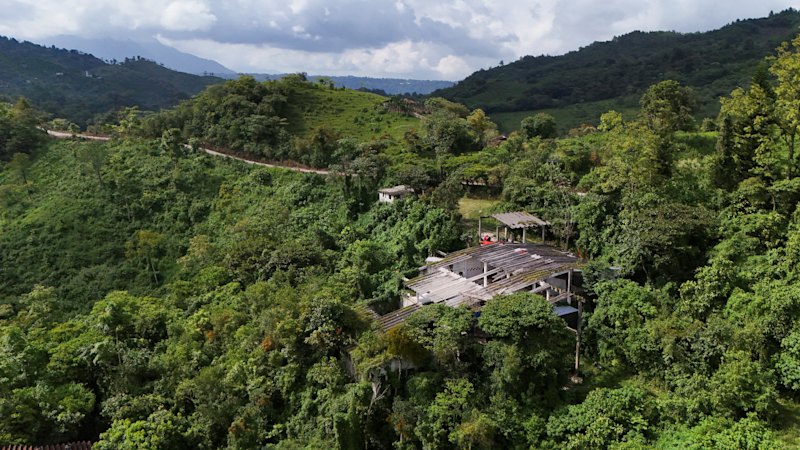
The headlines screamed about a new level of sophistication. Journalists breathless with techno-thriller tropes pointed to a remote Mexican mountain range, whispering about hidden diesel generators, clandestine wiring, and cyber-syndicates operating beyond the reach of the law. It makes for good television. It is entirely, laughably false.
I have spent years auditing energy consumption patterns and tracking secondary market ASIC flows across Latin America. When I look at those grainy photos of cooling fans duct-taped to plywood racks in a damp cavern, I do not see a sophisticated enterprise. I see a desperate, low-margin salvage operation run by people who failed basic economics.
Let us dismantle the narrative piece by piece.
The Sophistication Myth
The media loves to treat cryptocurrency mining as dark magic. If hardware is placed anywhere outside a sterile data center in Virginia, reporters assume it represents state-sponsored espionage or cartel ingenuity.
The reality is much more mundane and much more pathetic.
Putting mining rigs in a remote mountain location is a logistical nightmare, not a tactical advantage. Mountains present terrible operating conditions for high-density computing hardware. Humidity rots the hashboards. Dust clogs the intake fans. Temperature swings between freezing nights and scorching afternoons force thermal throttling, which shreds your efficiency metrics.
No professional operator looks at a mountain cliffside with zero fiber optic redundancy, impassable mud roads during the rainy season, and zero HVAC infrastructure and says, "Yes, this is where we build our digital empire."
The only people who choose these locations are those fleeing something. They are running from utility companies tracking abnormal load signatures, or they are hiding from landlords who noticed their commercial warehouse drawing as much power as a small hospital.
The Hardware Graveyard
Look closely at the equipment hauled out of these mountain raids. You will not find the latest generation Bitmain Antminer S21 or Hydro units running at optimal joules per terahash.
You find scrap metal.
These setups rely on discarded, heavily depreciated hardware like the Antminer S9 or Avalon equivalents that were obsolete four hardware generations ago. These machines burn roughly 1350 watts to produce a meager 14 terahashes per second. By modern standards, running them on retail power is financial suicide. They consume more value in electricity than they produce in block rewards.
When hardware reaches the end of its economic life in a professional data center, it gets liquidated for pennies. Speculative hustlers buy these dead units by the pallet load, hoping to squeeze a few more months of hashing life out of them in jurisdictions where they can evade overhead costs.
Deploying five-year-old scrap metal in a cave does not make you a criminal mastermind. It makes you a digital scavenger picking through a technological graveyard.
The Backyard Meth Lab of Compute
To understand what is actually happening in those mountains, throw out the James Bond comparisons and look at domestic drug manufacturing or illicit cryptocurrency setups in rural Eastern Europe.
This operation in the Mexican highlands was not a high-tech fortress. It was an improvised mess of stolen transformers, rigged junction boxes, and decaying power strips.
The math of mining only changes under one condition: zero-cost power obtained through theft.
When you do not pay for electricity, your variable cost drops to zero, temporarily masking the inefficiency of your antique hardware. That is the entire business model of these mountain setups. They are not crypto geniuses hacking the system; they are glorified copper thieves who swapped out wire cutters for power distribution taps. They bypass the meter, plug into a high-voltage line feeding a local agricultural pump or a rural municipality, and cross their fingers that the local utility inspector is on someone's payroll.
Calling this "sophisticated" is an insult to actual engineering. It is the equivalent of hotwiring a stolen tractor to haul dirt.
The Local Corruption Pipeline
You cannot steal megawatt-scale power from a rural grid without institutional complicity. This is where the media completely misses the structural reality on the ground.
A hidden farm does not sprout in a remote canyon because the perpetrators are invisible ghosts. It sprouts because local municipal infrastructure is porous, underfunded, and vulnerable to bribery.
In many rural districts across Latin America, the local power grid is managed by cash-strapped cooperatives or overworked municipal utilities. Substation monitoring is virtually non-existent. Line inspectors rarely visit remote transformer banks unless something explodes.
The operators of these clandestine rigs do not hack mainframes; they slip cash to local technicians who look the other way when unusual load spikes appear on the substation logs. They pay off the local delivery truck driver who hauls in spare fans and second-hand power supplies. It is a local racket built on petty corruption and neglected infrastructure, not an elite cyber-warfare cell.
Why the Press Buys the Fiction
Why do major news outlets fall for this every single time? Because complexity sells advertising.
A story about local linemen taking bribes to look the other way while a dozen clunky computers hum in a concrete shack does not trend on social media. But frame it as a shadowy tech cartel deploying advanced cryptographic weaponry from high-altitude redoubts, and suddenly you have a viral sensation.
Furthermore, law enforcement agencies love inflating the threat profile of these busts. If you catch a guy stealing electricity to mine digital coins worth a few hundred dollars a day, your press release looks petty. If you bust an international cyber-syndicate operating at the bleeding edge of financial cryptography, you look like heroes defending national security.
It is security theater mixed with journalistic laziness. They repeat terms they do not understand, projecting advanced capabilities onto people who are essentially running a loud, expensive space heater in a cave.
The Economics of Real Industrial Mining
If you want to see what actual sophistication looks like, leave the mountains and look at the plains of Texas, the hydro-powered valleys of Scandinavia, or the grid-stabilization sites in Iceland.
Real mining operations do not hide. They integrate. They sit right next to stranded natural gas flares or utility-scale wind farms where excess energy would otherwise be curtailed. They sign multi-million-dollar power purchase agreements that require months of legal oversight, environmental impact studies, and grid interconnection approvals.
They use immersion cooling systems or sophisticated dry-cooler arrays designed to maximize uptime and protect hardware investments worth tens of millions of dollars. Their maintenance teams are staffed by electrical engineers, not guys with a roll of electrical tape and a prayer.
When a professional miner scales up, they look for regulatory clarity, cheap and abundant power, and stable political environments. They do not look for a cave where they have to haul diesel cans up a goat path because the local transformer blew out for the fourth time this month.
The PAA Trap
People often ask search engines: Is mountain mining better for cooling crypto rigs?
The answer from anyone who has ever run a data center is a flat no.
Ambient cool air sounds great in theory until you factor in moisture. Mountain air carries high humidity and particulate matter that mixes with the oil and dust inside your fans. Within six months, your corrosion rate destroys the circuit boards. You spend more time replacing dead hashboards than you make in revenue.
Another common query: How do hidden crypto farms avoid detection?
They do not avoid detection indefinitely. They get caught because physics betrays them. You cannot hide the thermal signature of a few hundred computers running at full blast, and you certainly cannot hide the acoustic profile of thousands of high-RPM fans screaming in unison. Even in a remote canyon, the sound carries, and the power grid screams when a phantom load appears out of nowhere. The utility company notices the voltage drop long before the federal police kick in the door.
The Uncomfortable Truth About Energy Arbitrage
Every single one of these sensationalized busts highlights a deeper systemic failure: infrastructural rot.
These underground mining setups only proliferate where local grid governance is weak, where corruption is cheap, and where formal economic opportunities are scarce. When young people in rural regions turn to mining with stolen power, it is a symptom of economic stagnation, not a sign of an emerging tech underground.
They are chasing the ghost of digital wealth using the oldest criminal playbook in the book: plugging into someone else's outlet.
Stop calling it sophisticated. Stop giving amateur thieves a sci-fi villain upgrade. It is dirty, inefficient, and doomed from the start.
The next time a headline breaks about a clandestine crypto farm tucked away in the wilderness, remember what is actually inside that cave. It is not the future of finance. It is just a monument to bad math and stolen kilowatts, waiting for the transformer to blow.