The financial press loves a predictable ghost story. Whenever a high-profile tycoon sheds a trophy asset, the typewriter choir immediately strikes up the same tired requiem for the local property market.
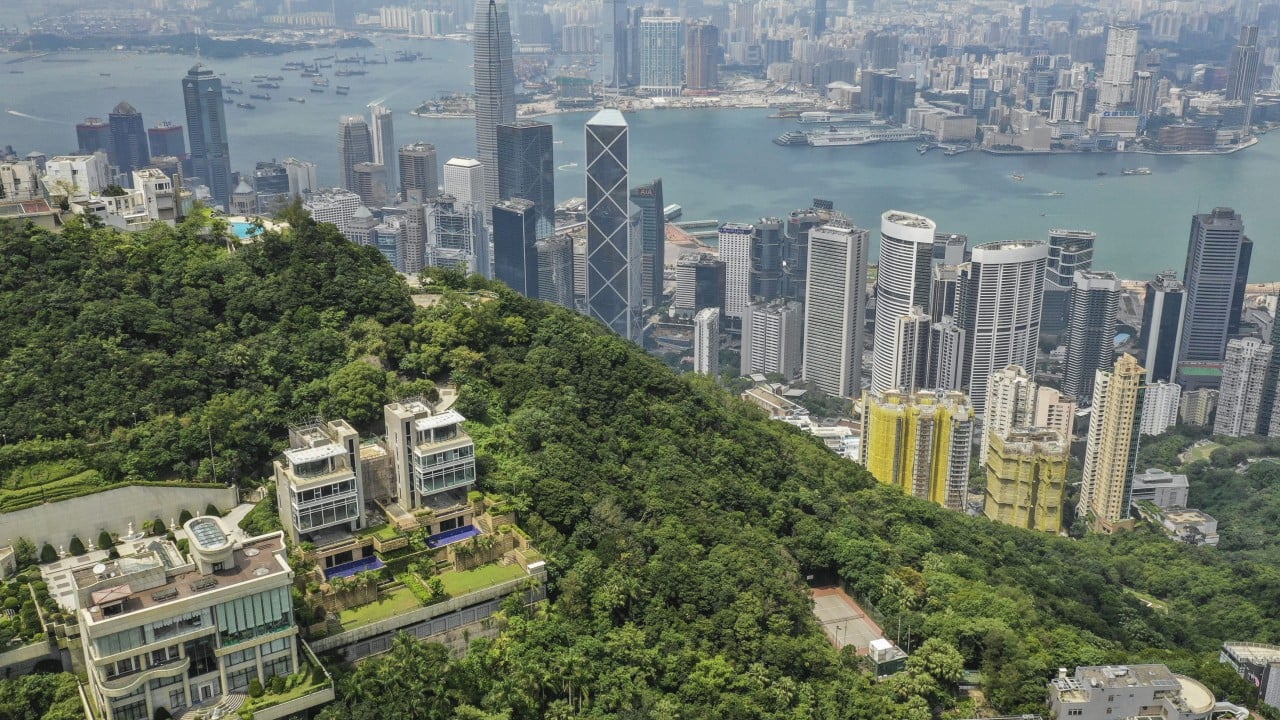
Case in point: CSI Properties chairman Mico Chung Cho-yee selling a luxury detached house at 80 Peak Road for HK$105 million (US$13.4 million).
The lazy consensus formed within minutes. We are told this transaction is a glaring indictment of Hong Kong’s ultra-luxury real estate sector. Analysts point to the 41% drop from the HK$178 million Chung paid for the site back in 2018. They point to the haircut taken after factoring in redevelopment costs. They frame it as a desperate, bleeding-edge retreat from The Peak—a sign that the world’s most exclusive enclave has lost its luster.
They are fundamentally misreading the board.
This isn't a story about a real estate market collapse. It is a masterclass in capital reallocation by an institutional operator who understands that liquidity is a weapon, sentimentality is a liability, and holding onto underperforming brick-and-mortar out of pure pride is how developers go broke.
The Sunk Cost Fallacy of the Trophy Asset
Mainstream financial journalists look at real estate through a consumer lens. They see a 41% paper loss and assume panic.
They forget who Mico Chung is. This is a man who cut his teeth alongside Thomas Lau of Chinese Estates, navigating the treacherous waters of corporate restructuring and distressed asset monetization long before CSI Properties became a mid-market force. Operators of this caliber do not look at a HK$178 million entry price and weep over what used to be. They look at the current opportunity cost of capital.
Let's break down the actual mechanics of the 80 Peak Road asset:
- Acquisition (2018): HK$178 million for a site with an old structure.
- Redevelopment: Approved for a three-story luxury residence spanning roughly 3,025 square feet of plot ratio area.
- The Exit (2026): HK$105 million to a buyer using a company-structure transfer.
To the uninitiated, the math looks disastrous. But let's look at the hidden reality of the Peak luxury market right now.
Luxury real estate is not a liquid stock. It is a highly illiquid, capital-intensive holding that demands continuous upkeep, insurance, security, and financing costs. By holding onto a vacant or mid-development site in a high-interest-rate environment, an investor is actively burning cash every single day.
I have seen funds blow tens of millions of dollars trying to "wait out" a down cycle just to save face. They refuse to take a loss because their egos are tied to the purchase price. Meanwhile, their capital sits trapped, rotting away at 5% or 6% opportunity cost while nimble competitors swoop in on distressed commercial debt, hospitality plays, or high-yield liquid instruments.
Chung didn't lose a fight; he cleared a bottleneck.
Dismantling the Peak Is Dead Premise
The market is flooded with questions from anxious investors asking: "Is Hong Kong's luxury property market permanently broken?"
The question itself is flawed. It assumes that ultra-luxury real estate behaves like a uniform, macroeconomic block. It doesn’t. The ultra-luxury tier operates on idiosyncratic liquidity events.
When people ask if The Peak has lost its premium, they overlook the structural shift in who is buying and why. The buyer of 80 Peak Road executed the transaction via a share transfer. In Hong Kong, buying a property through the acquisition of the holding company's shares rather than a direct property assignment is a classic institutional power move.
The Regulatory Arbitrage
| Transaction Type | Typical Stamp Duty | Corporate Share Transfer |
|---|---|---|
| Direct Asset Purchase | Up to 15% (depending on residency/status) | 0.2% Share Stamp Duty |
| Public Footprint | Land Registry publication of individual name | Private corporate registry update |
By utilizing a share transfer, the buyer drastically mitigated their tax friction and maintained absolute privacy.
This tells us that demand for Peak assets hasn’t evaporated; it has simply evolved. The buyers are no longer highly leveraged speculative flippers looking to brag at cocktail parties. The new cohort consists of ultra-high-net-worth capital preservationists who demand massive discounts to offset systemic risk, and who execute with surgical precision away from the public gaze.
To say a market is dead because prices normalized from their absurd, hyper-inflated 2018 peaks is mathematically illiterate. The 2018 valuation metrics were the anomaly—not the current correction.
The Hard Truth About Corporate Liquidity in 2026
Let’s look at the broader institutional matrix. CSI Properties is a public entity. In the current economic climate, corporate balance sheets are under a microscope.
Imagine a scenario where a developer holds a portfolio of commercial towers, residential joints, and a few luxury trophy sites. The commercial sector is facing structural headwinds due to shifting office demand. Debt maturities are looming across the industry.
In this environment, what is a more valuable asset? A semi-completed luxury house on a hill that generates zero cash flow, or HK$105 million in hard, liquid cash deployed directly onto the balance sheet to pay down floating-rate debt or buy back deeply discounted corporate bonds?
It is an elementary calculation.
[Trapped Capital in 80 Peak Road] ---> High Carrying Costs + Zero Yield
                                    |
                                    v (The Strategic Cut)
[HK$105 Million Cash Infusion]   ---> Debt Reduction + High-Yield Reinvestment
By taking the hit on Peak Road, Chung frees up operational bandwidth. He removes a line item that requires constant management attention and replaces it with immediate liquidity. This isn't a retreat; it's a defensive rebalancing that positions a company to survive—and eventually cannibalize—weaker players who refuse to cut their losses.
The Downside of the Contrarian Reality
Let’s be brutally honest about the risks of this perspective. Accepting a capital loss of this magnitude does have a psychological contagion effect. It resets the comps for the entire neighborhood.
When a tycoon of Chung’s stature accepts HK$34,700 per square foot for a prime Peak site, every private bank in the city immediately updates its collateral valuation models. Margins get called. Other wealthy owners who were clinging to the illusion that their Peak mansion was still worth 2018 prices are suddenly forced to confront a cold, hard valuation reality by their lenders.
So yes, this transaction inflicts pain on the surrounding market. But it is a healthy, cleansing pain. The refusal to accept market-clearing prices is what causes prolonged economic stagnation. By capitulating early and aggressively, savvy operators establish the floor. And once the floor is established, true price discovery can begin.
Stop reading the sensationalist headlines lamenting the "fall" of Hong Kong's elite real estate. The tycoons aren't panicking; they are simply cleaning house, paying down debt, and waiting for the weak hands to finish bleeding out. The smart money isn't looking at the 41% drop. It is looking at what Mico Chung is going to buy next with that HK$105 million.