Stop looking at the Strait of Hormuz. Stop refreshing the price of Brent crude every time a drone flies over a desert. The narrative that the European economy lives or dies by the grace of Middle Eastern oil taps is a relic of 1973. It is a comfortable ghost story told by analysts who haven't updated their mental models since the Cold War.
The "energy crisis" linked to Middle Eastern conflict is not a supply problem. It is a storage, infrastructure, and psychological problem. We are obsessed with the wrong map. While the media prints six-graph explainers on why your heating bill might spike, they miss the structural reality: Europe has already decoupled from the Middle East in every way that actually matters for long-term survival.
The Myth of the Vulnerable Tanker
The standard argument goes like this: any flare-up in the Levant or the Gulf creates a "supply shock" that cripples European industry. This is lazy thinking. It ignores the fundamental shift in global flow.
For decades, the physical movement of molecules defined power. Today, the power lies in the flexibility of the grid and the diversification of the port. Europe’s primary vulnerability isn't a lack of oil; it is the rigid, bureaucratic inability to pivot between sources fast enough. We saw this with the Russian gas decoupling. Everyone predicted a total industrial collapse. It didn't happen. Why? Because markets are more liquid and adaptable than the "experts" give them credit for.
The Middle East accounts for a shrinking slice of the European energy pie. Between the surge in North Sea production, the massive influx of American LNG, and the steady build-out of renewables, the "chokehold" is more of a light graze. If the Strait of Hormuz closed tomorrow, the price would spike—not because of a shortage, but because of speculative panic. We are paying a "fear tax," not a "scarcity tax."
The LNG Trap No One Talks About
We traded a pipeline addiction for a shipping addiction. The pivot to Liquefied Natural Gas (LNG) was heralded as the savior of European sovereignty. In reality, it just moved the goalposts.
When you rely on pipelines, you have a fixed relationship. It’s a marriage, however toxic. When you rely on LNG, you are in a global bidding war. The "Middle East crisis" doesn't threaten Europe by cutting off the gas; it threatens Europe by making the gas so expensive that Asian markets outbid us.
I’ve sat in rooms where traders laughed at the "energy security" speeches given by politicians. They know the truth: security is just another word for "having a bigger checkbook than Japan or South Korea." If you want to fix the energy crisis, stop worrying about the peace process in Gaza and start building more regasification terminals and high-capacity storage. The crisis is inside the house.
The Strategic Petroleum Reserve is a Security Theater
Governments love to point to their strategic reserves as a shield against Middle Eastern volatility. It’s a placebo.
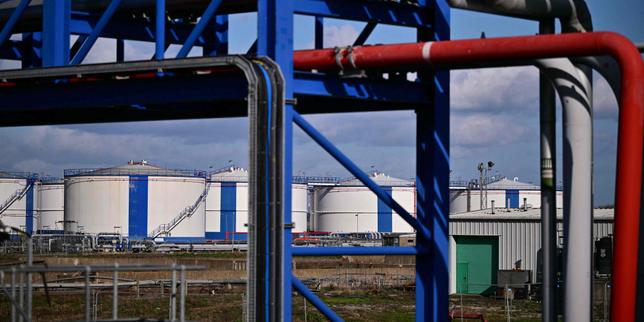
Most European reserves are calibrated for a world that no longer exists. They are designed to manage short-term physical disruptions—the kind of thing that happens if a refinery blows up. They are utterly useless against a multi-year geopolitical realignment. Releasing 30 million barrels into a market that consumes 100 million a day is like trying to put out a forest fire with a water pistol.
The real "reserve" isn't sitting in a salt cavern in Germany; it’s the ability of the European consumer to destroy demand. The 2022-2023 winter proved that high prices are the only effective policy tool we have. We didn't "innovate" our way out of the last crisis; we froze our way out of it by cutting industrial output. That is the "battle scar" the industry won't admit: our energy security is currently built on the back of deindustrialization.
Renewable Energy isn't "Green"—It’s Anti-War
The loudest voices in the energy debate frame renewables as a moral choice for the planet. They are wrong. Renewables are a cold, hard, cynical military strategy.
Every wind turbine in the North Sea and every solar farm in Spain is a direct hit against the influence of OPEC. The Middle East remains relevant only as long as we require a globalized supply chain for basic heat. The moment you electrify the base load, the geopolitical premium of the Middle East evaporates.
The irony? The same people crying about Middle Eastern instability are often the ones blocking the local mining of lithium or the construction of nuclear plants. You cannot have "sovereignty" if you are allergic to the infrastructure required to produce it. You are choosing to be a hostage to a geography you claim to fear.
$$E = mc^2$$ is the ultimate energy equation, but in the halls of Brussels, the equation is $Security = Diversity / Dependence$. We are failing the math because we are too scared to build in our own backyards.
The Crude Reality of Refineries
Here is a technical detail the "six-graph" articles always skip: not all oil is created equal.
Europe’s refinery system is optimized for specific grades of crude. You can't just swap Saudi Light for American WTI without massive technical friction. This is the real bottleneck. Even if we find the volume elsewhere, our physical hardware is still "tuned" to the Middle East and Russia.
Changing a refinery's diet takes months and millions of euros. This is where the real "consequence" of the crisis lies. It’s not about the price at the pump; it’s about the chemical engineering required to keep the lights on. We are locked into a legacy system that rewards our enemies and punishes our independence.
Stop Asking the Wrong Questions
The media asks: "Will the war in the Middle East cause a recession in Europe?"
The answer is: "Only if you let it."
A recession is a choice made by central banks and panicked CEOs. The actual physical lack of energy is a manageable problem if you have the guts to deregulate the energy market and stop subsidizing the status quo.
We are currently witnessing the "Death of the Middleman." The era where a few specific regions could dictate the economic health of the West is ending. It’s a messy, violent, and expensive death, but it is happening. The real "crisis" isn't that the oil might stop flowing. The crisis is that we still care so much that it does.
The Actionable Pivot
If you are running a business or managing a portfolio, stop hedging against "Middle East instability." That's a crowded, expensive trade. Instead, look at the following:
- Grid Hardening: The real money is in the bridge between the source and the socket.
- Storage Arbitrage: The ability to hold molecules for six months instead of six days is the only real form of energy sovereignty.
- Nuclear Resurgence: Small Modular Reactors (SMRs) are the only way to decouple industrial heat from global volatility.
The Middle East will always be a theater of conflict. It is a region defined by historical grievances and complex tribal dynamics. Expecting it to be "stable" so you can have cheap gas is the height of Western arrogance.
The goal isn't to fix the Middle East. The goal is to make the Middle East irrelevant to the European balance sheet. Every time we panic over a headline from Dubai or Tehran, we lose. The path forward isn't through the Suez Canal—it’s through the total, ruthless, and technical dismantling of our dependence on any single geography.
Build the terminals. Build the reactors. Dig the mines. Or shut up about the heating bill.
The era of the energy-dependent Europe is over, provided we have the courage to actually bury the corpse.