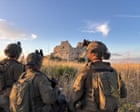
Israel just grabbed the strategic high ground in southern Lebanon, and Europe is furious.
The capture of the medieval Beaufort Castle by the Israel Defense Forces (IDF) marks the deepest ground penetration into Lebanese territory since the 2000 withdrawal. Perched on a jagged ridge dominating the Litani River, the fortress historically provided Hezbollah with a perfect vantage point to launch rockets and drones into Galilee communities. Now, Israeli flags fly over the ruins, and Prime Minister Benjamin Netanyahu is promising to push even further north.
The reaction from European capitals was swift, sharp, and entirely predictable. French President Emmanuel Macron led the charge, declaring that "nothing justifies the major escalation under way in south Lebanon." British Foreign Secretary Yvette Cooper and German officials quickly joined the chorus, demanding an immediate return to the fragile, U.S.-brokered April ceasefire that basically existed only on paper. France has even triggered an emergency UN Security Council meeting.
But behind the strong rhetoric lies a harsh diplomatic reality. Europe's protests are falling on deaf ears in Jerusalem because Western leaders are misreading why Israel is fighting, what it takes to secure the northern border, and how little leverage the West actually holds right now.
The Illusion of the April Ceasefire
The core of the European grievance is that Israel is tearing up the diplomatic framework established earlier this spring. The Western-negotiated truce was supposed to halt the cycle of violence between Israel and Iran-backed Hezbollah.
But ask any resident of northern Israel, and they'll tell you the ceasefire was an illusion.
Hezbollah never stopped launching drones and missiles. The group used the lull to rebuild the very infrastructure that the previous 2024 invasion failed to permanently erase. When the U.S. and Israel targeted Iran’s supreme leader back in March, Hezbollah responded by firing thousands of rockets, triggering the current all-out war.
Western diplomats keep calling for a return to UN Security Council Resolution 1701, which mandates that Hezbollah disarm and withdraw north of the Litani River. But for two decades, the international community did nothing to enforce it. UN peacekeepers looked the way while Iran poured billions into concrete tunnels and precision-guided munitions right under their noses.
Lebanese Prime Minister Nawaf Salam accuses Israel of implementing a policy of total destruction. From a humanitarian perspective, the toll is undeniable. Over a million Lebanese citizens are displaced, and thousands are dead. Yet, Israeli military commanders aren't looking at the diplomacy. They're looking at the topography.
Why Beaufort Castle Changed Everything
You can't understand this conflict without understanding the terrain. Beaufort Castle isn't just an archaeological site. It's a military jackpot.
The 14.5-kilometer Beaufort Ridge offers total line-of-sight visibility over northern Israel and the Nabatiyeh plateau. For years, Hezbollah utilized these heights for surveillance and direct-fire weapons. By seizing this ground, the IDF has effectively blindfolded the militant group in the border sector.
Israel learned the hard way in 1982, during the First Lebanon War, that leaving this ridge in enemy hands guarantees a permanent threat to its northern towns. Netanyahu’s directive to expand and deepen Israel’s hold on former Hezbollah strongholds is a direct response to a fundamental defense failure. The logic in Jerusalem is simple: if international guarantees won't keep Hezbollah away from the border, Israeli boots on the ground will.
The Real Reason European Diplomacy Is Failing
Why can't Europe stop the tanks? Because Brussels and Paris are bringing statements to a gunfight.
Europe’s leverage over Israel is largely economic, centered around the 1995 EU-Israel Association Agreement. Spain and Ireland have repeatedly demanded the suspension of this trade pact, pointing out that Israel is violating human rights clauses. The EU remains Israel's largest trading partner, and cutting ties could cost the Israeli economy over a billion euros annually while locking its tech firms out of vital European research programs.
But the EU is paralyzed by internal division. While French Foreign Minister Jean-Noël Barrot pushed through long-stalled sanctions against radical West Bank settlers last month after a leadership change in Hungary removed the country's veto, broad trade sanctions against Israel require total consensus. Countries like Germany, Austria, and the Czech Republic simply won't agree to economically isolate Israel during an existential multi-front war with Iranian proxies.
Furthermore, Washington is staying conspicuously quiet about the assault on Beaufort. While European leaders demand emergency UN sessions, the United States is holding separate bilateral talks with Israeli and Lebanese officials in Washington. Netanyahu knows that as long as American weapons keep arriving and the White House avoids public condemnation, European angry letters can be safely ignored.
What Happens Next on the Ground
If you're waiting for a diplomatic breakthrough this week, don't hold your breath.
While formal talks between Lebanese and Israeli officials are scheduled to continue, Hezbollah isn't at the table. The group has already stated it won't recognize any agreement negotiated over its head. Meanwhile, Iran is trying to tie a Lebanese ceasefire to the broader maritime situation in the Strait of Hormuz, attempting to force the West into a package deal.
Israeli commanders want to inflict maximum damage on Hezbollah's remaining missile infrastructure before any eventual international pressure forces a halt. Expect the IDF to use its new tactical positions on the Beaufort Ridge to launch deeper thrusts into the Beqaa Valley and western Lebanon, targeting command centers and resupply routes coming from Syria.
For Europe to regain a seat at the table, it has to stop repeating the failed talking points of the last twenty years. Demanding a return to status-quo ceasefires that leave terror armies entrenched on Israel's border is a non-starter. Until European leaders offer a credible, armed international force willing to actually police southern Lebanon and keep Hezbollah away from the border, their statements will remain what they are right now: background noise to a deepening war.
To see where this crisis is heading, watch the upcoming EU Foreign Affairs Council meeting. If member states fail to move past words and implement concrete trade restrictions, it's a green light for Jerusalem to continue its northern push indefinitely. If you want to understand the true trajectory of the war, ignore the speeches in Paris and watch the logistics lines moving north from the Litani River.