Estonia just hit the panic button on its eastern border, and honestly, it took them long enough. Following a fresh wave of sabotage attempts tied directly to the ongoing war in Ukraine, Tallinn is shutting down key border crossings with Russia. Most Western outlets treat this like another routine diplomatic slap on the wrist. They're wrong.
When a frontline NATO state physically seals itself off from Moscow, the fallout ripples way beyond Eastern Europe. If you think this is just a local squabble over customs checkpoints, you aren't paying attention to how hybrid warfare actually works on the ground.
What Actually Happened at the Estonian Border
Let's strip away the diplomatic jargon. Estonia shares a roughly 294-kilometer border with Russia, much of it running along the Narva River and Lake Peipus. For months, Estonian security services—specifically the Estonian Internal Security Service, known locally as Kapo—have been sounding the alarm over Russian intelligence operations spilling across that line.
Then came the latest sabotage attempts. We aren't talking about clumsy cyberattacks or angry tweets. We're talking about physical acts of vandalism, arson plots, and coordinated efforts to intimidate Estonian officials and disrupt critical infrastructure. In recent months, Estonian authorities have arrested multiple individuals recruited via Telegram by Russian intelligence handlers to smash car windows of government ministers, deface monuments, and probe border defenses.
Tallinn's response? Enough is enough. By moving to close border crossings—following the precedent set by Finland earlier—Estonia is cutting off the easiest physical transit routes for Russian operatives, smugglers, and weaponized migration flows.
- Narva-Ivangorod: The busiest crossing, which had already been restricted to pedestrian traffic after Russia refused to fix its side of the bridge for vehicles, faces total shutdown protocols during security spikes.
- Koidula and Luhamaa: The southern crossings, vital for whatever trickle of commercial transit remained, are now squarely in the crosshairs of permanent or indefinite closures.
It's a blunt instrument. There's nothing subtle about concrete barriers and razor wire. Yet when your neighbor treats every open gate as an invitation to send arsonists into your living room, you lock the door.
The Hybrid Warfare Playbook Nobody Wants to Admit Is Working
Here's the uncomfortable truth that policymakers in Brussels and Washington hate talking about. Russia doesn't need to roll T-90 tanks across the Narva River to destabilize a NATO member. Cheap sabotage works just fine.
Think about the economics of this. Recruiting a petty criminal or a desperate local via an encrypted messaging app costs Russian intelligence maybe a few hundred euros. That recruit throws a brick through an interior minister's car window or sets fire to a warehouse. Suddenly, Estonia has to deploy hundreds of extra police officers, divert intelligence resources, and deal with domestic political panic.
It's asymmetric warfare on a shoestring budget.
I've followed Baltic security policy for years, and the shift in tone from Tallinn over the last twelve months is unmistakable. Back in 2022, the focus was almost entirely on conventional deterrence—getting more NATO troops stationed at Tapa, buying HIMARS rocket systems, and building the Baltic Defense Line. Today, the immediate threat is internal disruption.
Why Sabotage Spikes When Ukraine Strikes Back
Notice the timing. Every time Ukraine lands a major blow—whether it's deep strikes inside Russian territory or holding the line against a Russian offensive—Moscow lashes out against Ukraine's staunchest backers. Estonia punches way above its weight in supporting Kyiv. Per capita, few nations have given more military aid to Ukraine than Estonia.
Moscow knows it can't easily hit Tallinn with a ballistic missile without triggering NATO's Article 5 collective defense guarantee. So it turns up the heat in the gray zone instead. Sabotage, GPS jamming in the Baltic Sea, and border provocations are Russia's way of saying, "Stop helping Ukraine, or we'll make your domestic life miserable."
How This Connects Directly to the War in Ukraine
You can't separate Estonian border security from the trenches in Donbas. They're two fronts of the exact same conflict.
First, look at logistics and sanctions evasion. Even with heavy European Union sanctions in place, dual-use goods—microchips, optics, industrial machinery—still find ways into Russia's war machine. Every open border crossing between the EU and Russia is a potential leak in the sanctions dam. Customs officers in Estonia have seized thousands of restricted items hidden in false-bottomed trucks and passenger luggage. Closing the crossings chokes off one of the last remaining smuggling arteries into northwestern Russia.
Second, there's the manpower and intelligence angle. Open borders allow Russian agents to rotate in and out of the Schengen Area with relative ease. While the EU banned most Russian tourist visas, dual citizens, permanent residents, and diplomatic personnel still crossed regularly. Shutting the gates forces Russian intelligence to rely on much riskier, longer routes through third countries like Turkey or Serbia.
Third, it frees up Estonian security forces. Guarding an active, open border requires massive manpower for passport control, customs inspections, and vehicle searches. When you seal a crossing completely, those border guards can be redeployed to patrol the green border—the forests and swamps between official checkpoints where actual infiltrators try to sneak through.
What Most People Get Wrong About Closing the Border
Whenever a Baltic state or Finland shuts down a crossing with Russia, the same predictable hand-wringing starts in Western media. Critics claim it hurts ordinary Russians trying to flee Putin's regime. Others argue it isolates the Russian-speaking minority living in Estonia, particularly in cities like Narva, where over 80% of the population speaks Russian as their first language.
Let's deal with both of those arguments honestly.
Yes, closing the border makes life harder for regular people who have family on the other side. No one denies that. In Narva, people used to walk across the bridge to Ivangorod just to buy cheaper groceries or visit grandparents. That era is dead, and it's sad for the locals caught in the middle.
However, national security isn't a charity. Estonian authorities have repeatedly warned their own citizens not to travel to Russia, pointing out that Russian border guards aggressively interrogate travelers, clone their phones, and actively try to blackmail them into spying for the FSB. Keeping the border open just so people can visit relatives essentially hands Moscow a steady stream of potential hostages and recruits.
As for Russian dissidents fleeing Putin? The truth is that the vast majority of Russians who wanted out left in 2022 or 2023. Today, the risks of infiltration far outweigh the humanitarian benefits of keeping open crossings with an openly hostile state.
The Baltic Defense Line Is Becoming a Physical Wall
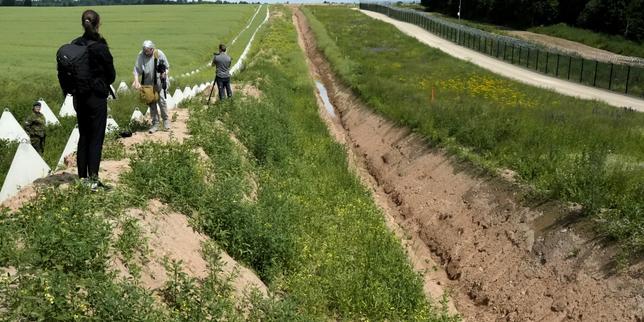
Estonia isn't acting in a vacuum. Alongside Latvia and Lithuania, Tallinn is actively constructing what's known as the Baltic Defense Line. This isn't just a political slogan. It's a massive network of bunkers, anti-tank ditches, dragon's teeth concrete obstacles, and sensor arrays stretching from the Gulf of Finland down to the Polish border.
Closing the road crossings is simply the logical first step in hardening that perimeter. You don't spend hundreds of millions of euros building concrete bunkers in the woods while leaving a four-lane highway wide open right next to them.
Finland proved how effective a hard border closure can be. When Russia tried to manufacture a migrant crisis on the Finnish border in late 2023 by funneling undocumented migrants from the Middle East and Africa toward Finnish checkpoints, Helsinki didn't blink. They shut down every single passenger crossing on their 1,340-kilometer border. The crisis stopped almost overnight because Moscow realized the tactic wouldn't work.
Estonia took notes. By moving decisively now, Tallinn is signaling to the Kremlin that weaponized migration and cross-border sabotage won't be tolerated.
The Economic Reality Nobody Mentions
Is there an economic cost to Estonia? Sure, a small one. Before 2022, transit trade with Russia was a decent chunk of Estonia's logistics sector. Ports like Muuga handled Russian fertilizers, oil products, and containers.
That business is already gone. Sanctions and corporate self-sanctioning wiped out legitimate Russo-Estonian trade years ago. What remained at the border crossings over the last year was mostly petty cross-border shopping, personal travel, and grey-market smuggling. Closing the border doesn't tank Estonia's economy because Estonia already took the economic hit years ago and moved on.
In fact, Tallinn's economy has pivoted aggressively toward Nordic integration, tech exports, and defense manufacturing. They don't need Russian transit money, which gives them the political freedom to slam the door shut without worrying about domestic business lobbies begging for mercy.
What You Should Watch For Next
If you're tracking European security, don't let this story disappear from your radar once the initial headlines fade. The border closure is a symptom of a much broader escalation across NATO's eastern flank.
Pay close attention to three specific developments over the coming weeks:
- Retaliatory provocations on the Narva River: Russia has a habit of removing navigation buoys in the border river or jamming GPS signals for civilian flights near Tartu and Tallinn. Expect Moscow to test Estonia's resolve with petty, deniable harassments right along the closed frontier.
- Latvia and Lithuania following suit: The Baltic states rarely move alone on major security decisions. If Estonia locks down its crossings completely, expect Riga and Vilnius to tighten their own border regimes with Russia and Belarus almost immediately to prevent smuggling and sabotage networks from simply shifting south.
- Internal security crackdowns: Closing the physical border only stops new operatives from walking in. Kapo and other European intelligence agencies will almost certainly ramp up arrests of existing sleeper agents and local recruits already operating inside EU territory.
If you travel in the Baltic region, register with your embassy, stay away from border exclusion zones, and follow local Estonian police advisories strictly. For everyone else watching from afar, take this border closure for what it actually is—proof that Europe's frontline states are done playing nice while Russia wages a shadow war on their soil.