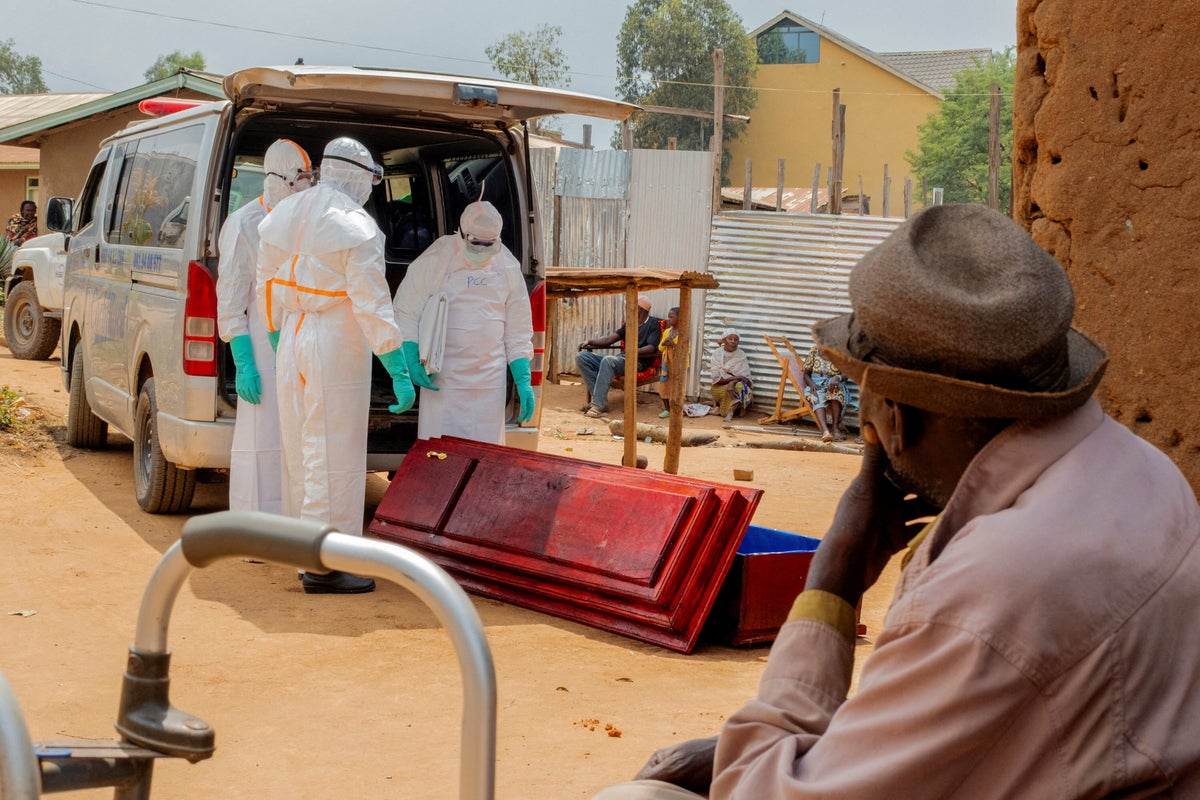
The containment of highly infectious pathogens depends on a predictable operational calculus: rapid diagnostic identification, immediate contact isolation, and standardized biomedical intervention. When the World Health Organization (WHO) escalated the national public health risk of the Ebola virus outbreak in the Democratic Republic of the Congo (DRC) to "very high," it signaled a systemic breakdown across all three variables.
The structural acceleration of this epidemic is driven by a critical biological mismatch. For weeks following the first recorded mortality in late April, regional health surveillance systems evaluated patient samples using diagnostic assays calibrated for the Zaire ebolavirus variant—the pathogen responsible for most historic outbreaks in the region. This diagnostic latency allowed the actual causative agent, the Bundibugyo ebolavirus strain (BVD), to propagate completely undetected through high-traffic mining corridors and dense population centers in Ituri province. The current epidemiological ledger reflects the compounding interest of this delay: confirmed cases have climbed to 82 with seven verified fatalities, while the wider clinical reality expands to nearly 750 suspected cases and 177 suspected deaths.
The Mechanics of Structural Transmission
To quantify the trajectory of the outbreak, the transmission dynamic must be viewed through a core structural framework: the environmental and biological vectors that dictate the reproduction number ($R_0$).
[Index Case / Animal Vector] ---> [Diagnostic Latency (Zaire vs. Bundibugyo)]
                                            |
                                            v
                                [Undetected Community Spread]
                                            |
               +----------------------------+----------------------------+
               |                            |                            |
               v                            v                            v
    [Artisanal Mining Hubs]      [Insecure Border Corridors]    [Traditional Burial Practices]
 (High-density labor mobility)  (950km porous Uganda border)   (Direct body fluid exposure)
The localized expansion is dictated by three highly volatile transmission variables:
- Asymmetric Mobile Demographics: The epicenters of Mongbwalu and Rwampara are anchored in artisanal mining networks. These economic zones operate via highly fluid, transient labor pools characterized by rapid, unmonitored migration. This structural mobility transforms localized infections into regional dispersal vectors before clinical symptoms trigger formal surveillance detection.
- Porous Cross-Border Corridors: The geographic proximity of Ituri province to the 950-kilometer Ugandan border introduces a high-velocity regional transmission path. Two cases have already been confirmed in Uganda from individuals traveling directly from the DRC, resulting in one fatality. While localized contact tracing and the cancellation of mass gatherings in Uganda have temporarily stabilized that specific axis, the border remains highly porous. The regional risk, consequently graded as "high" by the WHO, is a function of this cross-border friction.
- The Traditional Burial Amplification Loop: The pathobiology of Ebola dictates that viral load peaks within the tissue and fluids of deceased patients. Traditional mourning rituals, which involve direct physical contact with the deceased, function as super-spreader events. When security forces or external medical teams intervene to enforce safe, dignified burials without deep community integration, they encounter severe cultural resistance.
The Biomedical Countermeasure Deficit
The escalation to a national "very high" risk rating is fundamentally an acknowledgement of an absolute therapeutic deficit. Unlike outbreaks driven by the Zaire variant, which can be mitigated by established countermeasure suites, the Bundibugyo strain presents a critical asset gap.
The Vaccine Void
The Ervebo vaccine (rVSV-ZEBOV) leverages a vesicular stomatitis virus vector to express the glycoprotein of the Zaire variant. It offers zero cross-protection against the Bundibugyo variant. While public health officials have evaluated the deployment of a heterologous vaccine regimen designed for the Zaire and Sudan variants, this strategy carries severe operational risks. Deploying an unproven countermeasure that fails to demonstrably reduce transmission or disease severity risks permanently destroying community trust, rendering future, targeted vaccination campaigns logistically impossible.
Therapeutic Constraints
The monoclonal antibody treatments mAb114 (Ebanga) and REGN-EB3 (Inmazeb), which significantly reduced mortality rates in recent Zaire-strain epidemics, are structurally ineffective against BVD. Clinical management is restricted to aggressive supportive care—intravenous rehydration, electrolyte stabilization, and symptom management. Historically, the case fatality rate for untreated or supportively managed BVD ranges between 30% and 40%.
To fill this therapeutic void, the current intervention strategy relies on executing rapid clinical trials for Obeldesivir, an experimental oral small-molecule antiviral. Originally developed as a nucleotide prodrug for other viral indications, pre-clinical data suggests it may inhibit the viral RNA-dependent RNA polymerase of the Bundibugyo strain. The operational objective is to deploy Obeldesivir post-exposure prophylaxis among known high-risk contacts to abort viral replication before clinical onset.
The Operational Bottleneck: Sociopolitical Friction
A pathogen does not spread in a vacuum; its replication curve is shaped by the social architecture of the host environment. In eastern DRC, the humanitarian response is experiencing severe operational friction due to deep-seated institutional distrust and acute resource depletion.
The long-term exposure of the Ituri population to systemic regional conflict, shifting rebel militias, and perceived state neglect has fostered intense suspicion toward outside authorities. Public health interventions are frequently viewed not as humanitarian aid, but as hostile external incursions. This friction reached a breaking point in Rwampara, where a hospital isolation wing was set on fire by family members after medical staff refused to release a highly contagious body for traditional burial. Similar security breakdowns, involving threats against medical personnel by armed actors and local residents, directly compromise active surveillance. When epidemiological teams cannot safely enter a health zone to conduct contact tracing or verify alerts, the real-time data pipeline collapses.
This friction is compounded by a severely degraded baseline healthcare infrastructure. Severe international aid funding cuts enacted over the prior fiscal cycles have left local health zones without basic clinical assets. Surveillance teams lack reliable personal protective equipment (PPE), laboratory capacity is choked by supply chain delays, and basic triage architecture is missing. In sectors like Mongbwalu, suspected Ebola cases have been co-mingled within general hospital wards alongside uninfected patients, transforming local healthcare facilities into secondary amplification points.
Strategic Playbook for Containment Stabilization
Reversing the transmission curve requires shifting from a reactive crisis posture to a highly disciplined, localized containment strategy. The following actions define the critical path for halting regional escalation:
1. Decentralize Diagnostic Architecture
The reliance on centralized testing at distant reference laboratories creates an unacceptable turnaround latency. Operational priority must be given to deploying mobile, field-ready polymerase chain reaction (PCR) platforms configured specifically with Bundibugyo-specific primer sets directly to health zone triage hubs. Reducing the time-to-result from days to hours is the single most effective way to close the transmission window.
2. Standardize Isolation Triage in Existing Facilities
Immediate capital and material allocation must be directed toward physically segregating suspected cases from general patient populations. This requires the rapid construction of low-cost, high-barrier isolation units at every functioning clinic within a 100-kilometer radius of known clusters to halt nosocomial amplification.
3. Implement Low-Friction Community Co-Management
Public health agencies must cease top-down, enforcement-heavy compliance mandates regarding burials and isolation. Safe and dignified burial teams must be integrated with trusted local civil society leaders, elders, and community health workers who co-design the protocols. Respecting the social fabric while maintaining biological barriers is a strict prerequisite for operational security.
4. Accelerate Ring-Chemoprophylaxis Protocols
With international regulatory coordination, clinical protocols for the ring-deployment of Obeldesivir must be finalized within 48 hours. This entails mapping out defined geographical boundaries around confirmed cases and offering immediate, monitored oral antiviral regimens to all primary and secondary contacts, treating the molecule as a chemical shield to blunt the reproduction rate in the absence of a biological vaccine.