The Blue Mirage
Drive thirty miles north of Tampa, past the sprawling strip malls and standard suburban turnoffs, and the smell of asphalt eventually gives way to sun-baked grass. For decades, this part of Pasco County was defined by citrus groves, cattle pasture, and scrub oak. It was inland Florida: hot, flat, and miles away from the cooling breezes of the Gulf Coast.
Then someone dug a hole. A massive, fifteen-acre hole. If you liked this post, you might want to look at: this related article.
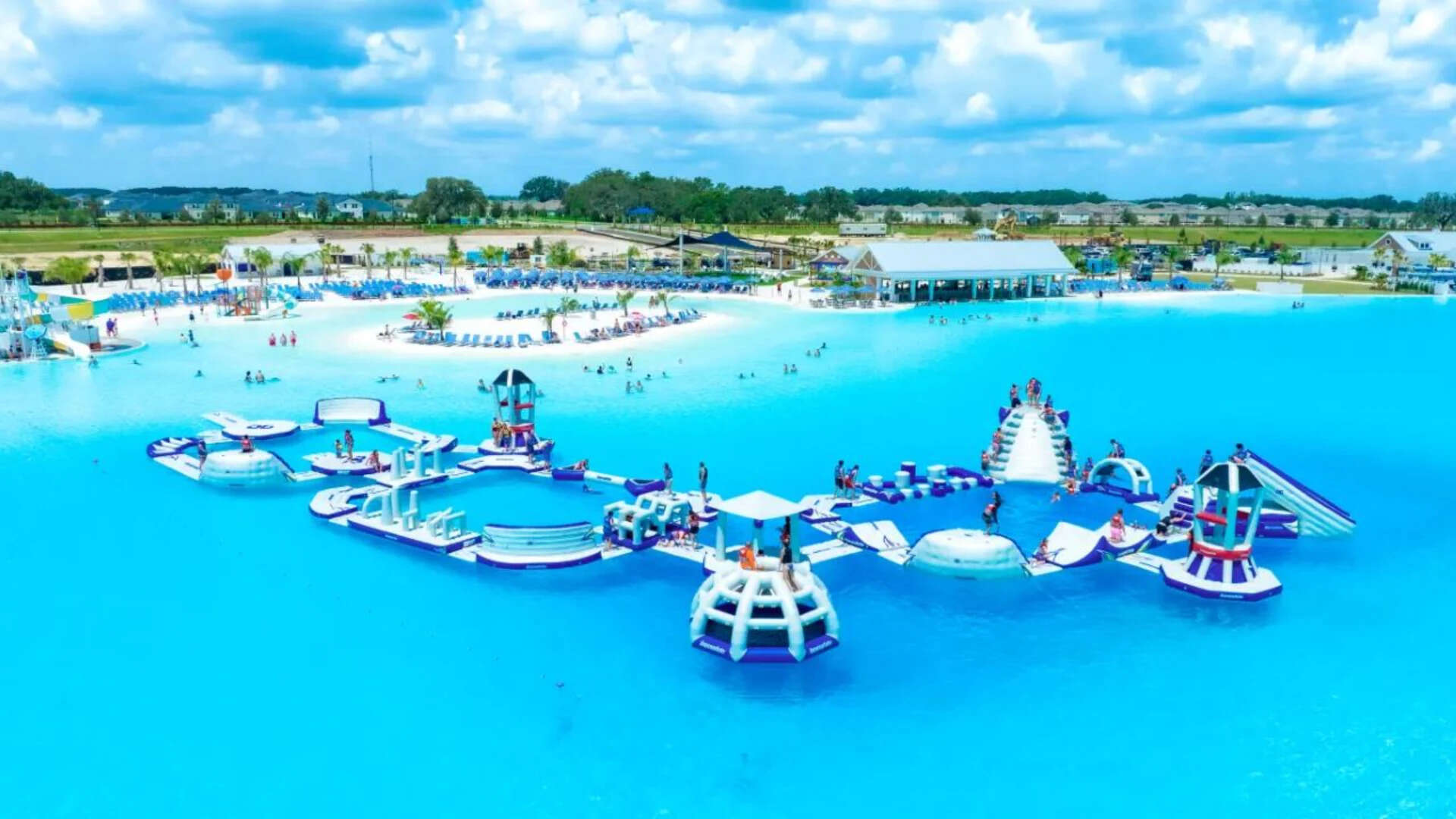
They lined it with thick membranes, filled it with tens of millions of gallons of water, and activated a specialized filtration system designed to keep the water an impossible, radiant shade of electric blue. Today, Epperson Lagoon sits like a dropped gemstone in the middle of a master-planned community. It is the largest artificial lagoon in the country, a body of water equivalent to roughly three hundred average residential swimming pools stitched together.
To stand on its artificial sandy shore is to experience a strange kind of sensory dissonance. Palm trees rustle in the breeze, paddleboarders glide across translucent water, and children splash near a floating obstacle course. Yet, directly beyond the surrounding perimeter wall, the pine flatwoods stretch out toward the highway. For another angle on this event, refer to the latest update from ELLE.
It is easy to dismiss this as mere novelty. But the urge to carve an inland ocean out of swamp and pasture reveals something much deeper about how we choose to live, what we expect from our homes, and our endless obsession with domesticating the wild.
The Chemistry of an Inland Ocean
For generations, suburban development followed a predictable rhythm. Builders bought land, put up rows of houses, built a modest community pool, and added a playground. But as coastlines became increasingly crowded, expensive, and vulnerable to unpredictable weather patterns, developers faced a quiet challenge: how do you sell the coastal Florida dream to someone buying a lot miles away from the beach?
The answer required serious fluid dynamics.
Traditional public pools rely heavily on massive doses of chlorine and continuous turn-over filtration, an approach that becomes impossibly expensive and ecologically impractical when scaled up to thousands of swimming lanes. The technology behind these mega-lagoons relies instead on a network of ultrasonic sensors and targeted micro-pulses of chemicals.
Note: While the lagoon looks like a natural Caribbean bay, it operates strictly through automated pulse-injection systems that use up to fifty times less energy than standard pool pumps and far fewer chemicals.
By injecting disinfectant only where and when bacteria levels spike, millions of gallons of water remain crystal-clear without turning into a chemical bath. The water stays smooth, pale blue, and unnervingly pristine. No seaweed clings to your ankles. No jellyfish float past. No tide pulls you out toward deep water.
It is nature stripped of its unpredictability.
What We Trade for Perfect Water
Consider a hypothetical buyer named Marcus. He moves his family from the humid, congested suburbs of Atlanta to Pasco County. He wants the sunshine. He wants his kids outdoors. But when he visits the natural Gulf beaches an hour away, he encounters red tide, parking gridlock, scalding hot asphalt, and sharp shell fragments underfoot.
Then he steps onto the boardwalk of an engineered lagoon.
The sand is cool, washed, and soft. The water is clear enough to see his toes three feet down. There are no sudden drop-offs or undertows. A concession stand serves cold drinks twenty yards from his beach towel. For Marcus, the choice feels effortless.
Yet there is a subtle quietness to these artificial ecosystems that takes a moment to process. Natural bodies of water breathe. They host fish, crabs, floating mangroves, and shifting currents. They smell of salt, decay, and marine life. An artificial lagoon does not breathe; it is maintained. It exists in a state of suspended animation, preserved against the encroachments of swamp life by technology and constant monitoring.
We trade the raw, unpredictable majesty of the natural world for comfort, safety, and guaranteed visibility.
Rebuilding the Modern Neighborhood
The impact of this shift goes far beyond real estate marketing brochures. It shifts the entire social center of gravity inside a residential neighborhood.
Historically, the American suburb was organized around private backyards. You built a fence, installed a grill, and spent weekends in isolated domestic quiet. The public space was limited to sidewalks and roads.
These massive aquatic hubs invert that dynamic. They act as public squares wrapped in tropical styling. On any given Saturday, hundreds of neighbors gather along the boardwalks, swim out to the center bars, or rent kayaks.
- Social density: Instead of isolated yards, residents share a single massive waterfront.
- Micro-economies: On-site restaurants, swim classes, and event rentals create self-contained mini-cities within residential zones.
- Property shifts: Homes situated directly along the artificial shore command premiums once reserved exclusively for oceanfront lots.
The line between a place to live and a resort destination disappears. People do not just buy a four-bedroom house; they buy admission to an ongoing summer vacation.
The Unseen Horizon
It is easy to look at a fifteen-acre pool in the middle of Florida farmland and see pure excess. It uses vast resources, reshapes the local hydrology, and converts working agricultural land into paved communities.
At the same time, it solves a very human problem. Millions of people are moving to sunny regions where existing natural infrastructure is already under immense strain. Public beaches are overcrowded. Coastal ecosystems are delicate. By building inland water destinations, developers divert thousands of weekend beachgoers away from fragile coastal habitats and into closed-loop systems.
Stand at the edge of the water as the afternoon heat peaks. The sun reflects off the vibrant blue surface, casting dancing patterns of light onto the surrounding homes. A gentle wave machine laps soft water against the artificial sand.
It is not the ocean. It was never meant to be. It is something entirely modern: a manufactured sanctuary carved out of the dry pine flatwoods, proving that if humans cannot easily reach the water, we will simply make the water come to us.