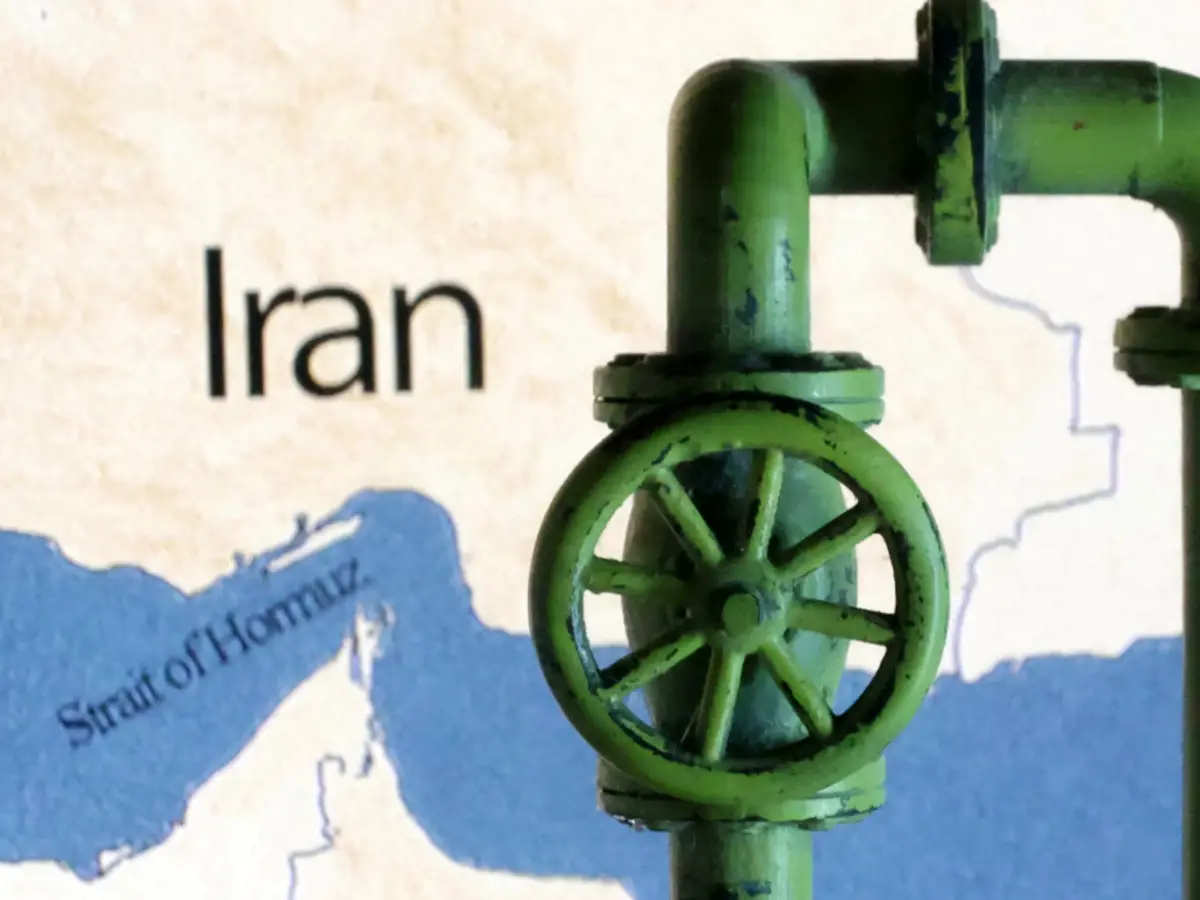
European equity markets are caught in a violent tug-of-war between desperate dip-buying and the cold reality of $105 oil. While major indices like the Stoxx Europe 600 and the DAX attempted to find their footing on Monday, the gains remain fragile. Investors are staring at a map of the Middle East and realizing that the temporary "rebound" might just be the eye of a storm. The core issue is not just the price of a barrel; it is the fundamental strangling of the Strait of Hormuz, a waterway that handles 20% of the world's supply and currently sits at a near-standstill.
The Hormuz Chokehold
Brent crude is hovering around $105 per barrel, a price point that acts as a tax on every European manufacturer and household. The market is reacting to the realization that the United States proposal for a naval coalition to escort tankers through the Strait is meeting significant resistance. France, the UK, and Germany have remained publicly silent or non-committal. Without a clear security guarantee, insurance premiums for tankers have reached levels that make shipping prohibitive.
Europe is particularly vulnerable because it lacks the domestic production cushion of the United States. While the International Energy Agency (IEA) has authorized a record release of 400 million barrels from emergency reserves, the math does not favor the bulls. This release is a bridge to nowhere if the primary supply route remains blocked. Analysts at Energy Aspects have pointed out that the IEA’s intervention, while historic, pales in comparison to the daily volume lost from the Persian Gulf.
Inflation Reborn
Just as the European Central Bank (ECB) thought it had a handle on consumer prices, energy-driven inflation has returned with a vengeance. Core Personal Consumption Expenditures (PCE) in the US recently hit 3.1%, but in Europe, the sensitivity to natural gas and oil imports creates a more direct threat to industrial margins.
The "merit order" system of the European electricity market means that as long as gas-fired power plants are needed to meet peak demand, electricity prices will track the soaring cost of fossil fuels. This creates a feedback loop. Higher energy costs force factories in Germany and Italy to scale back production, which leads to "stagflation"—the nightmare scenario of stagnant growth and rising prices. We are already seeing this in the revised GDP data, with fourth-quarter growth for the Eurozone struggling to stay above zero.
The Defensive Pivot
Smart money is moving away from discretionary retail and into deep-value sectors.
- Defense stocks are up 1.3% as regional instability drives government spending.
- Banking sectors are facing volatility as traders bet on whether the ECB will be forced to hike rates again to combat energy inflation, despite the risk of triggering a recession.
- Renewable energy stocks remain a long-term play, but they cannot replace the immediate shortfall of crude and LNG needed to keep heavy industry alive through the spring.
The current market "footing" is built on the hope that diplomacy will prevail where military signaling has failed. However, the disconnect between equity valuations and the reality of the energy supply chain is widening. If the Strait of Hormuz remains a no-go zone through the end of March, the current $105 ceiling for Brent will quickly become the floor.
Monitor the insurance "war risk" premiums for Suezmax tankers over the next 48 hours. If those rates do not soften, expect the European indices to surrendered their recent gains as the cost of doing business becomes mathematically unsustainable.
Would you like me to analyze the specific impact of these oil price shifts on the German automotive sector's profit forecasts for the remainder of 2026?