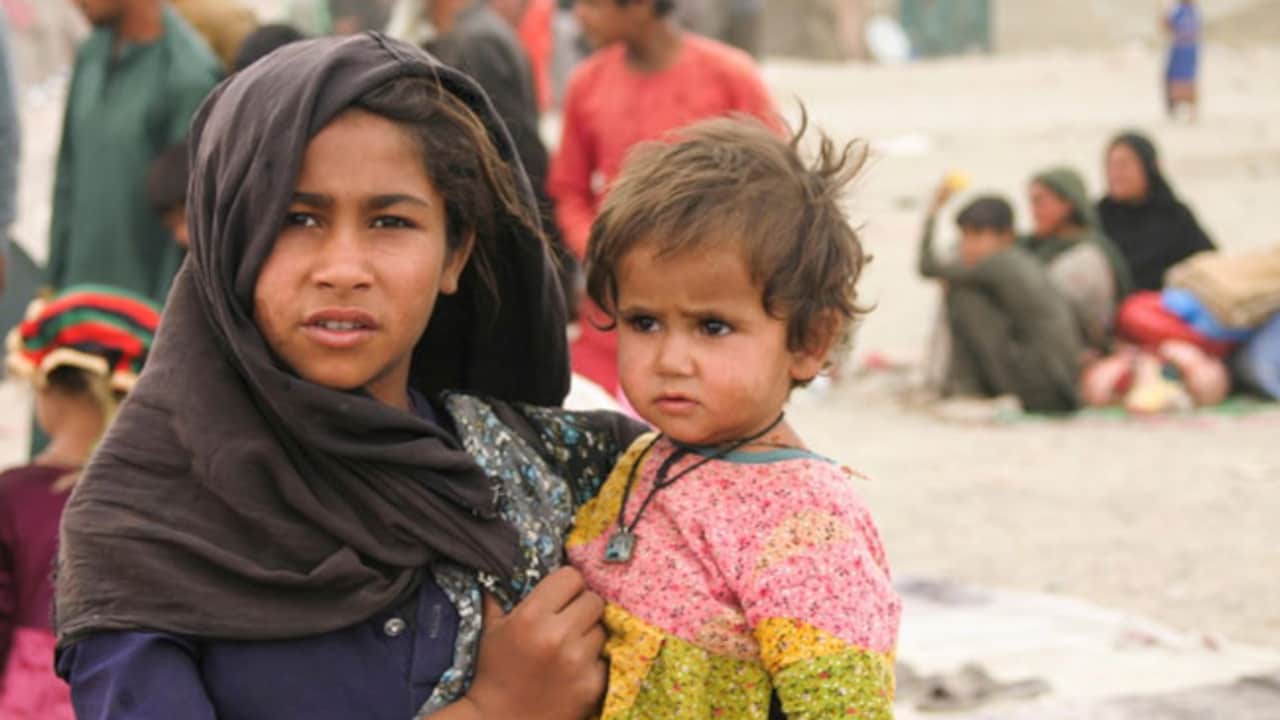
Every six months, the United Nations rolls out the same tired press release. Another million children at death's door. Another billion-dollar appeal. Another chorus of hand-wringing from Geneva to Washington, begging donors to open their checkbooks for emergency therapeutic feeding packets.
It is the most successful humanitarian grift of the twenty-first century.
And it is killing the very people it claims to save.
I have spent the better part of two decades watching foreign aid machinery operate in fragile states, and the Afghanistan intervention stands as a masterclass in institutional blindness. We treat chronic, systemic economic collapse like an acute famine. We drop sacks of fortified peanut paste and imported wheat flour onto a population that needs functioning markets, stable currency, and local agricultural autonomy.
The lazy consensus holds that if a child is malnourished, you shove calories down their throat. Simple. Humane. Except that every single plane-load of foreign food aid undercuts local farmers, crushes grain prices, destroys indigenous distribution networks, and ensures that the next generation will be just as dependent on charity as the last.
Let us look at the data the UN prefers to bury in its annexes. When you flood a broken market with free foreign commodities, you signal to every wheat producer in Helmand and Herat that their labor is worthless. Why plant a crop when foreign NGOs are giving away subsidized grain shipped in from thousands of miles away? You destroy the supply chain from the root, create permanent dependency, and then wonder why the malnutrition numbers bounce right back up the moment donor fatigue sets in.
This is not a food shortage. It is a market destruction engine fueled by guilt and bureaucratic self-preservation.
The Therapeutic Feeding Trap
The standard humanitarian playbook relies entirely on ready-to-use therapeutic food. Paste packets. High-energy biscuits. They save lives in the immediate crucible of an earthquake or an active war zone. But applying emergency triage to a chronic, thirty-year economic descent is economic malpractice.
When an aid agency hands out free imported food packets for months on end, two things happen. First, local merchants go bankrupt because they cannot compete with zero-dollar pricing. Second, parents stop investing in local economic resilience because survival is outsourced to foreigners.
I watched this play out in rural provinces where local millers stood outside distribution centers, holding bags of rotten local grain that nobody would buy because the UN containers were stacked ten feet high in the village square. We are trading long-term economic stability for short-term photo opportunities.
The professional humanitarians will tell you that children cannot wait for markets to rebuild. They are right about the children. They are catastrophically wrong about the remedy.
If you want to save an Afghan child, stop shipping containers of processed paste across borders. Hand cash directly to mothers through digital wallets tied to local markets. Let them buy fresh dairy, local vegetables, and regionally milled flour. That approach injects liquidity into dying rural economies, keeps local shopkeepers in business, and respects the dignity of a mother who knows how to feed her family better than some procurement officer in Rome.
The Myth of the Monolithic Crisis
Headlines love a clean villain and a clear victim. The UN report paints Afghanistan as a flat plain of uniform starvation.
The reality on the ground is infinitely more complex and infinitely more frustrating.
Kabul has functioning markets. Walk through the Mandawi district on any given Tuesday, and you will find stalls overflowing with pomegranates, mutton, almonds, and rice. The food is there. The calories are physically present in the country. The crisis is not a lack of supply; it is a catastrophic collapse of purchasing power driven by international sanctions, frozen central bank reserves, and the sudden evaporation of the foreign aid bubble that sustained the entire GDP for twenty years.
When you freeze a nation's financial system overnight and then substitute statecraft with bags of charity, you engineer the very poverty you pretend to alleviate.
Critics will call this heartless. They will argue that sanctions are necessary to pressure the de facto government. Fine. Have that geopolitical debate. But do not pretend that handing out imported peanut paste solves the economic violence of a severed banking sector. Be honest about the tradeoffs. When you choke off foreign exchange and ban ordinary banking transactions, you guarantee that families cannot afford local food. Piling bags of foreign aid on top of that structural failure is like putting a band-aid on an amputated limb.
The Unspoken Incentive Structure
Why does this cycle persist? Follow the budget.
An international organization cannot go to its donors and say, "We fixed the market, you can stop funding us now." Bureaucracy demands expansion. Crisis guarantees funding. The entire humanitarian apparatus in Kabul is incentivized to maintain the emergency status indefinitely because perpetual emergency equals perpetual employment.
Every time a report declares one million children at risk, executive compensation packages are justified, logistics contracts are renewed, and another round of glossy annual reports hits donor desks. The system is perfectly designed to perpetuate the problem it claims to solve.
Imagine a scenario where the international community completely cuts off in-kind food drops for six months and redirects every single dollar into capitalized micro-loans for local farmers and direct cash transfers for households.
The initial shock would be brutal. NGOs would panic. PR departments would melt down. But within two quarters, local grain production would surge, transport networks would re-emerge, and prices would stabilize based on real supply and demand rather than donor whims.
We refuse to take that risk because it requires letting go of control. Foreign donors love charity because charity comes with conditions, oversight boards, and the warm glow of moral superiority. Commerce and economic independence are messier. They require trusting local actors to run their own affairs.
Dismantling the Savior Complex
The hardest pill for the international development community to swallow is that their presence is often part of the pathology.
For decades, Afghanistan was treated as an international NGO playground. Billions poured in, creating an artificial economy built on rental inflation, security details, and imported consultants. When the collapse came, the shock was total because nothing had been built to stand on its own feet.
Continuing the same strategy with a different set of political constraints is not compassion. It is repetition of error.
If we genuinely care about infant mortality and childhood wasting in Central Asia, we must abandon the paternalistic reflex of the food drop. We must unfreeze the financial channels, let local commerce breathe, support regional agricultural infrastructure, and stop measuring our virtue by the tonnage of foreign calories we manage to truck across mountain passes.
The next time a UN press release drops with frightening statistics about starving children, do not ask how many billions more donors need to send.
Ask why the markets are still broken after twenty years of intervention.
Until we answer that question honestly, the aid shipments will keep rolling, the local farmers will keep going broke, and the children will remain exactly where the system needs them to be: perpetual props in a multi-billion-dollar tragedy.


