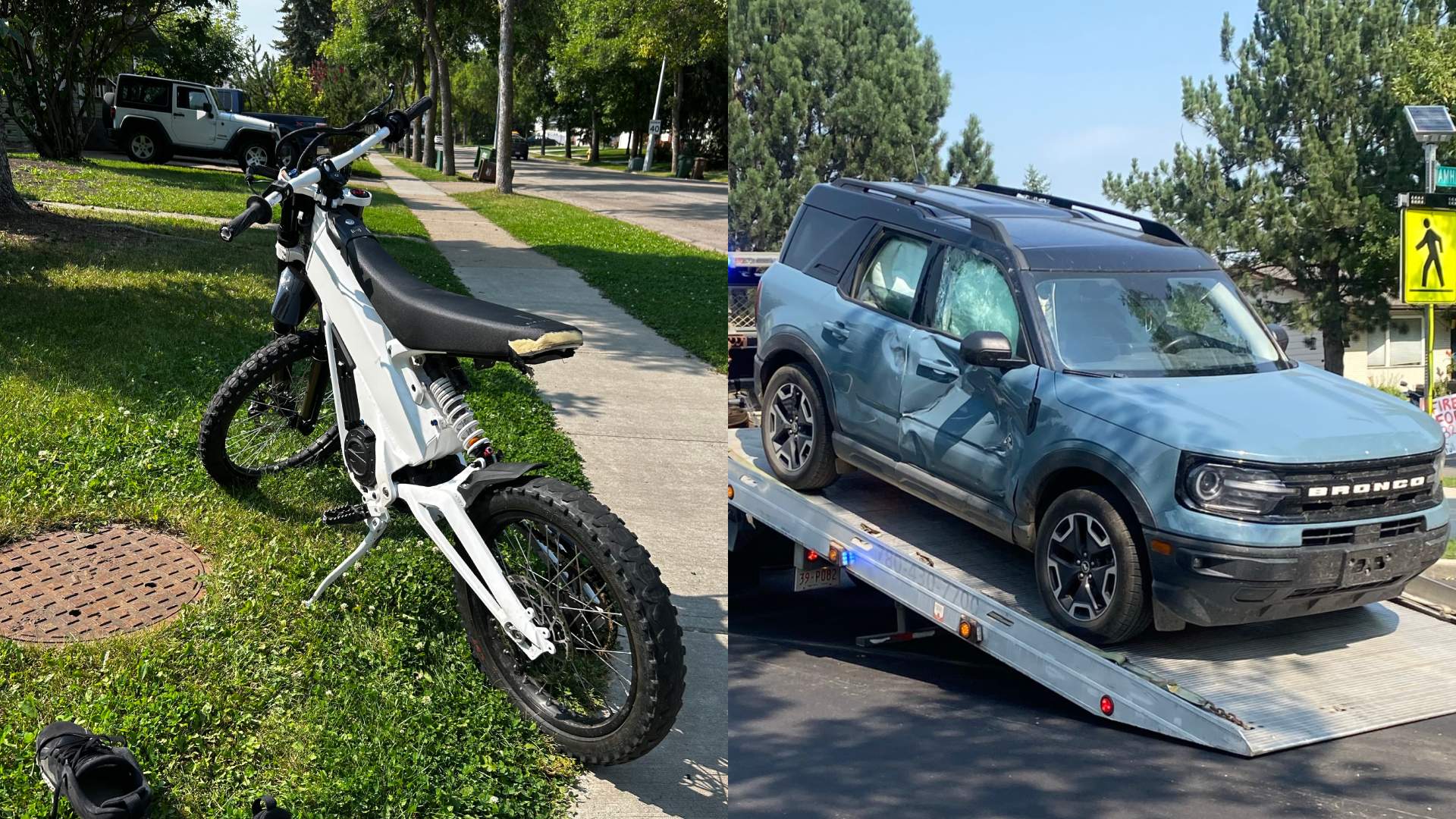
A crumpled Ford Bronco, deployed airbags, and a sixteen-year-old rider handed nearly $1,400 in fines. That is the reality of what happens when high-speed micro-mobility collides with urban traffic.
When RCMP officers responded to a collision on Akins Drive in St. Albert, they found a scene that emergency rooms across the country are seeing with alarming frequency. The teenage rider had smashed straight into the side of an SUV, deploying the vehicle's airbags and shattering a window before being rushed to the Stollery Children's Hospital.
It is an accident waiting to happen that finally materialized. Across cities and suburbs, a massive surge in emergency room visits is tied directly to the rise of unregulated electric mobility devices.
The Dangerous Confusion Over Electric Dirt Bikes
Most people see a battery-powered two-wheeler and assume it shares the same legal status as a bicycle or a casual rental e-scooter. That misunderstanding is putting riders in grave danger.
Electric dirt bikes do not have pedals. They do not idle at twenty kilometers per hour. These are high-speed, off-highway motor vehicles capable of rocketing through residential neighborhoods at velocities meant for dirt tracks and private backcountry trails.
Operating these machines on municipal streets, sidewalks, or public pathways is completely illegal in many jurisdictions. Yet, parents keep buying them for teenagers who treat public asphalt like their personal motocross playground.
When a 16-year-old hits a heavy SUV, physics does not care about how quiet the electric motor is. The passenger-side doors of the Bronco involved in the St. Albert crash were completely crumpled from the impact. The rider walked away with a trip to the hospital and a stack of fines totaling nearly $1,400, which is honestly a mild outcome considering how bad it could have been.
Why Hospitalizations Are Spiking
Emergency departments are tracking a sharp upward trend in severe trauma cases linked to e-mobility. It is not just traditional e-bikes causing trouble. The market is flooded with cheap, high-powered imported bikes that lack proper braking systems for pavement.
- Speed Mismanagement: Riders used to bicycles cannot handle how fast electric torque accelerates a heavy frame on paved roads.
- Lack of Infrastructure: Cities are scrambling to build bike lanes, but these lanes are designed for slow-moving commuters, not 50-kilogram electric motorcycles tearing along at highway speeds.
- Inadequate Protection: While the teen in St. Albert wore a helmet, many riders skip even basic safety gear, assuming low-emission vehicles carry low risk.
Police detachments are running targeted traffic operations to crack down on illegal street riding, handing out fines and seizing equipment. But enforcement after the fact does little to fix a broken culture of safety.
What Needs to Change Right Now
If you own an electric dirt bike, or if you are a parent thinking about buying one for your kid, you need to understand the rules before disaster strikes. Keep these machines off public property entirely. Transport them to designated off-road parks where they actually belong.
Municipalities also need to step up public education campaigns. Slapping fines on injured teenagers after a crash is a reactive band-aid. Clearer signage at neighborhood parks, stricter import regulations on high-speed unregistered bikes, and direct dealer accountability would go much further.
Until local authorities and retailers bridge the gap between sales and safety laws, emergency rooms will keep treating preventable trauma, and quiet electric motors will keep surprising drivers at blind intersections.