The media frenzy surrounding Florida’s recent execution of its oldest death row inmate followed a script written in the 1990s. Outlets rushed to publish the killer’s last words, obsessing over the finality of the needle, the somber atmosphere of the execution chamber, and the supposed delivery of long-delayed justice. The standard narrative framed the decades-long delay as a failure of a legal system clogged by endless, soft-hearted appeals.
They are looking at the wrong map.
The standard outrage from tough-on-crime commentators screams that keeping a convicted murderer on death row for thirty or forty years is a symptom of legal weakness. Meanwhile, abolitionist critiques focus entirely on the cruelty of aging behind bars. Both sides miss the cold, hard, institutional reality.
Executing a geriatric inmate is not a triumph of ultimate justice. It is a confession of systemic logistical bankruptcy. We are not running a functional punitive system; we are running the world's most expensive, highly secured nursing homes, only to terminate the contract once the patient becomes too expensive to medicate.
The Geriatric Death Row Taxpayer Black Hole
The public loves to argue about the ethics of the death penalty. Nobody wants to look at the balance sheet.
When an inmate sits on death row for three to four decades, their legal status ceases to be the primary driver of their daily cost. Their biology takes over. According to data from the National Institute of Corrections, maintaining an elderly inmate costs between two to four times more than a younger prisoner. On death row, where single-cell housing, increased guard-to-inmate ratios, and isolated transport are mandatory, that multiplier skyrockets.
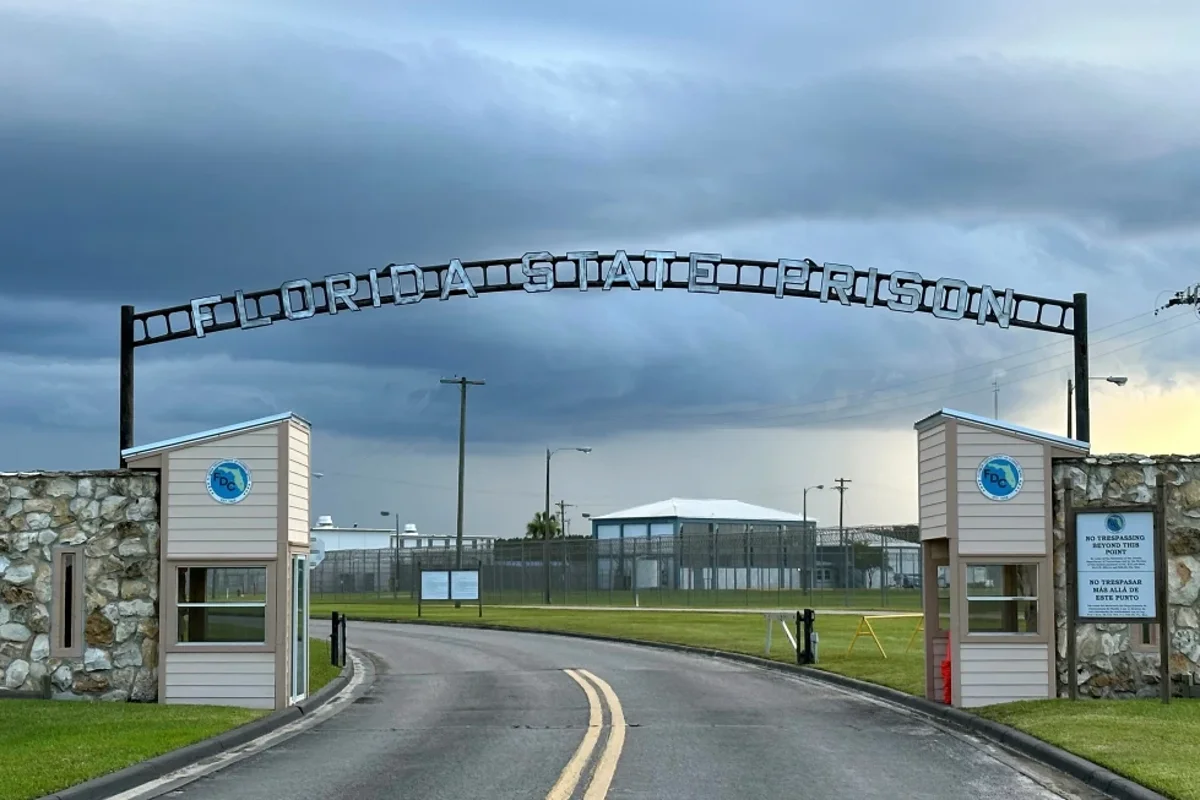
Consider what actually happens inside Florida State Prison. You have individuals in their late seventies and eighties suffering from advanced cardiovascular disease, cognitive decline, diabetes, and mobility loss.
- The Security Paradox: A seventy-eight-year-old man who needs a walker to reach the visitor room still requires a multi-guard escort because of his death row classification.
- The Medical Pipeline: Prisons are fundamentally unequipped for complex, long-term geriatric care. Every specialized oncology treatment, dialysis session, or advanced cardiac scan requires transport to an outside medical facility.
- The Bureaucratic Overhead: That transport requires a dedicated chase vehicle, armed correctional officers working overtime, and specialized hospital rooms retrofitted for inmate security.
I have watched state departments of correction burn through millions of dollars keeping a single human being alive with top-tier medical intervention, simply to ensure they survive long enough to be legally killed by the state. It is a bizarre, circular bureaucratic ritual. We invoke the highest standards of modern medicine to combat natural death, protecting our exclusive franchise on artificial death.
Dismantling the Deterrence Premise
People often ask: "Doesn't executing these high-profile, long-term inmates send a message that deters future violent crime?"
The short answer is no. The premise of the question ignores human psychology and criminological data.
Deterrence relies entirely on swiftness and certainty. When a criminal act is separated from its ultimate punishment by thirty-five years, the psychological link breaks completely. A twenty-year-old commitant a violent offense today does not look at a seventy-eight-year-old being executed for a crime committed before the internet existed and think, "I better change my life choices."
The Capital Punishment Research Project and decades of empirical studies by criminologists like Michael Radelet demonstrate that the death penalty lacks a statistically significant deterrent effect compared to life without parole. When the execution takes place in the deep winter of the offender's life, the "message" isn't deterrence. The message is that the state moves at a glacial pace, accumulating massive storage costs along the way.
The Illusion of Finality for Victims
The competitor press loves to exploit the concept of "closure" for the families of victims. They paint a picture of a decades-old wound finally healing the moment the execution is pronounced complete.
Talk to the families who have actually ridden this train. The thirty-year wait does not offer closure; it offers a permanent, low-grade psychological water torture.
Imagine a scenario where your family is dragged back into the courtroom every three to five years for a new evidentiary hearing, an appellate review, or a clemency campaign. Every milestone of your grief is tethered to the state’s sluggish bureaucratic apparatus. The victim's family is forced to keep one foot in the worst day of their lives for the entirety of their adult existence.
By the time the execution occurs, the family members who originally sought vengeance or justice are often elderly themselves, or dead. The execution of a geriatric inmate is frequently witnessed by the children or grandchildren of the original victims—people who have no living memory of the person who was lost, yet were raised in the shadow of a perpetual legal war.
Life without parole, delivered swiftly and cleanly within twenty-four months of indictment, removes the offender from the public ledger permanently. It stops the media circus. It cuts off the endless platform for the killer's "last words." It allows the healing process to begin without a decades-long government dependency.
The Complicity of the Media Circus
The publication of a killer's last words is presented as public-interest journalism. In reality, it is lazy, click-driven voyeurism that actively subverts public understanding of institutional failure.
By focusing on the drama of the final twenty-four hours—the last meal, the spiritual advisor, the final statement—the press transforms a bureaucratic execution into a cultural event. This spectacle completely obscures the preceding thirty years of systemic mismanagement. It allows politicians to claim a victory for law and order without ever answering for the millions of dollars wasted keeping a dying man comfortable enough to make it to the gurney.
The public is fed a narrative of resolute state power, when they are actually witnessing the final act of an incredibly inefficient state-sponsored hospice program.
The Operational Reality
If the goal of the justice system is swift, decisive punishment, the current death row infrastructure fails on every metric. If the goal is fiscal responsibility, it is a disaster.
The contrarian truth is simple: the state should stop chasing the ghost of the death penalty for aging inmates. Not out of mercy. Not out of a belief in rehabilitation. But out of a cold, calculated refusal to let the worst elements of society dictate public spending priorities through their own biological decay.
We must strip the romance and the moral grandstanding from this discussion. Stop asking whether an eighty-year-old deserves to die for a crime committed in 1985. Start asking why the taxpayers of Florida spent three decades paying for his cardiologist, his specialized diet, his legal counsel, and his high-security isolation cell, only to stage a media event at the end of his natural life.
The system isn't broken because people are escaping justice; it is broken because the state has become addicted to the expensive, performative ritual of executing grandfathers.