Thirty thousand feet above the Mojave Desert, the air inside a commercial airliner tastes faintly of recycled aluminum, dry skin, and lukewarm coffee. Most people are asleep, their necks crooked against scratched plastic window shades, dreaming of whatever awaits them at the end of a long haul.
Then, someone looks over a shoulder.
A thumb taps a glass screen. Eight letters appear in a glowing text bubble. Hijacking.
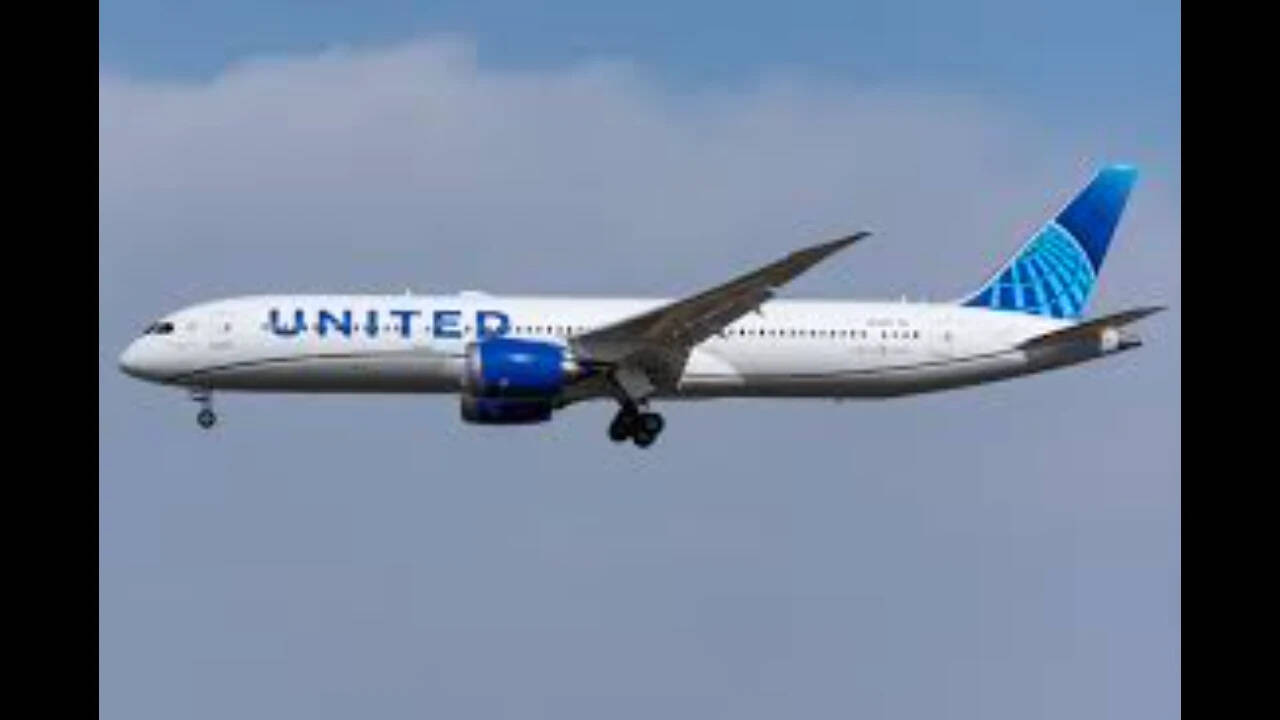
That single word, glimpsed by a passing flight attendant on a United Airlines jet climbing out of Las Vegas, did not just alter the trajectory of a Boeing 737. It collapsed the invisible architecture of trust that keeps modern aviation airborne, turning a routine departure from Harry Reid International Airport into an emergency turnaround, a tactical police boarding, and an overnight ordeal for roughly 150 exhausted human beings.
Stop. Think about what happens in the nervous system of a flight attendant when those eight letters register on the retina.
We like to pretend that flying is merely public transit with better views. We complain about legroom, roll our eyes at the safety demonstration, and treat the cabin crew like glorified waitstaff in navy-blue polyester. Yet the moment a threat—real, imagined, or catastrophically misunderstood—enters the cabin, that illusion evaporates. Every flight attendant working in American airspace today operates under the long, cold shadow of September 11, 2001. They are not trained to give a passenger the benefit of the doubt when the word hijacking appears on a phone screen during ascent. They are trained to assume the worst so that nobody dies while they hesitate.
The Anatomy of a Thirty-Second Decision
To understand why a multi-million-dollar aircraft burns thousands of pounds of jet fuel to turn around and strand 150 people on terminal benches overnight, you have to step inside the galley during those first thirty seconds after the sighting.
Imagine—and let us be clear that this is a hypothetical reconstruction based on standard aviation security protocols—the physical choreography of that moment. The flight attendant sees the text. Her heart rate spikes instantly, flooding her bloodstream with adrenaline. She cannot ask the passenger, Excuse me, are you joking, or are you planning to storm the flight deck? If the threat is genuine, confronting the sender triggers the very crisis she is sworn to prevent. If the text is an out-of-context remark, a dark joke, or a reference to a movie plot, she has no safe way to verify that at 30,000 feet without risking the lives of everyone aboard.
So she walks calmly to the forward galley. She picks up the interphone. She speaks a coded phrase or a direct warning to the captain behind a reinforced, bulletproof cockpit door.
Behind that door, the pilots face a binary choice with zero margin for error. In aviation, there is an old, unforgiving rule: Never take a known problem into thinner air. Once a flight crew receives credible notification of a potential security threat inside the cabin, protocol dictates an immediate diversion to the nearest suitable airport. Because the United Airlines flight had recently departed Las Vegas, returning to Harry Reid International was the fastest way to put the aircraft back on solid ground where armed federal and local law enforcement could intervene.
The turn happens smoothly. Most passengers barely feel the bank angle change. Perhaps a few glance at the seatback map, frowning as the little white airplane icon loops back toward the Nevada desert instead of pressing onward. No frantic announcements echo over the PA system. Panic inside a pressurized metal tube is a contagion far harder to manage than an orderly landing, so crews routinely withhold the exact nature of a security threat until the wheels are locked on the tarmac and tactical teams are waiting at the gate.
One Hundred and Fifty Lives on Pause
When an airliner makes an emergency security return, the runway becomes a stage for quiet, terrifying precision.
Red and blue lights strobe across the tarmac in the desert dark. Armed officers from the Las Vegas Metropolitan Police Department and federal aviation authorities surround the jet. Inside, the cabin lights come up to full brightness—a stark, clinical glare that strips away the drowsy comfort of night flight. Passengers are told to keep their hands visible, leave their carry-on bags in the overhead bins, and wait.
Consider who sits in those 150 seats. Let us picture a composite of the people on any given night flight out of Las Vegas, grounded in the statistical reality of domestic air travel:
- A contractor heading home after a three-day trade show, whose toddler is expecting him at the breakfast table.
- An elderly woman traveling with a zippered pouch of insulin that must stay refrigerated, watching the clock tick past midnight.
- A college student on a tight budget who cannot afford a two-hundred-dollar last-minute hotel room on the Strip.
- A nervous flyer gripping the armrests, convinced for twenty agonizing minutes that they are living through the opening scene of a tragedy.
Nobody boards a flight expecting to become collateral damage in a text message. Yet when federal law enforcement boards a plane to investigate a potential hijacking, speed and thoroughness override comfort every single time. The aircraft becomes an active crime scene until proven otherwise. Passengers are deplaned row by row, questioned, screened, and held in secure areas while bomb-sniffing dogs and officers sweep the cabin, the cargo hold, and the digital footprint of the person holding that phone.
Hours bleed away. By the time investigators determine whether the threat was a malicious hoax, a reckless misunderstanding, or a genuine security breach, the flight crew has timed out.
Federal Aviation Administration regulations are strict on this point, and for good reason: pilots and flight attendants cannot legally operate a commercial aircraft beyond their maximum duty hours. Fatigue kills. Even after law enforcement clears the plane and clears the passengers, the jet cannot simply take off again with an exhausted crew at the controls. A replacement crew has to be sourced, briefed, and transported to the gate—often an impossible puzzle at two o'clock in the morning.
And just like that, 150 strangers are stranded overnight.
Why One Word Costs Millions and Ruins Nights
People often ask why airlines and federal authorities react with such overwhelming force to a single text message, especially if it turns out to be a false alarm. Why not just confiscate the phone, detain the passenger at the destination, and let everyone else get home on time?
Because an airplane is not a city bus. You cannot pull over to the curb if you guessed wrong.
Think of commercial aviation security like a fire suppression system in a library full of irreplaceable manuscripts. When smoke hits the sensor, the sprinklers do not wait to see if someone merely lit a match to read a label or if an arsonist just torched the stacks. The water dumps immediately. Books get ruined. Carpets flood. Everyone gets soaked and miserable. You accept the collateral misery because the alternative—waiting until the whole building is engulfed in flames—is unthinkable.
Since 2001, federal law has treated interference with a flight crew and false threats involving aircraft with zero tolerance. Under Title 49 of the United States Code, conveying false information about a hijacking or bombing is a federal felony carrying severe prison time, massive fines, and a permanent spot on no-fly lists. Airlines also routinely seek civil restitution from disruptive passengers to recover the staggering cost of a diversion—which easily climbs into the tens of thousands of dollars when you factor in dumped fuel, landing fees, overtime pay, and hotel vouchers.
Wait. What about those hotel vouchers?
Here is the bitter irony that greets stranded passengers at the customer service desk at three in the morning: When a flight diverts for a security incident caused by a passenger, the airline classifies it as an extraordinary circumstance outside its control.
I have stood in those fluorescent-lit airport lines at dawn, my eyes gritty from lack of sleep, watching exhausted parents try to negotiate a cot for a crying baby while an overworked gate agent repeats the same scripted apology. Under Department of Transportation guidelines, airlines are generally only required to provide meals and hotel accommodations when delays or cancellations are within the airline's control—such as mechanical failures or crew scheduling errors. Weather, air traffic control ground stops, and law enforcement security emergencies fall into a gray zone where compensation is discretionary rather than guaranteed.
Even when an airline tries to do right by its passengers, finding 150 empty hotel rooms in a city like Las Vegas during a busy convention weekend or holiday rush can be logistically impossible. The result is a familiar, dismal tableau: hundreds of grown adults curled up on rigid terminal chairs with armrests specifically designed to prevent lying down, using backpacks as pillows while automated announcements remind them not to leave their luggage unattended.
The Invisible Contract We Sign at the Gate
We live in an era of casual hyperbole. We text I'm dying when something is funny, I'm going to kill him when a coworker misses a deadline, and we throw around loaded words on glowing screens without considering who might be standing six inches behind our shoulder in a cramped cabin.
Privacy on an airplane is a pure fiction. Your screen is a billboard to anyone standing in the aisle.
When you step across the threshold of a commercial jet, you enter an unspoken social contract with every other person on board. You surrender a degree of personal freedom, speech, and privacy in exchange for the miracle of hurtling through the stratosphere at five hundred miles an hour in relative safety. That contract works only because everyone agrees to respect the fragile psychology of shared confinement.
The flight attendant who spotted that text did her job with textbook courage. She saw a word that has haunted her profession for a quarter-century, and she refused to gamble with 150 lives on the hope that it was innocent. The pilots did their job by putting the aircraft on the ground immediately. Police did their job by swarming the gate and neutralizing any possible danger.
Every link in the safety chain held. Nobody was hurt. No weapon was found. The system worked exactly as designed.
Yet as morning light finally spilled across the concourse in Las Vegas—illuminating wrinkled clothes, dead phone batteries, missed weddings, missed surgeries, and children sleeping upright against strangers' shoulders—the true weight of those eight letters became impossible to ignore. Somewhere in that terminal, 150 people were finally boarding a replacement flight, staring down at their own phones with a quiet, newfound awareness of just how thin the glass really is between a normal Tuesday and a nightmare.