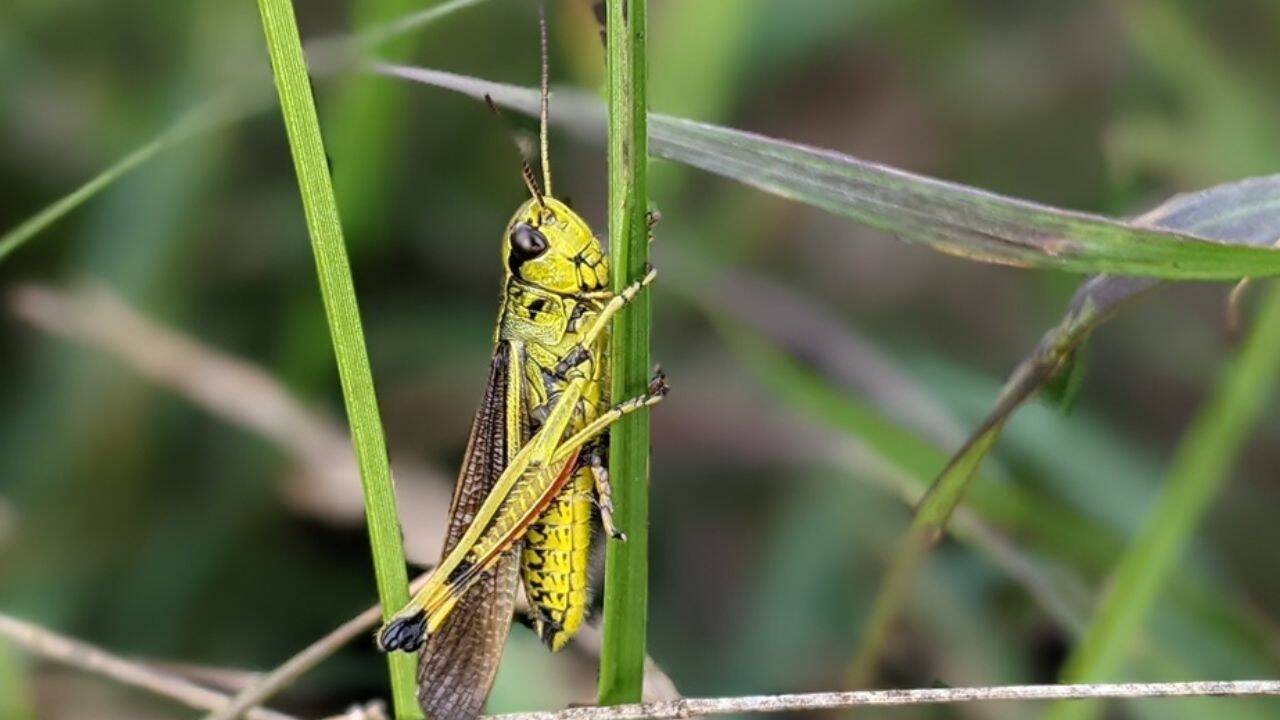
Thousands of rare Large Marsh Grasshoppers (Stethophyma grossum) have returned to the Norfolk Broads, marking a triumphant milestone nearly nine decades after the species vanished from English wetlands due to agricultural drainage and habitat loss. Biologists released the captive-bred insects into restored fenland habitats, resurrecting an ecological link that was severed eighty-six years ago. This reintroduction is not merely a nostalgic exercise for conservationists. It represents a brutal reckoning with how industrial land management nearly erased a foundational invertebrate from the British ecosystem.
For decades, the standard response to ecological collapse in the United Kingdom has been quiet resignation. Wetlands were piped, bogs were dried for turnip fields, and specialized species faded into museum drawers. The Large Marsh Grasshopper, unmistakable with its vibrant yellow-green coloring and crimson-tinted hind legs, was written off as collateral damage of the Second World War agricultural push. When food security meant turning every acre of fen into arable ground, insect biodiversity carried zero political weight.
The Mechanics of Extinction and Recovery
Understanding why these insects disappeared requires looking beneath the surface of the soil. The Large Marsh Grasshopper is an ecological specialist. It does not thrive on manicured pastures or heavily fertilized rye grass. Its survival depends entirely on acidic peat bogs and pristine fen vegetation like the tufted hair-grass (Deschampsia cespitosa). Females deposit their eggs deep into damp, sphagnum-rich soil matrices. If the water table drops by even a few centimeters, or if artificial nitrogen run-off from nearby farms alters the chemical composition of the peat, the eggs desiccate or fail to hatch.
When the last native populations winked out in Norfolk during the late 1930s and early 1940s, the cause was twofold. First came the physical destruction of the wetland architecture. Second, and more insidious, was the fragmentation of the landscape. Even if a few grasshoppers survived in an isolated pocket of marsh, they could not cross miles of dry, hostile farmland to find mates.
Reversing this trajectory took thirty years of quiet, unglamorous groundwork. Conservation scientists did not simply dump thousands of bugs into a random field. They had to rebuild the plumbing of the Norfolk Broads. Water levels were artificially raised to re-wet dried peat layers. Invasive scrub trees that sucked up vital moisture were cleared out by hand. Only when the hydrology of the fen mirrored its pre-industrial state did reintroduction become viable.
Breeding these insects in captivity is an exercise in microscopic precision. Facilities like zoos and specialist breeding centers had to replicate the exact winter freezing cycles required to trigger embryonic development in the eggs. A fraction of a degree too warm, and the diapause fails. Too dry, and the embryos die in their shells. The thousands of grasshoppers now hopping through Norfolk reedbeds are the survivors of meticulous, high-stakes laboratory protocols.
The Broader Ecological Stakes
Why should anyone care about a jumpy green insect that measures barely an inch and a half? Because grasshoppers occupy a critical rung on the trophic ladder. They are primary consumers that convert tough wetland vegetation into digestible protein for predators.
When the Large Marsh Grasshopper vanished, it created a structural vacuum in the local food web. Specialized predators that relied on large-bodied orthopterans—such as specific wading birds, predatory beetles, and rare spiders—lost a vital caloric source. By restoring the grasshopper, conservationists are attempting to restart a biological engine that has been idling on half-power for almost a century.
Yet, this victory comes with heavy caveats. The modern British countryside is fundamentally hostile to native wildlife. Surrounding the restored Norfolk fens are intensive agricultural operations pumping agrochemicals, pesticides, and synthetic fertilizers into the watershed. Aerial drift does not respect boundary fences. A sudden thunderstorm can wash agricultural runoff straight into a restored peat bog, instantly spiking nutrient levels and favoring aggressive, common weed species over the delicate sedges the grasshoppers require.
Furthermore, climate change introduces a terrifying volatility. Fen ecosystems depend on predictable seasonal moisture. Prolonged summer heatwaves bake the peat, turning spongy moss into tinder and threatening egg pods buried just beneath the surface. Reintroducing a species is easy; keeping it alive on a warming, chemically saturated planet is an entirely different operational challenge.
The return of the Large Marsh Grasshopper proves that ecological damage is not always permanent, provided society is willing to spend decades undoing the damage of past generations. But it is also a warning. Every restored wetland is an island in a sea of ecological degradation. Unless broader agricultural practices shift to respect the fragile hydrological boundaries of these refuges, these grasshoppers may simply be living on borrowed time in a gilded cage.