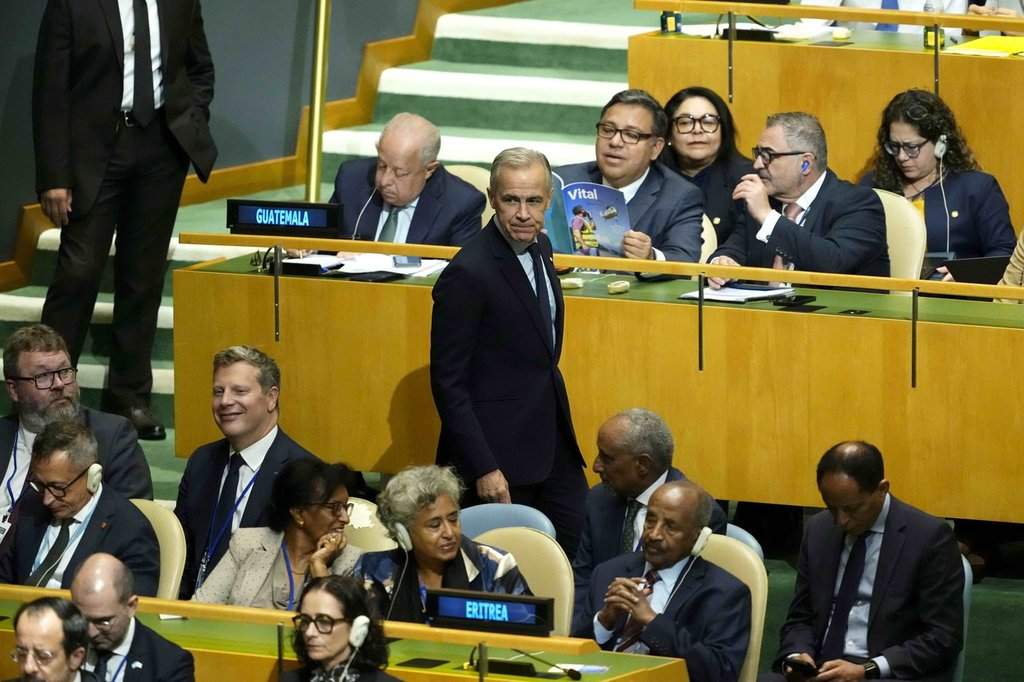
Foreign aid allocations in active conflict zones rarely function as simple charitable transfers. Instead, they operate as constrained capital injections governed by distinct friction coefficients, logistical bottlenecks, and diplomatic signaling mechanisms. When Prime Minister Mark Carney announced a C$100 million aid package for Palestinians at the United Nations General Assembly, the commitment broke down into two distinct operational buckets: C$80 million designated for immediate humanitarian relief and C$20 million directed toward peace, security, and police capacity building. To evaluate the efficacy and structural limitations of this fiscal intervention, one must examine the capital allocation mechanics, the physical degradation of recipient infrastructure, and the macroeconomic friction that renders traditional aid models vulnerable to systemic loss.
The Capital Allocation Matrix
A rigorous financial breakdown of state-level foreign assistance requires separating capital into two utility functions: consumption and institutional maintenance.
The primary allocation of C$80 million targets humanitarian consumption. In zones experiencing acute physical displacement and supply chain collapse, humanitarian capital functions purely as a depreciating asset. It covers consumables—food, medical supplies, and temporary shelter materials—that are consumed instantly with zero residual productive capacity. The velocity of this capital is high, but its multiplier effect on local economic recovery is near zero because the underlying physical infrastructure required to circulate wealth has been compromised.
The secondary allocation of C$20 million targets security capacity, specifically sustaining long-term programs intended to train Palestinian police forces in the West Bank. Unlike humanitarian relief, security expenditures represent an institutional investment. The objective is to preserve administrative continuity and maintain civil order. However, the return on investment for institutional capital depends entirely on jurisdictional stability. When territorial integrity is actively fragmenting due to geopolitical expansion and military operations, institutional capital suffers from high rates of policy leakage and administrative obsolescence.
The Infrastructure Degradation Cost Function
Evaluating foreign assistance without accounting for asset depreciation is an analytical error. Parliamentary disclosures running parallel to political announcements indicate that international donor investments face severe attrition in the region. In the West Bank alone, numerous donor-funded projects—spanning sanitation facilities, educational structures, solar energy arrays, and basic community infrastructure—have faced systematic destruction, physical damage, or administrative confiscation.
This creates a negative capital feedback loop:
- Donor Input: State actors inject capital to build sustainable local infrastructure (e.g., water treatment, agricultural wells, and power grids).
- Exogenous Shock: Military actions or settlement expansion physically dismantle or render these assets inaccessible.
- Write-Down: The capital value drops to zero, forcing donor governments into a perpetual cycle of replacement rather than cumulative development.
When infrastructure has a high probability of structural erasure, every dollar of aid spent on physical development carries an implicit insurance premium that donors rarely fund. Consequently, project lifecycles are artificially truncated, shifting the burden back to emergency humanitarian relief.
Trade Policy Interventions and Economic Leverage
State actors frequently couple humanitarian aid pledges with trade restrictions to exert diplomatic leverage. Alongside financial assistance, administrative moves to restrict trade originating from illegal territorial settlements represent a shift from fiscal charity to regulatory enforcement.
From an economic standpoint, the direct financial impact of banning settlement-origin goods is marginal when measured against total bilateral trade volumes. For instance, historical comparators in European markets demonstrate that goods originating from disputed settlements account for a minute fraction of overall exports compared to mainstream commercial trade with sovereign states. The utility of a settlement-goods ban does not lie in its immediate fiscal contraction of the target economy. Rather, its utility is legal and signaling-based: it aligns state regulatory frameworks with international judicial opinions, such as rulings from the International Court of Justice regarding the illegality of maintaining institutional or commercial ties to occupied territories.
This creates a bifurcation in state strategy. Governments attempt to satisfy domestic political demand for ethical foreign policy through selective trade prohibitions while simultaneously deploying humanitarian capital to manage the resulting human fallout on the ground.
Geopolitical Contiguity and Strategic Objectives
The strategic rationale articulated by donor leadership frames these financial packages around preserving the viability of a two-state solution. However, capital allocation faces a structural contradiction when concurrent land-use policies undermine territorial contiguity.
Urban planning projects and settlement expansions—such as those proposed in strategic corridors like the E1 zone in the West Bank—are designed to physically divide contiguous territorial landmasses. When physical barriers partition a region into isolated enclaves, the transaction costs of basic commerce, labor mobility, and administrative governance skyrocket.
Financial aid cannot substitute for territorial integrity. Injecting capital into an economically partitioned space without addressing the underlying logistical and physical fragmentation results in diminishing marginal returns. Every administrative obstacle that prevents the movement of goods and personnel devalues the currency of aid, transforming long-term development plans into short-term survival management.
Strategic Execution Framework
To transition from palliative aid management to high-yield intervention, state actors must alter their deployment architecture.
- Shift from Replacement to Accountability: Conditioning future financial assistance on explicit asset protection frameworks reduces capital write-offs. Donors must establish clear valuation metrics for physical infrastructure to shift the financial risk of asset destruction onto the actors carrying out the demolition.
- Integrate Trade and Aid Metrics: Financial pledges must align with comprehensive economic disincentives. Restricting targeted settlement goods is insufficient if broader capital flows and investment corridors continue to support the expansion of non-viable geographic fragmentation.
- Prioritize Adaptive Logistics: In environments characterized by high friction and infrastructure volatility, capital must be channeled through decentralized, highly mobile distribution networks that minimize reliance on fixed structural assets vulnerable to sudden physical removal.
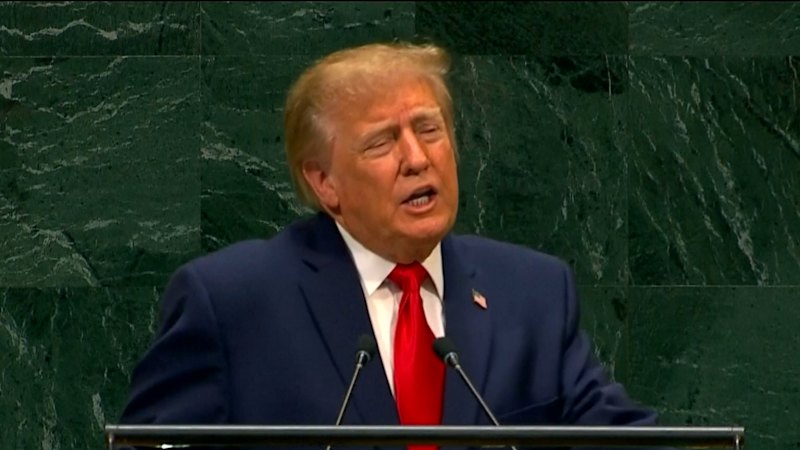
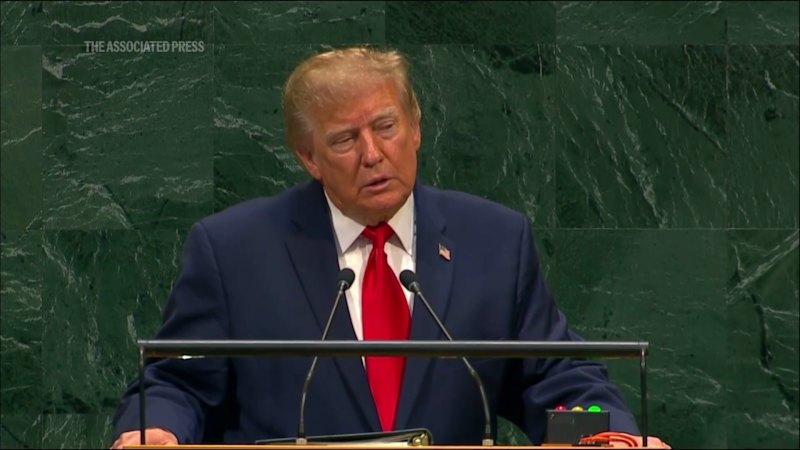
This video provides additional context regarding the geopolitical speeches and economic warnings delivered at the United Nations General Assembly surrounding the aid announcements.