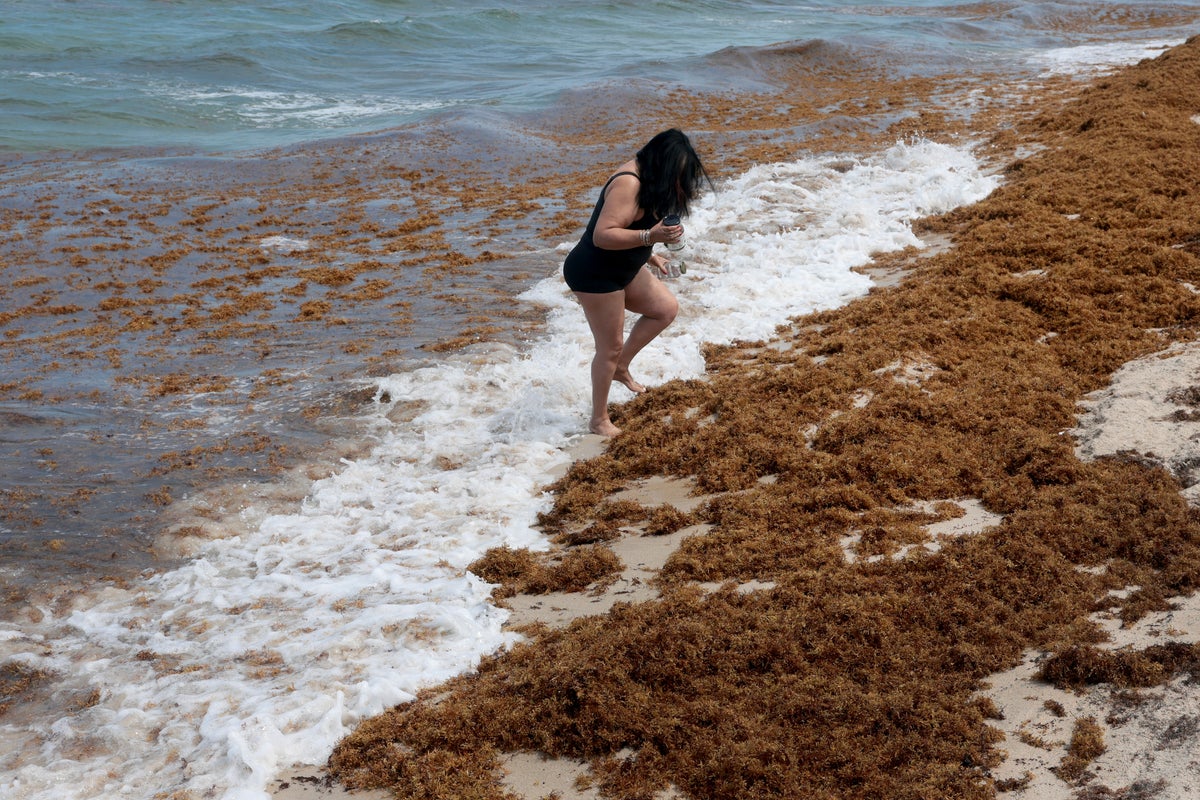
The annual stranding of pelagic Sargassum—a brown macroalgae that forms massive floating mats in the Atlantic Ocean—is no longer a localized, seasonal anomaly for Florida beaches. It is a predictable structural supply-chain disruption impacting tourism infrastructure, local municipal budgets, and coastal real estate valuation. When these colossal biomass accumulations wash ashore, they transition from vital marine habitats into highly destructive terrestrial burdens.
Evaluating this phenomenon as a mere aesthetic inconvenience underestimates the complex ecological and economic feedback loops at play. Coastal municipalities and private hospitality enterprises must shift from reactive beach-clearing protocols toward an asset-preservation model. Resolving this crisis requires deconstructing the biological mechanisms fueling the blooms, quantifying the true cost function of land-based disposal, and mapping the impending migration of this operational challenge up the Atlantic coast. For a more detailed analysis into this area, we recommend: this related article.
The Great Atlantic Sargassum Belt Mechanism
The macroalgal accumulations striking Florida do not originate from local waters, nor are they a transient symptom of isolated weather events. They are driven by a geographic and biological construct known as the Great Atlantic Sargassum Belt (GASB). This biomass field spans thousands of miles from West Africa to the Gulf of Mexico. For broader context on this issue, comprehensive reporting is available on Financial Times.
The proliferation of this belt relies on a multi-variable influx of nutrients that optimizes the growth kinetics of Sargassum natans and Sargassum fluitans. Understanding the structural drivers of this growth requires examining three distinct nutrient inputs:
- The Amazon River Plume: Agricultural runoff and deforestation along the Amazon basin introduce vast quantities of nitrogen and phosphorus into the Atlantic. Oceanographic currents trap these nutrients, creating a high-velocity incubation zone for the macroalgae.
- West African Upwelling: Deep, nutrient-rich oceanic waters are driven to the surface along the western coast of Africa by prevailing wind patterns, providing a steady baseline of inorganic nutrients.
- Equatorial Recirculation: The North Equatorial Recirculation Region acts as a continuous loop, trapping biomass in warm, well-lit waters that accelerate vegetative fragmentation—the primary method by which Sargassum clones and multiplies itself.
This combination of elevated sea surface temperatures and heavy agricultural runoff creates a compounding growth function. The algae doubles in mass roughly every 9 to 20 days under optimal conditions. This rapid replication creates an unavoidable downstream logistical challenge for North American coastlines.
The Chemical and Biophysical Cost Function
The operational crisis begins the moment Sargassum makes landfall. While floating at sea, the organism is aerobic, producing oxygen and supporting diverse pelagic life. Upon stranding, the macroalgae rapidly enters an anaerobic decay cycle, altering the physical and chemical profile of the shoreline.
The Hydrogen Sulfide Bottleneck
As the dense mats decompose without access to oxygen, bacteria break down the organic material, releasing hydrogen sulfide ($H_2S$) and ammonia gas. At low concentrations, $H_2S$ produces a distinct, repulsive olfactory profile that immediately depresses local hospitality revenue. At higher concentrations near major accumulation points, the gas presents severe occupational hazards for municipal beach crews, causing respiratory irritation, headaches, and nausea. The corrosive nature of $H_2S$ accelerates the oxidation and degradation of nearby electronic infrastructure, HVAC systems, and coastal property assets.
Heavy Metal Accumulation
A critical variable that eliminates traditional agricultural reuse options is the bioaccumulation properties of the macroalgae. Sargassum acts as a sponge for heavy metals present in the open ocean, most notably arsenic and cadmium.
Because the tissue concentrations of these toxins frequently exceed safe regulatory thresholds for organic fertilizers or animal feed additives, simple processing models fail. Depositing untreated raw biomass onto inland agricultural fields introduces a clear risk of groundwater contamination and crop toxicity.
The Municipal Dilemma: Mechanical Removal vs. Ecological Preservation
Local governments bear the immediate financial burden of removing thousands of tons of wet biomass daily to protect their tourism tax bases. However, the operational playbook for heavy beach maintenance introduces a series of systemic trade-offs.
The Mechanical Breakdown
Municipalities typically deploy mechanical rakes and front-end loaders directly onto the sand. This heavy industrial approach suffers from severe inefficiencies:
- High Mass Inefficiency: Mechanical collection is non-selective. For every ton of Sargassum removed, a significant percentage of beach sand is collected concurrently. This accelerates coastal erosion and strips the beach profile of its natural geometry.
- Fuel and Equipment Depreciation: Operating heavy diesel machinery continuously in a highly corrosive salt and $H_2S$ environment drives maintenance costs exponentially upward, shortening the lifespan of municipal fleets.
- Logistical Surcharges: The extreme water retention of the algae means that trucks are primarily transporting heavy saltwater to landfills. This increases tipping fees and operational fuel consumption.
Ecological Collateral Damage
The deployment of heavy machinery on the beach creates direct conflicts with environmental mandates. Heavy vehicles compact the sand, which destroys the nesting habitats of endangered sea turtles and crushes the small macroinvertebrates that form the base of the coastal avian food web.
Furthermore, nearshore mats block sunlight from reaching benthic seagrass communities, creating localized anoxic zones that kill fish and trigger long-term degradation of the shallow marine ecosystem.
Geographic Migration: The Threat to the Mid-Atlantic
While Florida and the Caribbean remain the primary impact zones, oceanographic models indicate that this problem is scaling geographically. The Gulf Stream serves as a high-capacity conveyor belt, carrying detached fragments of the GASB northward along the eastern seaboard of the United States.
[Great Atlantic Sargassum Belt]
       │
       ▼
[Caribbean / Straits of Florida] ───► (Primary Impact: Massive Stranding)
       │
       ▼ (Gulf Stream Transport)
[The Carolinas & Mid-Atlantic]  ───► (Secondary Impact: Seasonal Inundation)
The second limitation facing coastal managers is the warming trend of mid-Atlantic sea surface temperatures. Historically, colder waters north of Cape Hatteras acted as a natural thermal barrier, slowing down algal metabolism and preventing major blooms.
As nearshore waters trend warmer for longer stretches of the year, the structural conditions required for Sargassum survival and growth are moving northward. States like North Carolina, Virginia, and even parts of the northeast must prepare for seasonal inundations that will test municipal infrastructures unaccustomed to large-scale biomass management.
The Strategic Playbook for Asset Managers and Municipalities
Relying on terrestrial machinery to clean up stranded macroalgae is a failed strategy that targets the symptom rather than the supply chain. Capital must be reallocated toward a two-tiered intervention model based on marine interception and high-value industrial processing.
Upstream Marine Interception
To preserve beach infrastructure and avoid the sand-loss penalties of land-based heavy machinery, investment must pivot toward water-borne collection. This involves deploying specialized tactical barriers and sea-harvesting vessels.
- Deflection Booms: Non-disruptive, floating maritime barriers placed outside the surf zone can redirect incoming mats away from high-value public beaches and into designated, low-impact industrial recovery pockets.
- Harvesting Vessels: Utilizing modified fishing vessels equipped with low-angle conveyor belts allows crews to scoop Sargassum directly out of the water while it is still fresh, buoyant, and free of sand. This approach prevents anaerobic decay and eliminates the production of toxic gases on the shoreline.
Valued-Added Processing Limitations
Transforming this liability into an asset requires processing pathways that can handle heavy metal contamination.
One viable route is pyrolysis, a process where the biomass is thermally degraded in the absence of oxygen to produce biochar. This method locks away the carbon and concentrates toxins into a stable, non-leachable form, creating a structural additive for concrete or asphalt mix.
An alternative pathway is anaerobic co-digestion, mixing the algae with domestic wastewater sludge or food waste to generate biomethane gas, converting a municipal cleanup liability into a localized source of renewable energy.
The critical priority for municipal networks and coastal enterprise groups is clear: establish regional, cross-jurisdictional task forces to fund marine interception infrastructure before the seasonal arrival of the belt. Treating pelagic inundation as an unpredictable weather anomaly is no longer operationally defensible. It must be managed with the same rigorous, infrastructure-grade planning applied to stormwater management or wastewater treatment.