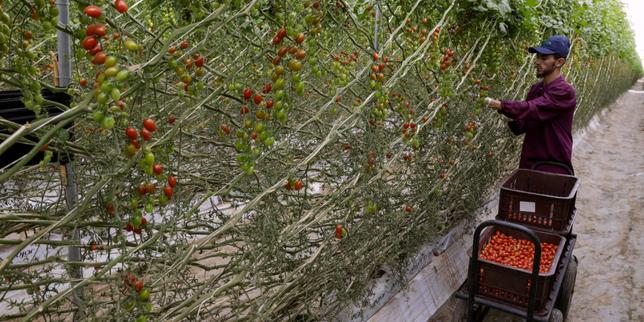
Morocco is executing a structural shift from rainfall-dependent farming to industrial water manufacturing. Facing a multi-year structural drought that has depleted dam reservoirs and exhausted fossil aquifers, the state has pivoted toward large-scale seawater desalination to sustain its high-value agricultural export sector. The core premise driving this capital allocation is simple: the economic loss of halting agricultural exports exceeds the high marginal cost of producing desalinated water. By underwriting massive public-private infrastructure projects like the Chtouka-Aït Baha plant, Morocco is attempting to decouple its horticultural output from climate volatility. This blueprint relies on cross-subsidizing agricultural water tariffs through municipal demand, integrating renewable energy to suppress reverse osmosis power costs, and restricting desalinated water use exclusively to high-margin export crops such as tomatoes, berries, and citrus.
The Structural Deficit Driving the Pivot
Traditional Moroccan agriculture relies on two failing inputs: surface water captured by dams and subterranean aquifers. Over the past decade, erratic precipitation has dropped average dam filling rates to historic lows, forcing authorities to cut off irrigation allocations to major agricultural basins like the Souss-Massa and Doukkala plains.
When surface water disappears, growers default to groundwater extraction. In the Souss-Massa region—the engine of Morocco's early-season fruit and vegetable exports—unregulated pumping has pushed water tables down by several meters per year. Extraction costs rise exponentially as pumps must pull water from greater depths, while saltwater intrusion degrades soil fertility along the coast. The physical limit of the aquifer is no longer a theoretical projection; it is an operational constraint halting production.
Under these conditions, agricultural planners face a binary choice:
- Abandon export-oriented horticulture, forfeiting billions in foreign currency reserves and eliminating hundreds of thousands of rural jobs.
- Manufacture freshwater at an industrial scale, absorbing the capital expenditure and higher unit costs to preserve market share in European supply chains.
The state selected the second option, treating water security not as an environmental conservation issue, but as an industrial supply chain necessity.
The Unit Economics of Desalinated Irrigation
The central friction in agricultural desalination is the mismatch between the cost of water production and the price farmers historically pay for irrigation. Reverse osmosis desalination is energy-intensive and capital-heavy. Even with modern energy recovery devices, producing one cubic meter of desalinated water carries a baseline cost dictated by amortization of capital expenditure (CAPEX), electricity tariffs, membrane replacement, and brine disposal.
Historically, Moroccan farmers paid heavily subsidized rates for dam water, often a fraction of a dirham per cubic meter, or paid only the diesel and electricity costs of pumping groundwater. Desalinated water delivered to the farm gate costs significantly more—frequently hovering around 5 dirhams per cubic meter even after state subsidies.
The Cost-Absorption Mechanism
For an agricultural operation to remain solvent using desalinated water, the crop must generate enough net revenue per cubic meter of water applied to absorb this input cost. This creates an immediate economic filter across crop varieties:
- Low-Value Staple Crops: Cereals, alfalfa, and traditional open-field crops require high volumes of water per kilogram of yield and command low market prices. Irrigating these crops with desalinated water results in immediate negative margins.
- High-Value Export Horticulture: Greenhouse tomatoes, blueberries, raspberries, and avocados yield high revenue per cubic meter. Growers in the Chtouka plain utilize precision drip irrigation, hydroponics, and climate-controlled greenhouses to maximize water-use efficiency (measured in kilograms of produce per cubic meter of water).
In this system, water transitions from a public utility to a precision industrial input. Growers no longer flood fields; they calculate exact evapotranspiration rates and nutrient delivery to ensure every liter of desalinated water translates directly into exportable tonnage.
The Public-Private Co-Financing Model
To prevent the unsubsidized cost of desalination from bankrupting growers, Morocco structures its desalination infrastructure through Public-Private Partnerships (PPPs) built on a dual-purpose distribution model.
The Chtouka-Aït Baha facility illustrates this architecture. Rather than building a standalone agricultural plant, the state combined agricultural irrigation demand with the potable water needs of Greater Agadir. This aggregation achieves two financial objectives:
- Economies of Scale: A larger plant capacity reduces the per-cubic-meter CAPEX and operational overhead.
- Cross-Subsidization and Risk Sharing: Municipal water utilities provide guaranteed off-take agreements backed by sovereign credit, lowering the financing risk for private consortiums. Meanwhile, the Ministry of Agriculture subsidizes the agricultural portion of the CAPEX, allowing farmers to buy water at a capped tariff while committing to strict per-hectare connection fees and minimum off-take volumes.
The Energy-Water Nexus and Decarbonization
Reverse osmosis pushes seawater through semi-permeable membranes at high pressure, making electricity the single largest variable operating expense (OPEX). Relying on a fossil-fuel-heavy electrical grid exposes desalinated agriculture to global energy price shocks and undermines the carbon footprint of exported produce—a growing liability as European retailers tighten environmental border standards.
To insulate water tariffs from energy volatility, Morocco links its desalination expansion directly to its renewable energy infrastructure. The strategy pairs coastal desalination plants with dedicated wind and solar power purchase agreements (PPAs).
In the southern provinces, such as the Dakhla desalination project, the integration is total: a dedicated wind farm powers the desalination plant directly, bypassing grid transmission bottlenecks and locking in a low, predictable levelized cost of electricity (LCOE). By fixing the energy input cost over a 20-to-30-year concession period, operators stabilize the marginal cost of water production, turning volatile meteorological risk into a predictable fixed financial obligation.
Ecological Externalities and Virtual Water Trade
While desalination solves the immediate supply bottleneck for export farms, it introduces secondary economic and environmental liabilities that complicate long-term planning.
The Virtual Water Paradox
Agricultural exports represent the export of "virtual water"—the volume of freshwater consumed to produce a commodity. Critics argue that a water-scarce nation should not allocate scarce capital and energy to grow water-intensive crops like avocados and berries for European consumers.
From a purely hydrological standpoint, exporting virtual water from an arid region appears irrational. From a macroeconomic standpoint, however, Morocco is executing an arbitrage play. The country lacks fossil fuel reserves and relies heavily on agricultural exports and remittances to balance its trade deficit. By importing energy technology and desalination equipment, converting seawater into high-value produce, and exporting that produce to the European Union, Morocco converts abundant solar, wind, and coastal resources into hard currency. The trade-off is deliberate: domestic hydrological balance is subordinated to foreign exchange generation and rural employment stability.
Brine Management and Marine Impact
Every cubic meter of freshwater produced via reverse osmosis generates roughly 1.2 to 1.5 cubic meters of hypersaline brine, mixed with pretreatment chemicals and anti-scalants. Discharging concentrated brine back into coastal waters increases local salinity and reduces dissolved oxygen levels, threatening benthic ecosystems and coastal fisheries.
Because Morocco’s Atlantic coast supports a massive fishing industry—another primary pillar of national exports—poorly engineered brine outfalls create direct inter-sectoral conflict. Mitigating this requires expensive diffuser systems that disperse brine over wide areas to accelerate dilution, adding further CAPEX to new projects.
The Exclusion of Smallholders
The high cost of desalinated water accelerates agricultural consolidation. Large agribusinesses with access to commercial credit, greenhouse technology, and direct European distribution contracts can absorb a 5-dirham-per-cubic-meter water tariff. Smallholder farmers, lacking capital to upgrade from open-field flood irrigation to precision drip systems, cannot achieve the yields required to pay for manufactured water.
As groundwater access is restricted to allow aquifers to recharge and surface water disappears, smallholders face forced exit from the sector. The state’s desalination strategy preserves national export volumes, but it simultaneously concentrates land and production capacity into the hands of capitalized corporate farms.
Operational Vulnerabilities in the Current Blueprint
Relying on industrial desalination to backstop agriculture carries three distinct failure modes that require continuous management:
- Aquifer Free-Riding: In regions where desalination pipelines run alongside existing wells, farmers are tempted to blend expensive desalinated water with cheaper illegally pumped groundwater to lower their average input cost. Unless authorities strictly meter and seal private boreholes, the primary ecological goal of desalination—allowing fossil aquifers to recover—will fail.
- European Regulatory Retaliation: European agricultural lobbies frequently challenge Moroccan imports over price competitiveness and phytosanitary standards. If European buyers impose carbon border adjustments or water-footprint labeling requirements, Moroccan exporters will face compliance costs that could erode the thin margins supporting desalinated irrigation.
- Infrastructure Concentration Risk: Centralizing water supply into a handful of massive coastal plants creates single points of failure. A mechanical failure, cyberattack, or marine algae bloom (red tide) that clogs intake filters can halt water delivery across thousands of hectares within days, destroying perennial orchards and seasonal harvests simultaneously.
Strategic Imperatives for Water-Stressed Agribusiness
To operate profitably within a desalinated agricultural economy, producers and policy planners must abandon legacy farming models and execute three concrete adjustments:
- Enforce Strict Metering and Borehole Moratoriums: Infrastructure subsidies must be tied to mandatory telemetry on all farm-level water intakes. Desalination cannot function as a supplemental supply; it must serve as a total replacement for groundwater extraction in over-exploited basins, backed by automated cutoffs for non-compliant growers.
- Mandate Closed-Loop Hydroponics for New Connections: Granting access to subsidized desalinated water for open-field cultivation wastes capital. New irrigation hookups should be restricted to closed-loop substrate or hydroponic systems that recapture and recirculate runoff, pushing water-use efficiency above 40 kilograms of produce per cubic meter.
- Index Water Tariffs to Export Revenue: Fixed water tariffs crush growers during years of European market gluts and price crashes. Concession agreements should incorporate variable tariff bands tied to export price indices, allowing producers to build financial reserves during high-margin seasons to subsidize water costs during market downturns.