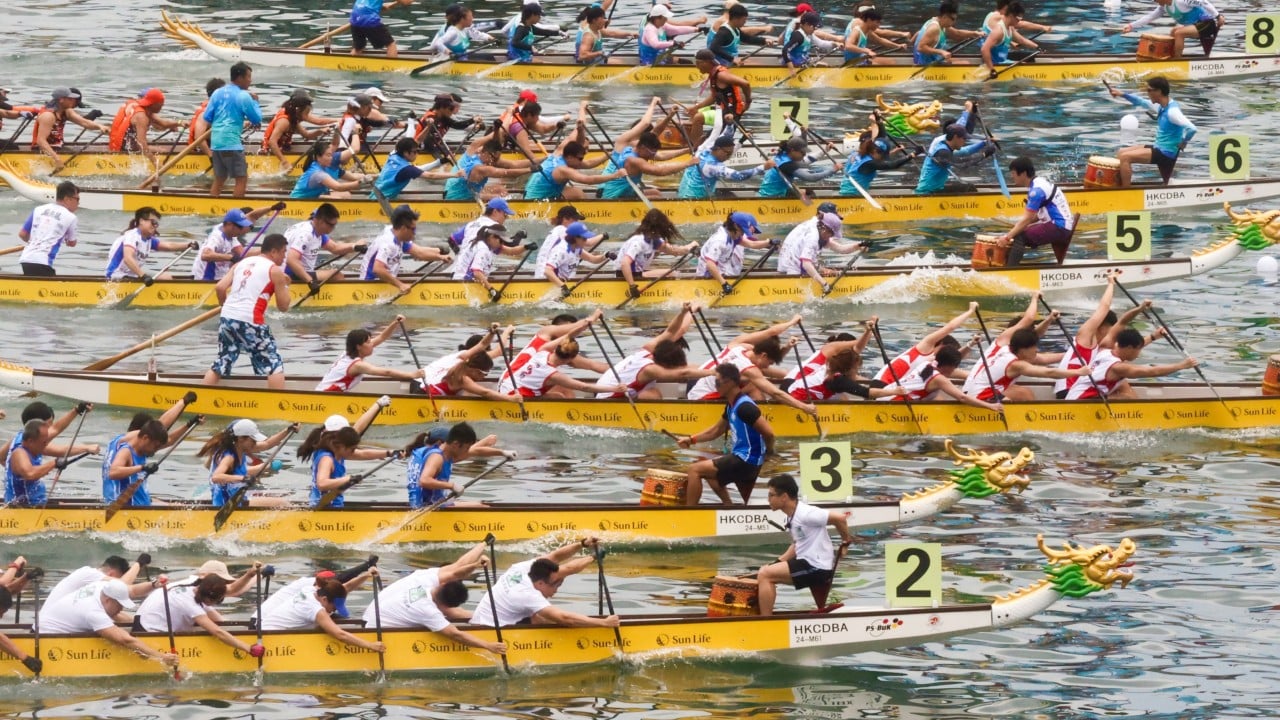
Mass-participation cultural events frequently suffer from a structural analytical deficit. Observers routinely quantify these events through superficial metrics such as foot traffic estimates or subjective assessments of "atmosphere." The annual dragon boat races along the Tsim Sha Tsui promenade in Hong Kong serve as a primary case study for a more rigorous evaluation: how a localized heritage asset transforms into a high-density macroeconomic engine.
To evaluate this phenomenon, the event must be deconstructed into its three operational pillars: logistical throughput optimization, multi-tiered tourism monetization, and corporate brand equity translation. The convergence of these pillars creates a predictable, repeatable surge in economic velocity within a highly constrained geographic footprint.
The Spatial Efficiency Calculus of the Victoria Harbour Course
The Tsim Sha Tsui promenade presents a distinct spatial optimization problem. Maximizing spectator density while maintaining strict public safety parameters requires a precise allocation of linear infrastructure.
The economic value of a single meter of waterfront during peak race hours operates on a steep gradient. The primary constraint is physical sightline geometry. Because dragon boat racing occurs at water level, effective spectator capacity scales horizontally rather than vertically. This creates a structural bottleneck that event organizers manage through two distinct mechanics:
- Velocity Linkage: The proximity of the promenade to major transit hubs (specifically the MTR network and the Star Ferry terminal) establishes a high-volume intake pipeline. The throughput capacity of these transit nodes dictates the ceiling of the event's instantaneous attendance.
- Temporal Staging: By staggering race heats at fixed 15-to-20-minute intervals, organizers prevent crowd stagnation. The predictable cadence forces a natural rotation of the spectator base, as casual observers vacate prime viewing positions during intermediate lulls, allowing new cohorts to occupy the perimeter.
This spatial arrangement directly influences the microeconomics of the immediate vicinity. Retail and food-and-beverage outlets located within a 500-meter radius of the primary viewing zone experience a localized demand shock. The monetization of this shock depends entirely on a business's ability to convert high-velocity foot traffic into rapid transactional throughput. Establishments that optimize for speed of service—minimizing friction in the ordering and fulfillment cycle—capture a disproportionate share of consumer spend compared to traditional sit-down models.
The Multi-Tiered Monetization Matrix
The financial viability of large-scale civic sporting events rests on a bifurcated revenue model that balances domestic engagement with high-yielding international tourism.
Domestic Foot-Traffic Conversion
The baseline economic floor of the event is sustained by resident spectators. While their direct expenditure per capita on transport and sustenance is relatively low, their aggregate volume creates critical mass. This mass is essential for justifying municipal infrastructure expenditure and attracting foundational corporate sponsorships.
International Premium Inflow
The true economic multiplier stems from the international and cross-border demographic. The arrival of overseas teams and dedicated sports tourists introduces external capital directly into the local hospitality ecosystem. This capital distributes across three distinct tiers:
- Hospitality and Inventory Absorption: The influx of international athletic delegations creates a baseline demand for mid-to-high-tier hotel inventory. Because race schedules demand proximity to the venue for optimal preparation, hotels in the Tsim Sha Tsui and East Tsim Sha Tsui clusters command a premium, compressing available market inventory and driving up Average Daily Rates (ADR) across the broader district.
- The Secondary Service Economy: Beyond accommodation, the consumption patterns of international visitors diverge significantly from residents. The economic footprint extends to high-end dining, experiential retail, and ancillary transport services, creating a localized inflationary effect that benefits service providers optimized for English and Mandarin-speaking clienteles.
- The Long-Tail Retention Effect: International broadcast coverage of the races functions as a highly targeted marketing campaign for Hong Kong’s maritime identity. The visual asset of Victoria Harbour, populated by high-performance athletes against a dense urban backdrop, reinforces the city's positioning as a premier travel destination, lowering future customer acquisition costs for the tourism board.
Corporate Brand Equity and Competitive Sponsorship Mechanics
Dragon boat racing has transitioned from a communal ritual into a highly sophisticated corporate engagement platform. The sport’s intrinsic values—collective synchronization, raw physical exertion, and strategic pacing—align precisely with corporate messaging frameworks.
The sponsorship architecture operates through a two-sided marketplace. On one side, multinational corporations, particularly within the financial services, logistics, and telecommunications sectors, utilize the event to demonstrate local market commitment and corporate vitality. On the other side, the event organizers leverage these corporate partnerships to subsidize the immense logistical overhead required to secure and manage the deep-water course.
This relationship manifests in three core operational executions:
- Corporate Invitational Divisions: By embedding dedicated corporate racing categories within the official schedule, the event creates a direct participation vector for businesses. This is not merely a branding exercise; it functions as a high-stakes team-building mechanism and a venue for business-to-business networking in a high-energy environment.
- Linear Branding Saturation: The physical infrastructure of the racecourse—buoys, starting gates, finish line structures, and promenade barriers—presents a high-visibility canvas. Because television and digital streaming cameras must track the boats continuously across a fixed trajectory, brands embedded within these linear zones achieve sustained, high-recall exposure that traditional interstitial advertising cannot replicate.
- Digital Hospitality Integration: Modern sponsorship packages increasingly decouple from physical signage, focusing instead on digital integration. Live telemetry data, athlete performance metrics, and real-time streaming feeds offer sponsors opportunities to attach their branding to precise technological milestones during the broadcast, appeals directly to a younger, digitally native audience.
Operational Volatility and Risk Management Frameworks
The execution of a high-density waterfront event carries significant operational risks that can rapidly degrade both financial performance and brand equity. A rigorous strategic analysis must account for these vulnerabilities and the mechanisms designed to mitigate them.
Maritime and Weather Dependencies
The primary operational variable is the environment. Victoria Harbour is a heavily trafficked commercial shipping lane, creating complex hydrodynamic conditions. Tidal shifts, wake from passing commercial vessels, and sudden meteorological changes—particularly during the summer monsoon and typhoon seasons—introduce immediate risk to athlete safety and scheduling integrity. Mitigating this requires a continuous, real-time coordination protocol involving the Marine Department, the Observatory, and on-water rescue assets. Any disruption to the race sequence introduces a compounding delay that threatens broadcast windows and compromises spectator retention.
Crowd Density and Kinetic Bottlenecks
The physical configuration of the Tsim Sha Tsui promenade features several structural choke points. As crowd density approaches critical thresholds, the velocity of pedestrian movement drops exponentially. If these bottlenecks are unmanaged, they present severe safety risks and diminish the consumer experience, leading to early attrition. Advanced event strategies deploy dynamic barriers, unidirectional pedestrian routing, and real-time crowd-monitoring sensors to actively redistribute density away from saturated zones into underutilized secondary viewing areas.
Maximizing Structural Yield from Heritage Assets
To extract maximum economic and cultural value from the dragon boat infrastructure, municipal and private stakeholders must shift from a reactive hosting model to a proactive asset-maximization strategy. The event cannot be viewed as an isolated annual occurrence; it must function as the anchor point for a broader, interconnected ecosystem.
The immediate priority is the digitization of the spectator experience. Physical sightlines will always remain a hard constraint on the Tsim Sha Tsui promenade. To break through this capacity ceiling, organizers must deploy localized, low-latency 5G streaming architectures and augmented reality overlays. By allowing spectators positioned several rows back—or even in adjacent hospitality venues—to access real-time telemetry, athlete heart rates, and precise stroke-rate analytics via their mobile devices, the value proposition of the non-front-row experience increases dramatically. This democratization of data transforms a passive, visually obscured viewer into an engaged, high-retention participant.
Concurrently, the commercial model must pivot toward year-round asset utilization. The specialized equipment, training methodologies, and organizational expertise developed for this single weekend represent significant sunk capital. Establishing a permanent, high-performance maritime sports hub within the harbor district would allow stakeholders to monetize this infrastructure through international training camps, corporate leadership retreats, and smaller-scale regional qualifiers throughout the calendar year. This continuous operational cadence stabilizes the supply chain, ensures a permanent cadre of highly trained race officials, and mitigates the financial volatility associated with a single-weekend event model.