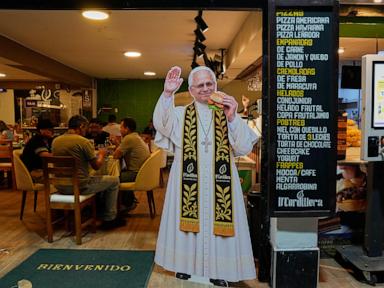
The heat in Pampas de Pimentel does not ask for permission. It presses down on the coastal desert of northern Peru like a heavy wool blanket, baking the sand until the air above the scrub brush shimmers and warps. On the morning of November 13, 2026, temperatures climbed past ninety degrees without a single tree to offer mercy.
Half a million people stood in that dust anyway.
They had come to see a man in white cassocks who, eighteen months earlier, had stepped onto the central balcony of St. Peter’s Basilica in Rome and shocked the Catholic world. Born Robert Francis Prevost in Chicago, he had become Pope Leo XIV, the first pontiff from the United States. Yet when he looked out over the sea of flags in Vatican City on May 8, 2025, he did not switch to English to address his birthplace. He switched to Spanish. He spoke directly to a windswept coastal diocese thousands of miles away.
Chiclayo.
News tickers around the globe reduced his November 2026 return to a neat diplomatic bullet point. They called it an apostolic journey through Uruguay, Argentina, and Peru. They tallied the eighteen speeches across six days. They noted the historic weight of a naturalized Peruvian citizen returning to his adopted homeland as the leader of 1.4 billion Catholics.
Those headlines missed the real story entirely.
To understand why 500,000 people endured a shadeless desert furnace just to catch a glimpse of a white popemobile, you have to strip away the gold rings, the Swiss Guards, and the geopolitical theater. You have to look down at a pair of scuffed, dust-caked shoes.
The Geometry of Belonging
Consider a hypothetical parishioner we will call Elena, a market vendor who has spent forty years selling dried corn and chilies near Chiclayo’s central square. In the standard biography of global leaders, Elena is a statistic—one face in a cheering crowd, one data point in the demographic charts of Latin American Catholicism.
In reality, Elena represents the invisible currency that built this papacy.
For decades, power inside the Catholic Church flowed along predictable currents. Decisions were drafted in marble corridors in Rome and handed down to the peripheries like decrees from a distant capital. When Pope Francis, Leo’s predecessor, assumed the papacy in 2013, he famously spoke of shepherds who must carry "the smell of the sheep." Yet Francis, weighed down by the complex political gravity of Buenos Aires, never once returned to his native Argentina during his pontificate.
Robert Prevost carried a different history.
He first arrived in northern Peru in 1985 as a young Augustinian missionary, stepping into a country torn apart by economic collapse and the brutal violence of the Shining Path insurgency. Later, from 2015 until 2023, he served as the Bishop of Chiclayo. He did not govern from behind a mahogany desk.
"It was really hard to see him just sitting down," recalled Yolanda Díaz, a 72-year-old lay leader who worked alongside him in the diocese. "He was always walking around with his shoes covered in dust."
That dust was not a poetic metaphor. It was the literal soil of Lambayeque, kicked up along unpaved roads in rural hamlets and mountain villages like Santa Cruz in the Cajamarca highlands. When you live in a place where public infrastructure routinely fails the poor, authority is not earned through titles. It is earned through presence. People in Chiclayo did not know him as a future cardinal or a Vatican prefect. They knew him as the priest who baptized their children, officiated their weddings, and stood in their mud-floored living rooms when the rains washed out the coastal valleys.
When Rome called him away in 2023 to head the Dicastery for Bishops, Chiclayo felt the ache of an abrupt departure. When the white smoke rose above the Sistine Chapel in May 2025, that ache turned into a fierce, protective pride. The banners strung across Chiclayo’s streets in November 2026 did not hail him as the Supreme Pontiff. They bore four simple words: Leo returns home.
Oxygen in the Dark
Wait. Before turning this into a comforting tale of nostalgia, look closely at what actually forged the bond between this bishop and his city.
In 2020 and 2021, Peru suffered one of the deadliest per-capita COVID-19 mortality rates on earth. More than 219,000 Peruvians died. In Chiclayo, hospitals ran out of beds, and then they ran out of air. Families lined up outside clinics clutching empty metal cylinders, weeping as relatives suffocated in the backs of taxis because medical oxygen had vanished from the market.
Funerals were banned to stop the contagion. The dead were sealed in plastic and buried in silence.
During those months, Prevost refused to retreat into quarantine. While the city locked its doors, he walked into contagion wards to administer last rites to dying patients whose own families were barred from the room. When he realized prayers alone could not keep lungs inflated, he turned into a relentless fundraiser, mobilizing $380,000 through the Catholic charity Caritas to purchase and install two industrial oxygen plants for the diocese.
Think about what an oxygen plant means in a crisis. It is not a symbolic gesture. It is a mechanical lifeline humming in the dark, pulling nitrogen out of the coastal air so a grandmother in a clinic bed can take another breath.
And when torrential rains or pandemic lockdowns cut off remote mountain communities, Prevost climbed into helicopters himself to haul crates of food and medicine to the peaks.
Years earlier, in 2018, a different kind of emergency had washed over Chiclayo’s highways. Fleeing hyperinflation and political collapse in Venezuela, millions of desperate migrants began walking south across the Andes. Roughly 20,000 destitute migrants passed through Chiclayo alone, with 3,500 families settling permanently in the region. Xenophobia flared across Peru as local resources strained under the arrival of 1.6 million newcomers.
Prevost responded by establishing a dedicated diocesan commission on human mobility and human trafficking, appointing lay leaders like Yolanda Díaz to organize shelters, legal aid, and hot meals. He treated migration not as a border security abstract, but as a neighbor knocking at midnight.
This is the hidden truth behind the roar of the crowds in November 2026. People do not chant "El Papa es Chiclayano"—the Pope is Chiclayan—because he speaks their dialect. They chant it because he bled alongside them when the oxygen ran out.
The Tightrope in Lima
Yet a homecoming is never pure sentiment. Even for a pope, stepping back onto Peruvian soil meant walking straight into a political minefield.
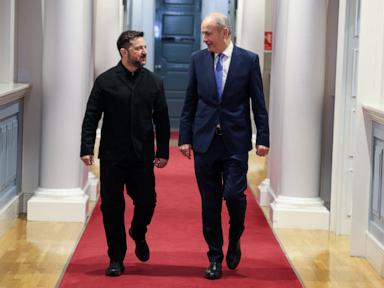
Before his plane touched down on the military airstrip in Chiclayo on November 13, Leo XIV had to spend two days in Lima. There, inside the Government Palace, he stood face-to-face with Peruvian President Keiko Fujimori.
To appreciate the quiet tension in that room, you have to remember the 1990s.
Back then, Keiko’s father, Alberto Fujimori, ruled Peru with an iron fist. While dismantling terrorist insurgencies, his regime carried out extrajudicial killings, forced sterilizations, and systemic corruption—crimes for which he was later convicted and imprisoned. During those dark years, a young missionary named Robert Prevost had been one of the sharpest, most uncompromising voices denouncing the regime’s human rights abuses.
Now, three decades later, the former missionary was head of the Catholic Church, and the strongman’s daughter—herself having served prison time before winning the presidency in 2026—was welcoming him as head of state.
Every political observer in South America watched that handshake for a flinch, a veiled rebuke, or a tactical compromise. Instead, Leo XIV played a longer, deeper game. In his address to civil authorities and diplomats at Lima’s National Theater, he did not trade partisan jabs. He spoke of institutional integrity, the defense of the vulnerable, and the moral obligation of leaders to serve rather than extract.
By refusing to let Lima’s political theater hijack his trip, he preserved his moral authority for the places that mattered most: the rugged interior, the Indigenous communities of the Amazon in Pucallpa, the ancient stone streets of Cusco, and the dusty parishes of the north.
Why the Periphery Matters Now
You might wonder why a six-day visit to a mid-sized Peruvian city holds any consequence for the rest of the world. After all, Catholicism is shrinking across Western Europe and North America. Empty pews and aging congregations dominate the headlines from Paris to Boston.
Look south, however, and the math flips entirely.
More than forty percent of the world’s Catholics live in Latin America. For centuries, the Vatican treated this region like a reliable subsidiary—a source of numbers, rarely a source of leadership. Even when Francis became the first Latin American pope, critics often viewed him through the prism of Argentine Peronism and Buenos Aires intellectualism.
Leo XIV represents something fundamentally different. He is a hybrid figure who bridges two worlds without belonging entirely to the power centers of either. He understands the boardrooms of Chicago and the bureaucratic machinery of the Roman Curia, yet his spiritual operating system was coded in the Peruvian provinces.
When he stood at the Shrine of Our Lady of Peace in Chiclayo on November 13, surrounded by parish priests, nuns, seminarians, and lay pastoral councils, he was not delivering a theoretical lecture on Church reform. He was looking at the exact model of church governance he wants to export to the globe.
In northern Peru, priests are scarce. A single pastor might oversee forty rural villages scattered across arid plains and steep Andean ridges. If the Church in Chiclayo had waited for ordained clerics to do every job, it would have collapsed generations ago. Instead, survival forced an invention: a radical reliance on laypeople, catechists, and women leading local communities of faith.
Consider what happens when a man formed in that reality takes control of the Vatican’s global appointments and doctrinal priorities. He does not view shared leadership with laypeople as a scary modern experiment. To him, it is simply Tuesday in Lambayeque.
During his stop in the Amazonian city of Pucallpa later that weekend, Leo met with Indigenous leaders whose rivers and forests are being poisoned by illegal gold mining and logging. He spoke plainly about the violence inflicted on communities defending creation. Back in Rome, environmental encyclicals can sound like academic policy papers. In Pucallpa, standing beside men and women who receive death threats for protecting a watershed, the theology becomes flesh and bone.
The Weight of the Crown
On his final day in Chiclayo, inside the neoclassical cathedral where he had celebrated quiet weekday Masses for eight years, Pope Leo XIV stepped up to the altar.
The cathedral was packed beyond capacity, just as it had been during the darkest days of the pandemic, except now the silence was broken by weeping and applause. Before him stood the venerated statue of the Immaculate Virgin. Reaching up with both hands, the Pope placed a golden crown upon the image—an ancient Catholic gesture of entrustment.
For a brief second, the cameras caught his expression without the practiced composure of a global statesman. His eyes glistened. His voice caught slightly as he thanked the people who had taught a young North American priest how to listen, how to endure, and how to belong.
"I owe a special debt of gratitude," he told them.
Most leaders spend their lives trying to climb out of the places where they started, treating small towns as stepping stones toward larger stages and louder applause. History is full of men who forgot the names of the people who carried them up the ladder.
In Chiclayo, the ladder ran in reverse. A man rose to the oldest continuous monarchy on earth, sat on the throne of Peter, and used his global megaphone to point back toward a dusty coastal plain in northern Peru.
Outside the cathedral doors, the afternoon sun beat down on the plaza. Vendors hawked ice cream bars stamped with the Pope’s smiling face. Elderly women clutched rosaries worn smooth by decades of prayer. Somewhere in the crowd, a young seminarian adjusted his collar, staring at the white cassock disappearing toward the waiting helicopter bound for the mountains.
The popemobile rolled past the edge of the square, kicking up a thin, pale cloud of Chiclayo dust that settled softly onto the white paint of the doors, refusing to be left behind.