The wind in the Khost and Paktika provinces doesn't just carry sand; it carries the weight of a thousand-year-old stubbornness. For those living along the Durand Line, the border is not a line on a map drawn by a British civil servant in 1893. It is a scar. Recently, that scar began to bleed again.
When the Taliban released footage of their strikes against Pakistani military positions, it wasn't just a military update. It was a cinematic declaration of a shifting world order. The grainy video, showing flashes of fire against the rugged horizon, served as a digital middle finger to a neighbor that once considered itself the puppet master of Afghan destiny.
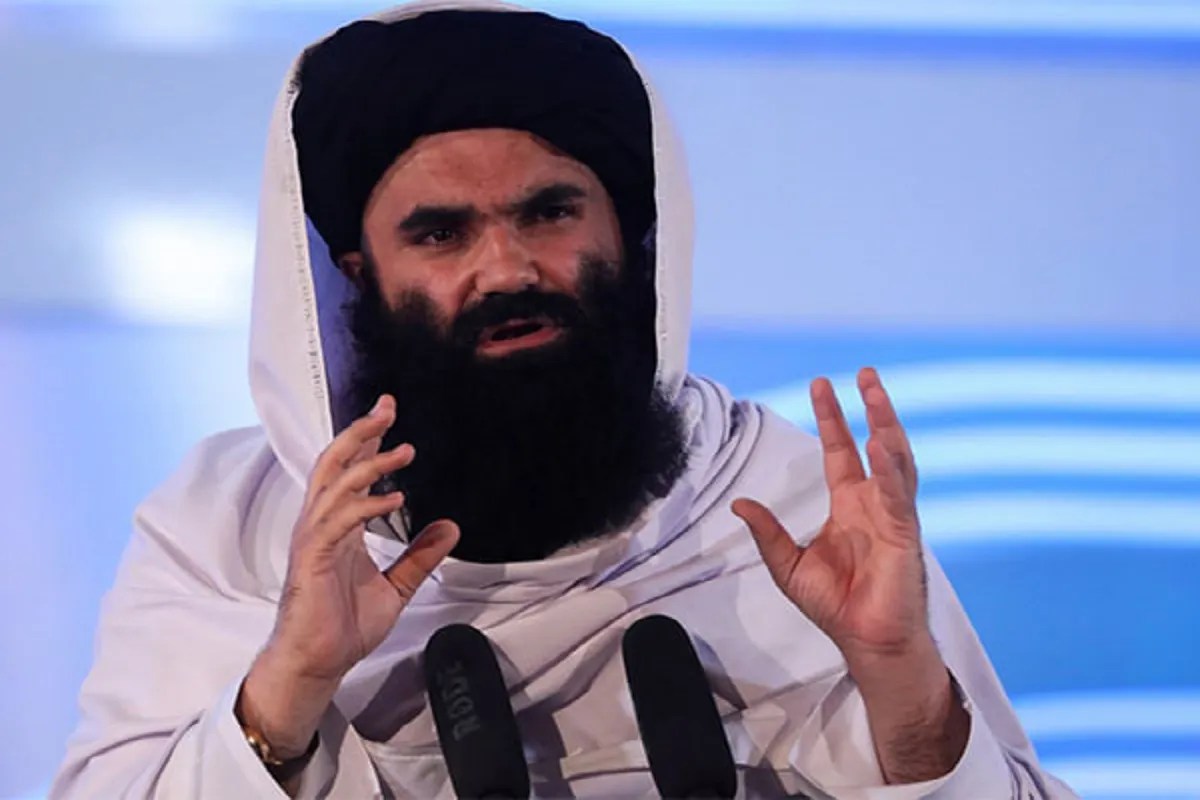
Sirajuddin Haqqani, a man whose name was once whispered in the dark corridors of intelligence agencies as a ghost, now stands in the light. When he spoke, he didn't use the measured, sanitized language of a Western diplomat. He spoke with the cold, hard clarity of a man who has spent decades in the mountains and now finds himself behind a mahogany desk. He warned Pakistan. He told them, in no uncertain terms, that the days of "strategic depth" are over.
The Architect and the Aftermath
To understand why this matters, you have to look past the rockets. Consider a hypothetical farmer named Dawood, living a few miles from the crossing. To Dawood, the geopolitical chess match between Kabul and Islamabad isn't about grand strategy. It’s about the fact that his windows rattle when the artillery speaks. It’s about the reality that the country he was told was his "big brother" is now the one firing across the ridge.
The footage released by the Afghan Ministry of Defense wasn't merely propaganda. It was an exercise in rebranding. For years, the narrative was that the Taliban were a proxy of Pakistan’s ISI. By broadcasting these strikes, the Taliban are burning that script in front of a global audience. They are saying: We are nobody’s shadow.
The strikes were a response to Pakistani airstrikes that allegedly targeted TTP (Tehrik-i-Taliban Pakistan) hideouts inside Afghan borders. Pakistan claims these groups use Afghan soil as a launchpad for terror. Afghanistan denies this, or perhaps more accurately, they find the accusation rich coming from a nation that provided the same sanctuary for twenty years.
The irony is thick enough to choke on.
The Language of the Long Game
Pakistan finds itself in a labyrinth of its own making. For decades, the military establishment in Rawalpindi viewed a friendly (or at least compliant) government in Kabul as essential for security against India. They got what they wanted in August 2021. Or so they thought.
Instead of a compliant subordinate, they found a fiercely independent neighbor that refuses to recognize the Durand Line as a permanent border. The Taliban’s refusal to fence the border isn't just a technicality. It is a refusal to accept the division of the Pashtun heartland.
Sirajuddin Haqqani’s warning was the verbal equivalent of a tripwire. He spoke of "consequences" and "readiness." These aren't just words; they are the currency of a region where face-saving is as important as ammunition. When a leader like Haqqani—who oversees the internal security of the country—publicly threatens a nuclear-armed neighbor, the power dynamic hasn't just changed. It has flipped.
Consider the psychological shift for the Pakistani soldier standing at a remote outpost. For years, he was told the threat came from the East. Now, he has to watch his back from the West, looking at a force that is using the very weapons and tactics that once made them untouchable.
The Invisible Stakes of a Border War
Beyond the hardware and the rhetoric lies a terrifying uncertainty for the millions of people who call this region home. Trade routes are the lifeblood of these mountains. Every time a rocket is fired, a truck carrying pomegranates or coal sits idle. Prices in the markets of Peshawar and Kabul spike. Families are divided by sudden gate closures.
The human cost is measured in the silence of a closed border.
The Taliban are currently playing a high-stakes game of chicken. They are cash-strapped, internationally isolated, and dealing with a simmering internal humanitarian crisis. Yet, they chose to engage in a kinetic confrontation with a much larger military. Why? Because in the Afghan narrative, sovereignty is the only thing that cannot be traded.
If they appear weak to Pakistan, they lose their legitimacy at home. If they don't respond to airstrikes, the "mujahideen" image they have cultivated for thirty years evaporates. They would rather starve in a sovereign house than feast in a protectorate.
The Shadow of the TTP
The core of the friction is the TTP. Pakistan demands their heads. Afghanistan offers them "mediation" but refuses to hand them over. It is a mirror image of the 2000s, with the roles perfectly reversed.
Pakistan’s frustration is palpable. They feel betrayed. They expected the Taliban to do for them what they once did for the Taliban: provide security and suppress cross-border militancy. But the Taliban see the TTP not as a foreign terrorist group, but as ideological brothers-in-arms who helped them win their war against the Americans. Asking the Taliban to crush the TTP is like asking a man to cut off his own left hand to satisfy a neighbor.
It won’t happen.
Instead, we see the release of combat footage. It is a way of signaling to the TTP that the Afghan government has their back, while signaling to the Pakistani public that their military is no longer the undisputed heavyweight in the region.
The Sound of Tomorrow
The footage is grainy. The explosions are distant. But the message is loud.
We are witnessing the birth pangs of a new regional reality. The old rules—where Pakistan could influence Afghan policy through a mix of patronage and pressure—have been incinerated. The new rules are being written in the dust of the border provinces.
As the sun sets over the peaks of Paktika, the soldiers on both sides of the line watch the horizon. They aren't looking for a peace envoy. They are looking for the next flash of light. The threat from Haqqani wasn't a climax; it was an overture.
In this part of the world, history doesn't move in a straight line. It moves in circles. And right now, the circle is closing on those who thought they could control the wind. The rockets fired by the Taliban are more than just explosives; they are the physical manifestation of an old debt being settled in a new currency.
The silence that follows an explosion is often more telling than the blast itself. In that silence, you can hear the shifting of tectonic plates. Pakistan is realizing that the "strategic depth" they sought has become a strategic nightmare, and the men they once hosted are now the men holding the keys to the gate.
The footage remains on the internet, a permanent record of a moment when the student turned on the teacher. It serves as a reminder that in the graveyard of empires, even the neighbors aren't safe from the ghosts.