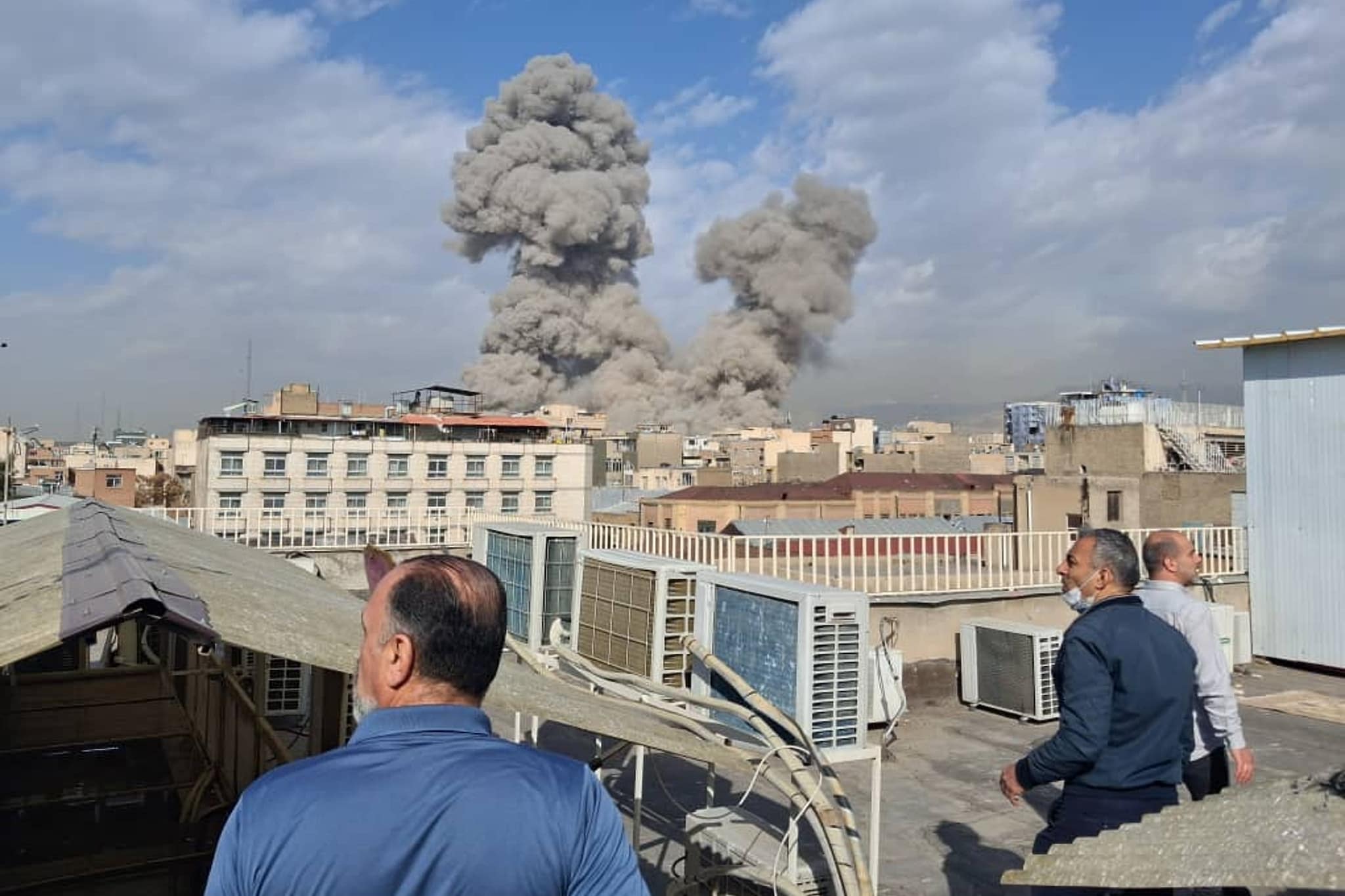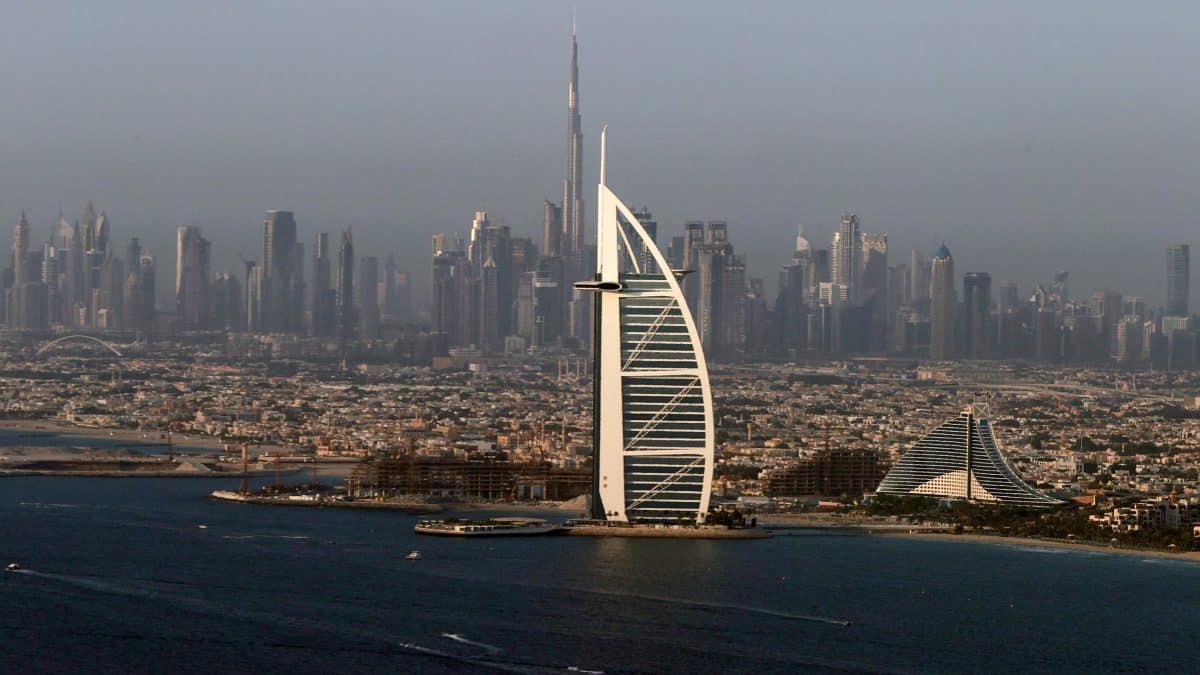
The glass shards littering the tarmac at Dubai International Airport and the structural scars on the Burj Al Arab are not just repair costs. They are the physical evidence that the unspoken contract of the Middle East has been voided. For decades, the United Arab Emirates operated under a specific, lucrative assumption: while the rest of the region burned, the UAE would remain an air-conditioned sanctuary for global capital. That illusion died in the early hours of this morning. Iranian retaliatory strikes have finally breached the "Goldilocks Zone" of Emirati security, proving that even the most sophisticated missile defense systems cannot guarantee the safety of a global logistics hub when the regional order collapses.
The targeting of Dubai’s crown jewels—its aviation infrastructure and its most recognizable luxury symbol—represents a calculated escalation by Tehran. This wasn't a blind volley. It was a message sent to the boardroom of every multinational corporation headquartered in the Dubai International Financial Centre. The cost of doing business in the Gulf just underwent a permanent, violent adjustment.
The Failure of the Iron Shield
Dubai’s defense strategy has long relied on a multilayered approach, combining American-made Patriot batteries with localized systems. On paper, it is one of the most protected patches of sky on the planet. Yet, the sheer volume of the saturation attack—a mixture of low-cost loitering munitions and high-speed ballistic missiles—overwhelmed the logic of the defense grid.
Military analysts have long warned about the "cost-exchange ratio" of modern missile defense. When a $20,000 drone can force the expenditure of a $3 million interceptor, the defender is mathematically doomed to lose. Last night, that math became reality. The strikes at the airport didn't just hit the runway; they hit the belief that Dubai is an untouchable fortress. Reports indicate that at least four drones bypassed the primary perimeter, impacting near the Emirates terminal. The secondary strike on the Burj Al Arab, while less damaging to the structure's integrity, serves a psychological purpose that far outweighs the physical debris. It is a visual signal to the world's elite that their playground is now a front line.
A Supply Chain Severed at the Neck
Dubai International is not just an airport. It is the connective tissue for the global East-West trade route. By successfully grounding flights and damaging ground infrastructure, the strikes have triggered a cascading failure across international logistics. Logistics managers from London to Singapore are currently rerouting cargo that usually transits through Jebel Ali or DXB.
The immediate fallout is obvious: surging insurance premiums. Maritime and aviation underwriters have spent the last six hours recalibrating the risk profiles for the entire Persian Gulf. When "war risk" surcharges jump, the margins for global trade thin. Dubai’s economy is built on the frictionless movement of people and goods. If you introduce friction in the form of shrapnel and flight cancellations, the city’s primary value proposition begins to erode.
We are seeing the transition from a regional skirmish to a global economic event. This isn't about oil prices alone. It’s about the reliability of the nodes that keep the modern economy functioning. If the UAE cannot guarantee the safety of a Boeing 777 on its tarmac, the "Dubai Model" of economic development faces an existential threat.
The Geopolitical Miscalculation
For years, the UAE has attempted a delicate balancing act. They normalized relations with Israel through the Abraham Accords while simultaneously trying to de-escalate tensions with Iran through back-channel diplomacy and trade. This "hedging" strategy was designed to make the UAE too useful to attack.
Tehran’s decision to strike Dubai suggests that the era of hedging is over. From the Iranian perspective, the UAE’s logistical support for Western interests and its growing security ties with Tel Aviv have made it a legitimate target in a wider regional conflagration. The strikes were not a random act of aggression; they were a response to a perceived shift in the regional power balance that Iran felt it could no longer ignore.
The UAE leadership now faces a brutal choice. They can double down on their security alliances, potentially inviting further strikes, or they can attempt a radical pivot back toward neutrality—a move that would alienate their Western and Israeli partners. There is no easy path back to the status quo of 2023.
Beyond the Headlines of Destruction
While the media focuses on the smoke rising from the coastline, the real damage is happening in the digital ledgers of global banks. The capital flight from Dubai has traditionally been a slow-moving fear, but today it is a frantic reality. High-net-worth individuals who moved to the Emirates for safety and tax incentives are now looking at Lisbon, Singapore, and George Town with renewed interest.
The Burj Al Arab is a hotel, but it is also a monument to the idea that wealth can buy immunity from geography. When a missile hits that monument, it reminds the world that geography is destiny. You cannot build a utopia next door to a tinderbox and expect the sparks to never cross the fence.
The Logistics of Recovery
Rebuilding a terminal or replacing glass panels is the easy part. The UAE has the sovereign wealth to do that ten times over. The hard part is restoring the "perceived safety" that allowed Dubai to thrive.
- Aviation Confidence: Airlines will require more than just a cleared runway to return to full capacity. They will need proof that the interceptor failure was a fluke, not a fundamental flaw.
- Tourism Narratives: The branding of Dubai as a luxury destination is heavily reliant on the "safe harbor" narrative. That narrative is currently under fire.
- Foreign Direct Investment: Investors hate uncertainty. The sight of smoke over the Arabian Gulf is the ultimate form of uncertainty.
The New Reality of the Gulf
We are entering a period where the traditional safe havens of the Middle East are being drawn into the theater of operations. This isn't just about Iran and the UAE; it's about the collapse of the regional security architecture that has held for thirty years. The U.S. umbrella is leaking, and the regional powers are realizing that they are on their own.
The strikes on Dubai are a klaxon for the global community. The era of "insulated conflicts" is over. In a globalized world, a drone strike in the Gulf is a tremor felt in every boardroom in the world. The charred remains of the Burj Al Arab’s exterior are a grim reminder that in the 21st century, there are no more sidelines. Everyone is on the field, whether they want to be or not.
The UAE must now decide if it will become a fortress or a bridge. It can no longer be both. As the smoke clears over the Persian Gulf, the only certainty is that the price of regional stability has just skyrocketed, and the bill is being delivered in fire. The world is watching to see if the desert's most ambitious project can survive the reality of its own neighborhood.
Contact your risk management teams and reassess your Gulf exposure immediately; the redline hasn't just been crossed—it has been erased.