The Dh422 Million Delusion
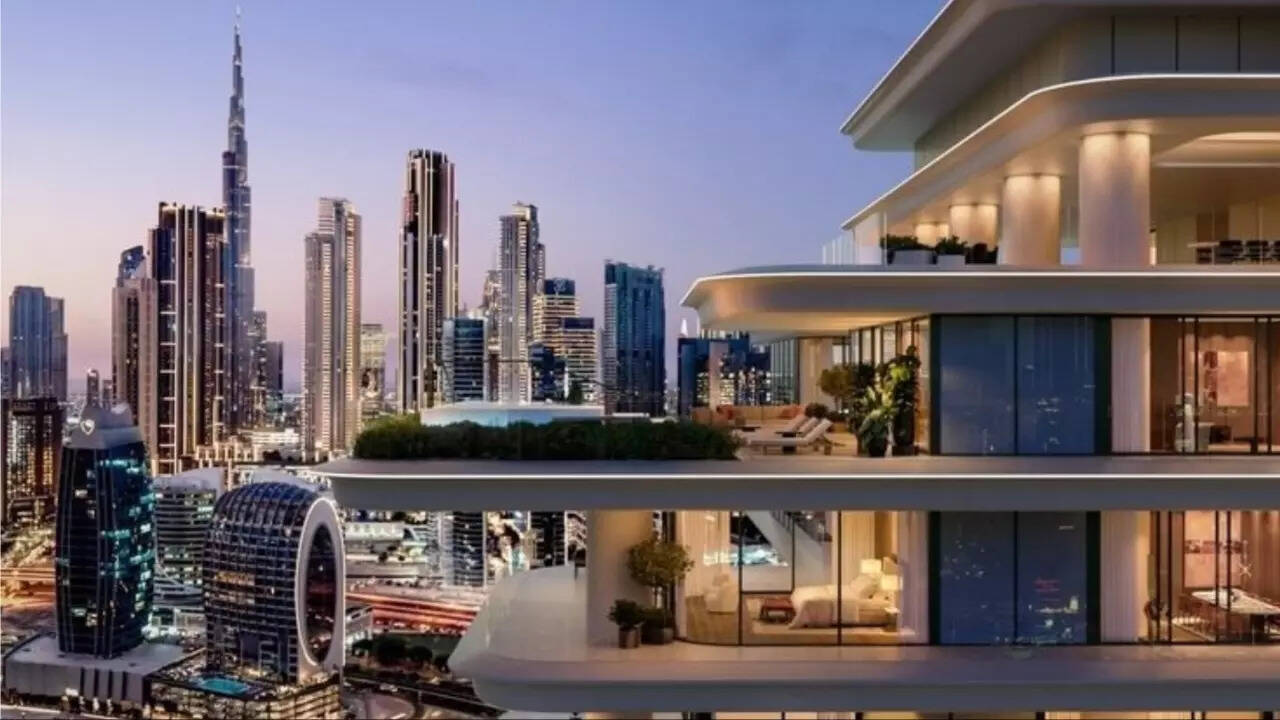
The financial press is currently obsessed with a number: Dh422 million. That is the price tag for a single penthouse at the Como Residences on Palm Jumeirah. The narrative being shoved down your throat is one of "resilience." Journalists want you to believe that Dubai’s luxury market is a bulletproof shield against regional instability, a stoic fortress standing tall while the Middle East grapples with the fallout of the US-Israel-Iran friction.
They are wrong.
Calling Dubai a "safe haven" is a fundamental misunderstanding of why capital is flooding into the Emirate. You don’t buy a Dh422 million apartment because you are afraid of a war; you buy it because you are betting on the chaos of the old world order. This isn't a flight to safety. It is a flight to liquidity and velocity.
The "lazy consensus" suggests that the ultra-wealthy are seeking a quiet place to hide. If they wanted quiet, they would buy a ranch in New Zealand or a townhouse in Zurich. They are buying in Dubai because it is the world’s most aggressive experiment in post-geographic capitalism.
The Geopolitical Arbitrage
Mainstream analysts keep asking how Dubai can thrive "despite" the conflict. The premise of the question is flawed. Dubai thrives because of the friction elsewhere.
When the US-Israel-Iran axis tightens, capital doesn't just disappear; it seeks a jurisdiction that refuses to take a side. Dubai has mastered the art of "neutrality for sale." While the West uses the SWIFT system as a weapon of foreign policy, Dubai operates as a high-speed clearinghouse for the global unaligned.
I have watched private equity vultures and family office heads move billions into the DIFC (Dubai International Financial Centre) not because they love the view from the Burj Khalifa, but because the regulatory environment is designed for speed, not moralizing.
- Fact: Dubai’s real estate market is no longer tied to oil prices.
- Fact: The buyer profile has shifted from regional elites to a global mix of Russian tech founders, Indian industrialists, and European crypto-exiles.
- Fact: Transaction volume is hitting record highs because the "cost of friction" in London and New York has become too high.
The Dh422 million sale isn't an anomaly. It’s a signal that the traditional financial capitals have lost their monopoly on "trust." In a world where your assets can be frozen in London or New York based on the prevailing political wind, a glass box in the sky on a man-made island starts to look like the only private property you actually own.
The Yield Trap and the Ego Premium
Stop looking at the Dh422 million price tag as a real estate investment. At that level, the math of "rental yield" is for the peasants.
When a buyer drops over $100 million on a shell, they aren't looking for a 5% ROI. They are paying an Ego Premium. In the world of ultra-high-net-worth individuals (UHNWI), real estate is the new currency. It is more stable than Bitcoin and more visible than a Swiss bank account.
The Mechanics of the "Veblen Good"
In standard economics, when the price of a good rises, demand falls. Real estate in Palm Jumeirah follows the logic of a Veblen Good. As the price increases, the desirability skyrockets because the price itself is the utility.
- Exclusivity as Infrastructure: You aren't paying for square footage; you are paying for the neighbors who can also afford to be there.
- Asset Tokenization: We are seeing a trend where these mega-apartments act as collateral for massive, low-interest private loans. The apartment is just a very heavy, very shiny bond.
- The Supply Lie: Developers keep talking about "limited supply." This is nonsense. Dubai has plenty of sand. What is limited is the permit for prestige.
The competitor article claims the market is "defying" the war. No. The market is pricing in the reality that the West is no longer the sole arbiter of where money is "safe."
Why the "Bubble" Talk is Boredom, Not Analysis
Every three years, a fresh crop of analysts predicts the Dubai "crash." They point to 2008. They point to 2014. They are fighting the last war.
In 2008, Dubai was built on cheap credit and "flipping" off-plan contracts. Today, the Dh422 million sales are largely cash-driven. You cannot have a debt-fueled collapse when the buyers are sitting on piles of dry powder and looking for a place to park it that isn't subject to the whims of the US Treasury.
Does that mean there is no risk? Of course not. But the risk isn't a "bubble." The risk is oversupply in the mid-market.
- The Luxury Tier: Decoupled from reality. Immune to interest rates.
- The Mid-Tier: Vulnerable, boring, and oversupplied.
- The Low-Tier: A brutal race to the bottom.
If you are reading about the Dh422 million sale and thinking it applies to a two-bedroom in Jumeirah Village Circle, you are the exit liquidity. The top 0.1% are playing a different game with different rules.
The Transnational Nomad Reality
We have entered the era of the Transnational Nomad. These are individuals who do not belong to a nation-state; they belong to a network of cities.
Dubai, Singapore, and perhaps Miami are the nodes of this network. The US-Israel-Iran conflict is a tragedy of the old world—a world of borders, ancient grievances, and "land." The buyers in Dubai are investing in the "Cloud." They want a jurisdiction that functions like an API: plug in your capital, get your residency, and operate with zero friction.
The competitor's piece treats the war as a "headwind." It isn't. It is the wind in the sails. When the world is on fire, you want to be on the island that figured out how to air-condition the beach.
Stop Asking if it’s a Good Investment
The most common question I get is: "Is now a good time to buy in Dubai?"
It is a stupid question.
It depends on who you are. If you are a middle-manager looking for a "safe" 7% return, you are late to the party. Go buy an index fund and pray for the best.
If you are a global player looking to hedge against the weaponization of the US Dollar and the terminal decline of European property rights, then the price is irrelevant. You are buying an insurance policy.
The Real Risks Nobody Mentions
I’ll be candid. The contrarian take isn't all sunshine and record-breaking sales. There are two "black swans" that the PR-heavy articles ignore:
- Regulatory Harmonization: If Dubai ever bows to international pressure to fully align its tax and transparency laws with the OECD, the "secrecy premium" vanishes.
- Climate Tech Failure: If the technology required to keep a desert city habitable in $50^\circ\text{C}$ heat fails or becomes prohibitively expensive due to an energy crisis, the glass towers become vertical ovens.
Neither of these involves a war in Iran. The regional conflict is noise. The structural shifts in how the world handles "untracked" wealth are the signal.
The Verdict on Dh422 Million
The sale of the Como Residences penthouse isn't a sign of a healthy real estate market. It is a sign of a fractured world.
It is proof that the global elite have given up on the idea of "stability" and have moved on to "agility." They are betting that Dubai will remain the world’s most efficient "gray zone"—a place where money has no smell and no flag.
Stop waiting for the "correction" that validates your fear of the Middle East. The correction happened years ago when Dubai realized that being a "haven" was less profitable than being a "hub."
The war isn't the story. The price isn't the story. The story is the death of the Western financial monopoly. Dubai is just the scoreboard.
Go find a way to get your capital into a jurisdiction that treats you like a customer rather than a subject. If you can't afford the Dh422 million penthouse, start looking at the infrastructure that supports the people who can.
Stop looking at the map. Start looking at the flow.