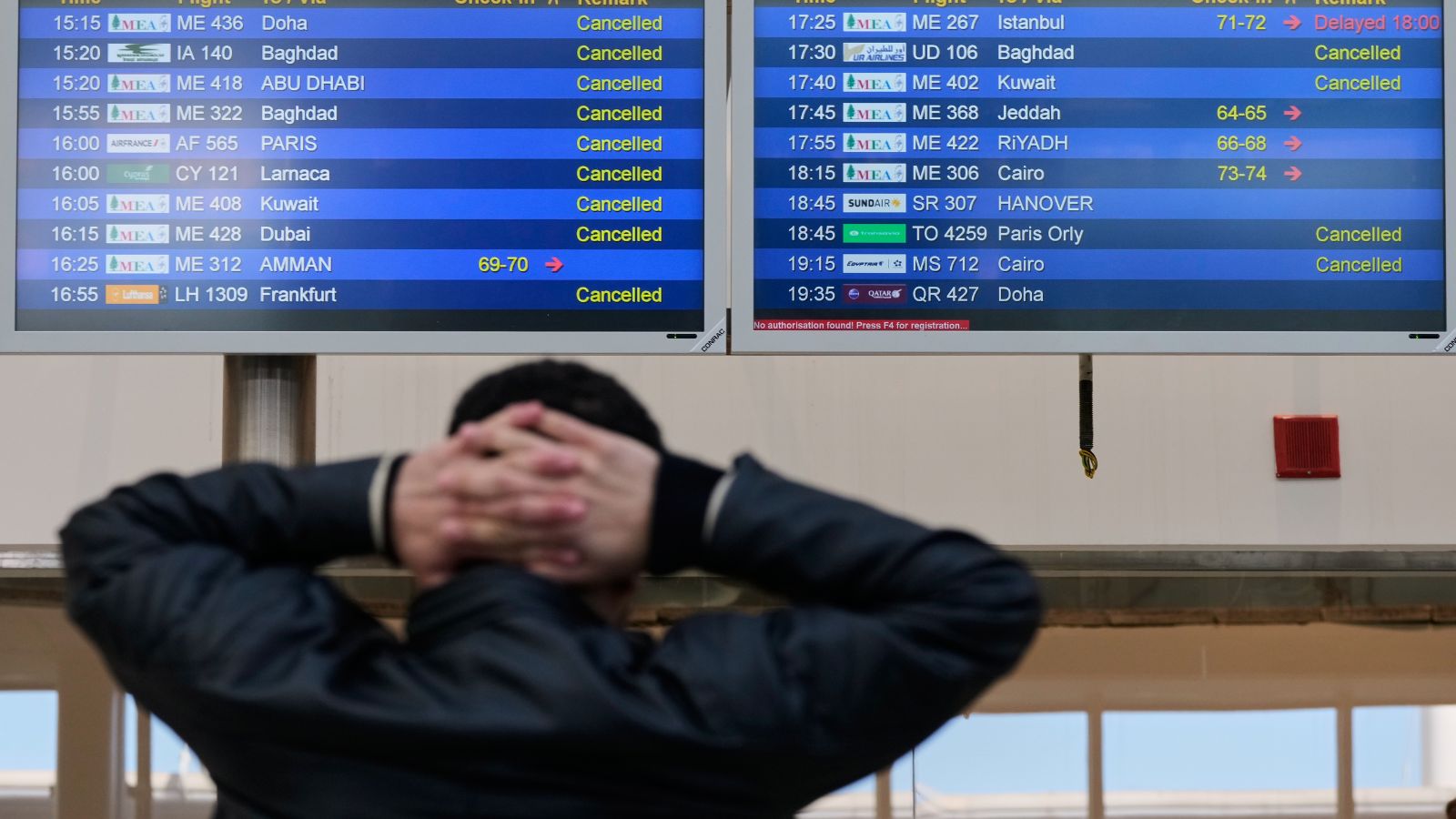
The physical restoration of flight paths at Dubai International (DXB) is underway, but the recovery of a global transit hub is not as simple as clearing a runway or rebooting a server. While Emirates and flydubai have resumed limited operations, the industry is witnessing a brutal lesson in the fragility of "just-in-time" aviation. When a hub that processes 80 million passengers a year stops for even a few hours, the ripples don't just fade; they turn into a tidal wave of logistical failures that take weeks to resolve.
The Mechanics of a Total Hub Stagnation
To understand why DXB isn't simply "back to normal," you have to look at the geometry of its business model. Unlike point-to-point airports where a delay affects one city pair, Dubai operates on a massive wave system. Hundreds of planes arrive from the West in a tight window, exchange thousands of passengers, and depart to the East.
When the record-breaking rainfall hit, this clock stopped.
The resulting backlog isn't just about people sitting in terminals. It is about displaced airframes. A Boeing 777 stuck in London cannot pick up passengers in Dubai for a flight to Sydney. This decoupling of the fleet from the schedule creates a vacuum. Even as the water receded from the taxiways, the airline dispatchers faced a nightmare: they had pilots out of legal flying hours, cabin crews stranded in hotels they couldn't leave, and aircraft parked in the wrong hemispheres.
Why Limited Operations Are a Defensive Triage
The decision by Emirates to restrict check-ins for transit passengers during the initial recovery phase was a move of desperation, not choice. It was a triage tactic designed to prevent the terminal from becoming a humanitarian crisis.
By cutting off the flow of new passengers, the airline attempted to flush the existing thousands out of the system. However, this creates a secondary economic hit.
- Perishable Cargo: Billions in high-value goods—flowers, pharmaceuticals, electronics—sat in flooded or inaccessible warehouses.
- Revenue Forfeiture: Refunding thousands of premium-class tickets while paying for hotel vouchers destroys the quarterly margin.
- Brand Erosion: The "Dubai Experience" is built on the illusion of effortless luxury. Seeing images of water-logged runways shatters that mirage.
Flydubai, the shorter-haul sibling, faces different hurdles. Its fleet lacks the long-range "buffer" that Emirates possesses. With a schedule built on high-frequency rotations, a single grounded plane in a regional outstation like Muscat or Doha ruins the entire day’s flight plan. They are fighting for gate space in a terminal that is currently a bottleneck of delayed arrivals.
The Engineering Oversight Under the Tarmac
We have to talk about the infrastructure. Critics are pointing at the drainage, but that is a superficial reading of the problem. No airport on earth is built to handle a year’s worth of rain in twelve hours. The real failure lies in contingency routing.
Dubai’s desert location means its soil is often non-porous. When the rain falls, it doesn't soak in; it moves. The airport is a low-lying basin of concrete in a city that has expanded its surface area of asphalt tenfold in thirty years. The water has nowhere else to go.
Standard operating procedures for major hubs usually involve diverting to "alternates." But when the alternates—DWC (Al Maktoum), Sharjah, and Abu Dhabi—are all suffering the same meteorological event, the system has no vent. The planes were forced to circle until fuel became a critical safety issue, leading to "Mayday" calls that clogged the air traffic control frequencies. This is the definition of a systemic collapse.
The Workforce Exhaustion Factor
Beyond the metal and the weather is the human element that the glossy press releases ignore. Ground handling staff, many of whom live in areas that were also flooded, couldn't get to work. Those who were already on-site worked 24-hour shifts.
Fatigue is the greatest enemy of aviation safety.
A ramp agent who hasn't slept in twenty hours is more likely to mismanage a fuel load or ignore a safety protocol. The "limited operations" we see now are a forced slowdown to ensure that the staff can actually function without causing a ground collision. The recovery speed is limited by the human duty-time clock, not just the weather.
The Digital Blind Spot
One would assume that in a "smart city," the digital infrastructure would handle the rebooking. Instead, the apps crashed. The automated systems couldn't handle the sheer volume of "broken PNRs" (Passenger Name Records).
When a multi-leg journey is interrupted, the software often defaults to a manual override. This forced tens of thousands of people into physical lines, creating the chaos seen in viral videos. The industry's reliance on centralized, cloud-based booking systems proved to be a liability when the local physical infrastructure failed.
The Cost of a Fragile Monopoly
Dubai has spent decades making itself the indispensable middleman of global travel. This crisis proves that being a bottleneck is great for profits but catastrophic for resilience. When DXB goes down, the connection between Europe and Asia doesn't just slow down; it breaks.
Competing hubs like Doha and Istanbul are watching this with a mix of sympathy and strategic interest. Every hour that an Emirates 380 sits idle is an opportunity for a competitor to prove they have the superior drainage, the better hotel capacity, or more resilient transit logic.
The recovery isn't just about drying out the rugs in the lounges. It is about convincing the global traveler that a three-hour layover in the desert is still a safe bet. To do that, the authorities will have to invest billions in sub-surface water management and massive expansion of on-site staff housing that is immune to weather-based transit cuts.
Future-Proofing the Desert Hub
The aviation world is entering an era of "extreme weather normal." What happened in Dubai this week will happen again. The current recovery efforts are a "patch" on a system that requires a fundamental architectural rethink.
If you are a passenger currently holding a ticket, your move is simple. Do not go to the airport unless your flight is confirmed "Active" on an independent tracking site like FlightRadar24. The airline's own app is likely lagging behind reality. Check your luggage with the expectation that you won't see it for five days.
The recovery is moving at the speed of safety, which is inherently slow. In the high-stakes game of international aviation, "slow" is the only way to avoid a secondary disaster. The tarmac is dry, but the logistics are still underwater.