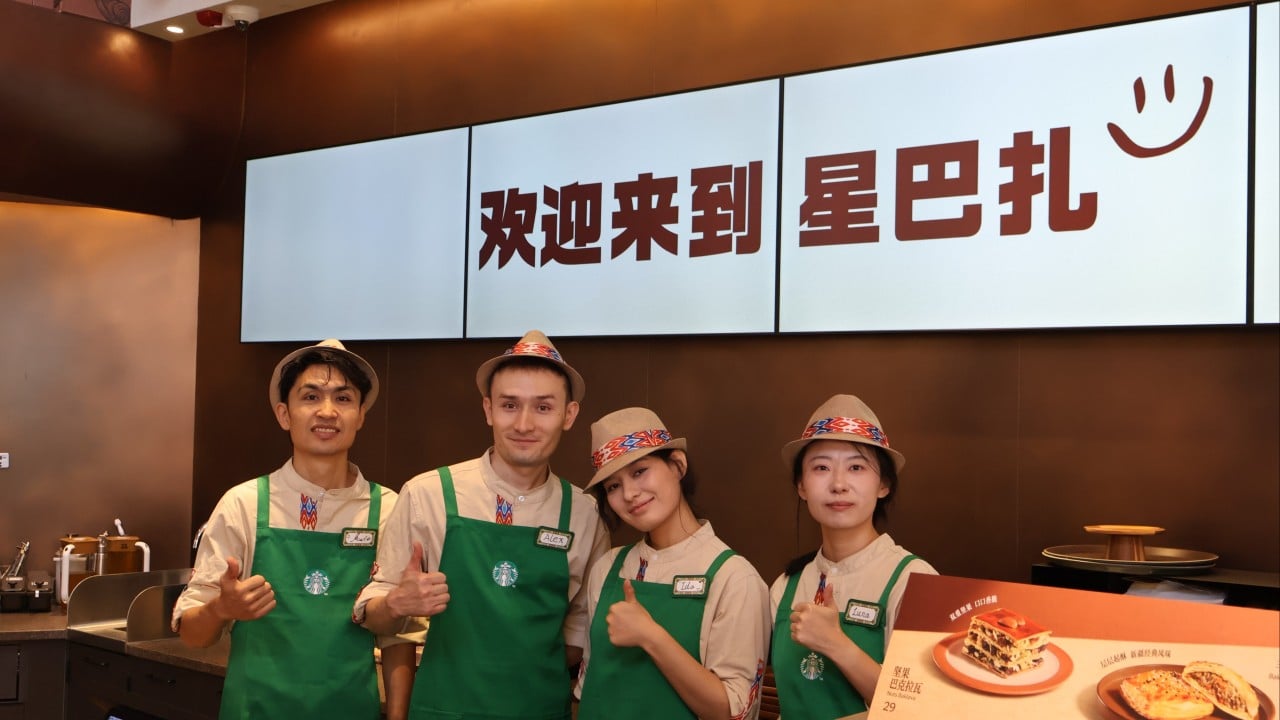
Every few years, a corporate tourism stunt makes the rounds online. A foreign vlogger or state-media correspondent walks into a sparkling green-and-white siren-logoed coffee shop in Ürümqi, pans the camera across a room full of young Uyghurs tapping away on smartphones or sipping iced macchiatos, and asks a triumphant, leading question: Can’t Uyghurs drink Starbucks and taste American freedom?
The implication is blunt. If a minority population can buy a Venti caramel frappuccino, systemic repression must be a myth. Consumerism equals liberation. If the registers ring, human rights must be intact.
It is a remarkably lazy piece of intellectual sleight of hand. I have watched analysts, corporate apologists, and social media tourists trot out this exact argument for a decade, and it gets dumber every time.
Let us dismantle the premise.
Drinking coffee has nothing to do with freedom. It has everything to do with supply chains, corporate uniformity, and the baseline mechanics of modern authoritarian capitalism. Equating a franchise menu with civil liberties is not just naive; it is a deliberate obfuscation of what freedom actually means in the twenty-first century.
The Corporate Franchise Fallacy
Global brands do not export liberty. They export standardized recipes, high-margin syrup, and localized supply chain integration.
When a multinational corporation licenses a store franchise in an emerging or heavily controlled market, it does not negotiate political sovereignty. It negotiates real estate leases, tax concessions, and operational compliance. The presence of a global brand proves that a government permits a specific kind of commercial zone to exist. It proves that local purchasing power exists for luxury caffeinated beverages. It proves that supply lines for paper cups and espresso beans are open.
It does not prove that a citizen can criticize state security apparatuses without a late-night knock on the door. It does not prove that religious practices are unhindered, that arbitrary detention camps are a fiction, or that independent labor unions are permitted to organize.
Conflating the right to buy an imported pastry with freedom of speech, freedom of movement, or freedom of conscience is an insult to political history. By that logic, citizens of the Third Reich were paragons of personal liberty if they managed to purchase imported luxury goods during a temporary economic thaw. Of course they weren't. Totalitarian states have always accommodated consumer luxury for compliant populations while crushing dissent in the shadows.
The Geography of Performative Normalcy
Let us look at where these cafes are located. They are never tucked into the remote rural townships where traditional agriculture has been uprooted, nor are they situated outside the razor-wire-perimetered security checkpoints that define the region's urban infrastructure.
They sit in glossy, state-subsidized commercial hubs designed precisely to project an image of normalcy to visiting delegations, compliant journalists, and domestic tourists from eastern megacities. These spaces are architectural stages. They are curated zones of sanitized modernity.
Imagine a scenario where a corporate executive flies into a heavily secured industrial zone, is driven directly to a five-star hotel with an attached international coffee chain, and concludes that the entire population lives a life of unbridled leisure. That is not observation. That is voluntary blindness packaged as travel journalism.
The existence of a commercial facade does not negate the reality of the fortress behind it. In fact, heavy state surveillance and high-end consumerism often coexist in a symbiotic embrace. Authoritarian modernization programs love nothing more than gleaming glass towers and Western coffee chains because they offer visual shorthand for economic progress. They let the state point to a balance sheet and shout down critics with a cup of steamed milk.
What Real Freedom Actually Looks Like
Let us define terms, because sloppy language is how bad arguments survive.
Political freedom is not the ability to choose between oat milk and almond milk. It is the ability to choose your own political representatives, practice your religion without state-mandated ideological re-education, speak your native language in public institutions without fear, and demand accountability from police and state security forces.
Consumer choice is a market metric. Freedom is a constitutional boundary placed on the power of the state over the individual.
When an observer points to a crowded cafe in Ürümqi and claims it refutes human rights reports, they are deliberately confusing the freedom to consume with the freedom to dissent. You can walk into a cafe, spend six dollars on a sugary beverage, and still live in a Panopticon where your phone is monitored, your travel is restricted, and your cultural heritage is systematically dismantled.
In fact, the modern surveillance state thrives precisely when it can offer its citizens a sterile, regulated slice of middle-class consumer comfort in exchange for absolute political silence. It is an implicit social contract: keep your head down, buy your coffee, post your aesthetic photos online, and leave the governance to the party.
The Downside of Contrarianism
Admitting this reality requires confronting an uncomfortable truth about global commerce. Corporations like Starbucks are neither champions of democracy nor agents of tyranny. They are amoral profit-seeking entities. They will open a store anywhere the local authorities give them permission and where a middle class has enough disposable cash to sustain margins.
To expect a coffee chain to act as an underground railroad for human rights is absurd. But it is equally absurd to weaponize their storefronts as proof that oppression does not exist.
When we let corporations off the hook by pretending their presence equals human rights progress, we participate in a global whitewashing campaign. We trade hard political realities for soft corporate aesthetics.
Stop asking if marginalized populations can buy an American latte. Start asking what happens to the people who try to organize an independent labor union outside the cafe doors. That is where the illusion ends, and reality begins.