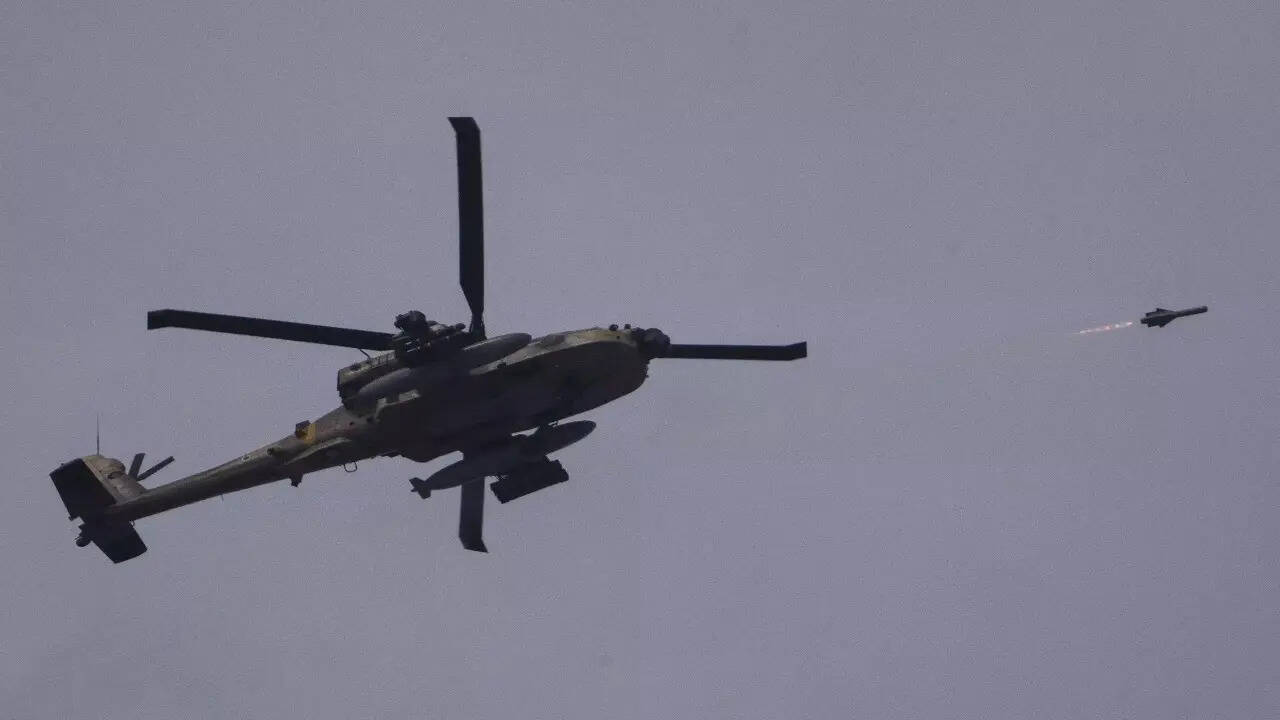
A U.S. Army Apache attack helicopter went down in the waters near the Strait of Hormuz on Monday, June 8, 2026. The two crew members on board were rescued and are doing fine, a fact later confirmed by President Donald Trump.
But don't let the quick rescue fool you. This isn't just another routine training mishap. It's the first time an American Apache gunship has gone down since the outbreak of hostilities between the U.S. and Iran earlier this year. With the fragile April ceasefire completely unraveling, the timing of this crash couldn't be worse. Whether it was a mechanical failure, pilot error, or Iranian anti-aircraft fire, the incident puts a spotlight on the insane operational stress the military faces right now in the Persian Gulf.
The Reality of America's Cat and Mouse Game in the Gulf
For months, U.S. Central Command (CENTCOM) has used a mix of fighter jets, drones, and AH-64 Apache gunships to break Iran's chokehold on the Strait of Hormuz. It's a brutal, high-stakes game. The strategic waterway is a global shipping artery, and right now, it's a powder keg.
The New York Times reported that CENTCOM has been pushing these Apache helicopters deeper into Iranian-monitored territory. The goal is simple. Washington wants to project a more aggressive posture to deter Tehran. Just a day before the crash, CENTCOM announced it shot down two Iranian drones targeting international maritime traffic. The tempo is relentless, and it's pushing both airframes and pilots to their absolute limits.
If you think this is a one-off issue, you aren't looking at the numbers. Tehran claims to have downed 30 MQ-9 Reaper drones since February. While Washington hasn't confirmed that number, we know the U.S. has taken real losses.
- April 2026: Thirteen American soldiers died and 399 were wounded during Operation Epic Fury.
- April 2026: Iran shot down a U.S. Air Force F-15 Eagle, sparking a frantic but successful rescue mission for the crew.
- March 2026: A friendly-fire incident involving Kuwaiti air defenses brought down three U.S. F-15s.
The theater is crowded, chaotic, and incredibly dangerous.
Why the Apache Was Flying in Harm's Way
Most people think of the Apache as a land-based tank killer. That's what it was built for. But in the Gulf, the military uses them for something completely different. They fly low-altitude littoral patrols to counter Iran’s fast-attack swarm boats and sea-skimming missiles.
Operating a heavy attack helicopter over salt water in extreme desert heat is a maintenance nightmare. The salt air eats the avionics. The heat thins the air, forcing the engines to work twice as hard to maintain hover and lift. When you add the threat of Iranian shoulder-fired surface-to-air missiles (MANPADS) and electronic warfare jamming, you get an environment where things go wrong fast.
President Trump recently stated that joint U.S.-Israeli strikes had "totally destroyed" Iran's military, leaving them with only 21% of their missile capacity. But 21% is still enough to be lethal. Even if this specific Apache fell victim to a technical malfunction—much like the UAE military helicopter crash that killed two crewmen back in March—the operational pressure caused by constant combat readiness is a direct catalyst for mechanical failure.
The Bigger Picture for Global Stability
The war that started on February 28 has already rocked the global economy, sending energy prices through the roof and driving up the cost of basic food items worldwide. Diplomatic efforts have stalled. Officials have been completely unable to turn the temporary April ceasefire into a permanent peace agreement.
With Trump claiming a fresh nuclear deal is within reach and promising "total victory" over Iran, the downing of an American asset threatens to upend delicate backroom diplomacy. Every single incident in the Strait of Hormuz carries the risk of accidental escalation. If an Apache crew is captured instead of rescued next time, the dynamic changes instantly.
The Pentagon promised to release a full incident report. Until then, the military has to keep flying these high-risk patrols.
For watchers of regional security, the lesson here is clear. Do not mistake a lull in major missile exchanges for peace. The tactical friction in the trenches—and in the air over the Gulf—is constant. Military planners need to re-evaluate the wear and tear on these airframes before mechanical fatigue or opportunistic enemy fire forces a much uglier headline. Watch the upcoming CENTCOM brief closely for updates on whether electronic warfare played a role in the crash.