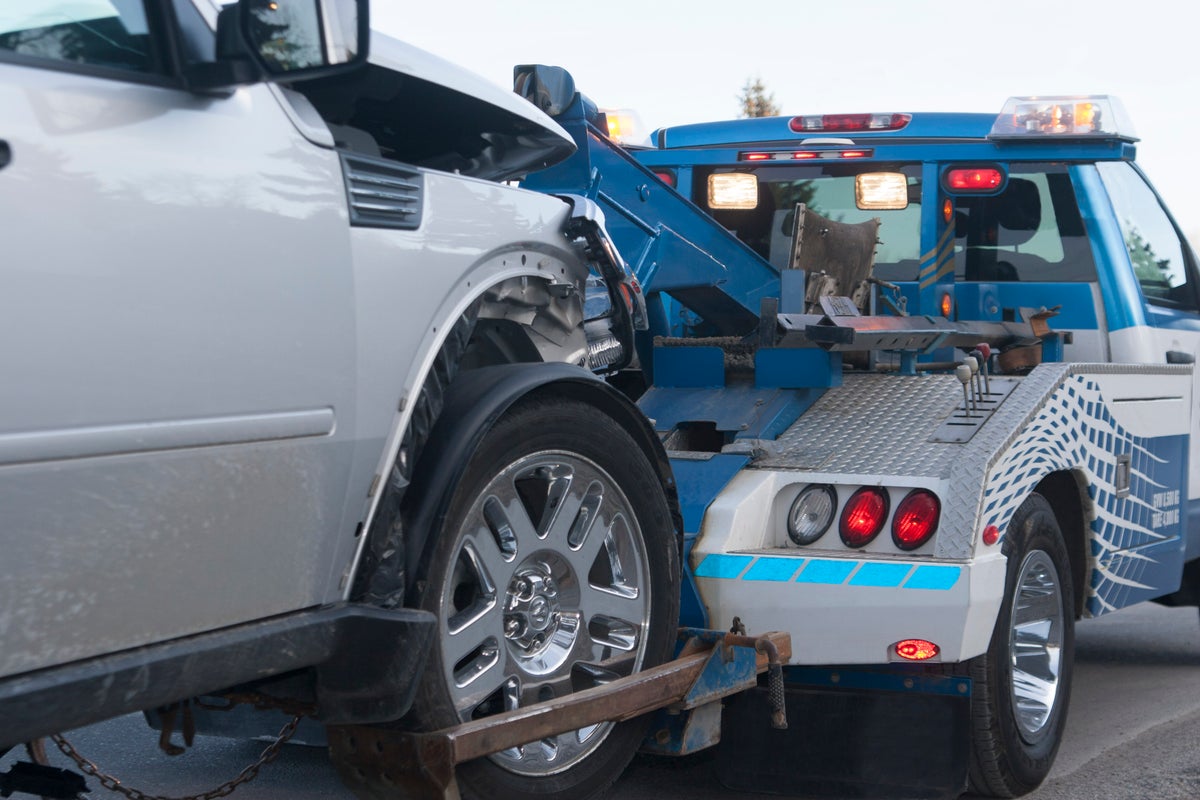
The Department of Justice just dropped a lawsuit on a private towing company for hauling 150 junkers off a Marine Corps base. The headlines are predictable. They paint a picture of a predatory business preying on "vulnerable" service members while they’re deployed. It’s a neat, emotional narrative that sells clicks and helps bureaucrats look like heroes.
It’s also a complete fabrication of how military logistics actually work.
If you’ve never stood on a base like Camp Lejeune or Pendleton, you don’t understand the "Ghost Fleet" problem. We aren't talking about a pristine, cherry-red Mustang belonging to a decorated sergeant currently dodging bullets in a far-off land. We are talking about rusted-out 2004 Honda Civics with three flat tires, expired tags from three states ago, and a cracked engine block leaking oil into the groundwater.
By suing companies for enforcing parking regulations, the DOJ isn’t protecting soldiers. It’s turning military installations into high-security scrap yards.
The Myth of the "Innocent Deployment" Tow
The legal crux of the DOJ’s argument hinges on the Servicemembers Civil Relief Act (SCRA). The law is clear: you can’t auction off a service member’s property without a court order if they are on active duty. On paper, it’s a noble protection. In practice, it’s being used as a blunt instrument to stop base commanders from cleaning up their own backyards.
Here is what the "lazy consensus" ignores: A massive percentage of these vehicles are "voluntary abandonments."
When a 19-year-old Lance Corporal gets stationed overseas or finishes his contract, he often realizes his $800 beat-er isn’t worth the cost of shipping or storage. So, he leaves it in the barracks parking lot. He loses the keys. He forgets it exists. Six months later, that car is a nest for rodents and a security hazard.
I’ve seen base facilities managers pull their hair out over this. They can’t move the car because of the red tape. They can’t leave it there because it blocks emergency access and construction. When they finally call a towing company to clear the blight, the DOJ swoops in years later to play "gotcha" with the paperwork.
Logistics vs. Sentimentality
Let’s talk about the math of a towing yard. A company isn't getting rich off a $500 auction of a car that’s been sitting for 90 days. Between the hook fee, the fuel, the insurance, and the literal square footage of the storage lot, the profit margins on these "illegal" auctions are razor-thin or non-existent.
The DOJ wants these companies to file a formal lawsuit for every single $400 junker. Think about the absurdity of that requirement:
- Pay a lawyer to draft a complaint.
- Pay filing fees to the court.
- Wait 60 to 180 days for a judge to sign off.
- All while the vehicle takes up space that costs the company money every day.
If the towing company follows the DOJ’s preferred "legal" route, they go out of business. If they go out of business, who clears the base? Nobody. The base becomes a graveyard of rotting steel.
The SCRA is Being Weaponized Against Efficiency
The SCRA was designed to prevent a bank from foreclosing on a soldier’s home while they were in a foxhole. It was never intended to be a free "permanent parking pass" for abandoned scrap metal on federal property.
When the DOJ sues, they often cite the lack of "due diligence" in checking military status. But the Department of Defense’s own DMDC (Defense Manpower Data Center) database is notoriously clunky for private vendors. If a name is misspelled by one letter or a VIN is typed incorrectly, the "active duty" status might not pop up.
The government is essentially punishing small businesses for the failures of the government’s own database.
The Hidden Cost to the Taxpayer
Whenever the DOJ "wins" one of these cases, the industry reacts. Towing companies stop bidding on military contracts. They decide the risk of a federal lawsuit isn't worth the $150 tow fee.
When the private sector walks away, the military has to handle it internally. That means:
- Buying multi-million dollar fleets of tow trucks.
- Training personnel whose primary job should be defense.
- Building government-run impound lots.
We are traded a functional, privatized solution for a bloated, taxpayer-funded bureaucracy, all to protect the "rights" of people who, in the vast majority of cases, don’t even want their cars back.
Stop Asking if it’s Legal and Start Asking if it’s Logical
The "People Also Ask" section of your search engine is filled with questions like, "Can a towing company take my car if I’m deployed?" The answer is technically "no," but the honest answer should be "Why are you leaving your junk on base?"
The military community needs to hear the truth: personal responsibility doesn't end when you put on a uniform. If you leave a vehicle to rot on federal land, you are creating a logistical nightmare for your fellow Marines. You are the reason the barracks look like a junkyard.
The DOJ’s intervention isn't a victory for civil rights. It’s a subsidy for laziness.
By making it impossible for towing companies to operate, the government is ensuring that military bases remain cluttered, unsafe, and ugly. We are prioritizing the "property rights" of a rusted-out fender over the operational readiness of a combat-ready installation.
If you want to protect service members, give them better financial literacy training so they don't buy 24% APR lemons in the first place. Don't sue the guy who's tasked with hauling the mistake away.
The next time you see a headline about a "predatory" towing company on a base, look past the outrage. Look at the photos of the cars. Ask yourself if that’s a vehicle someone is coming back for, or if it’s just trash that the government is now forcing us to keep.
If the DOJ wins, the only loser is the efficiency of the American military machine. Stop protecting the scrap and start protecting the mission.
.jpg?width=1200&auto=webp&crop=3%3A2)

