Paper rustles. Pages turn. In a locked room where every hour looks like the last, a book about soil can feel like a strange kind of rescue.
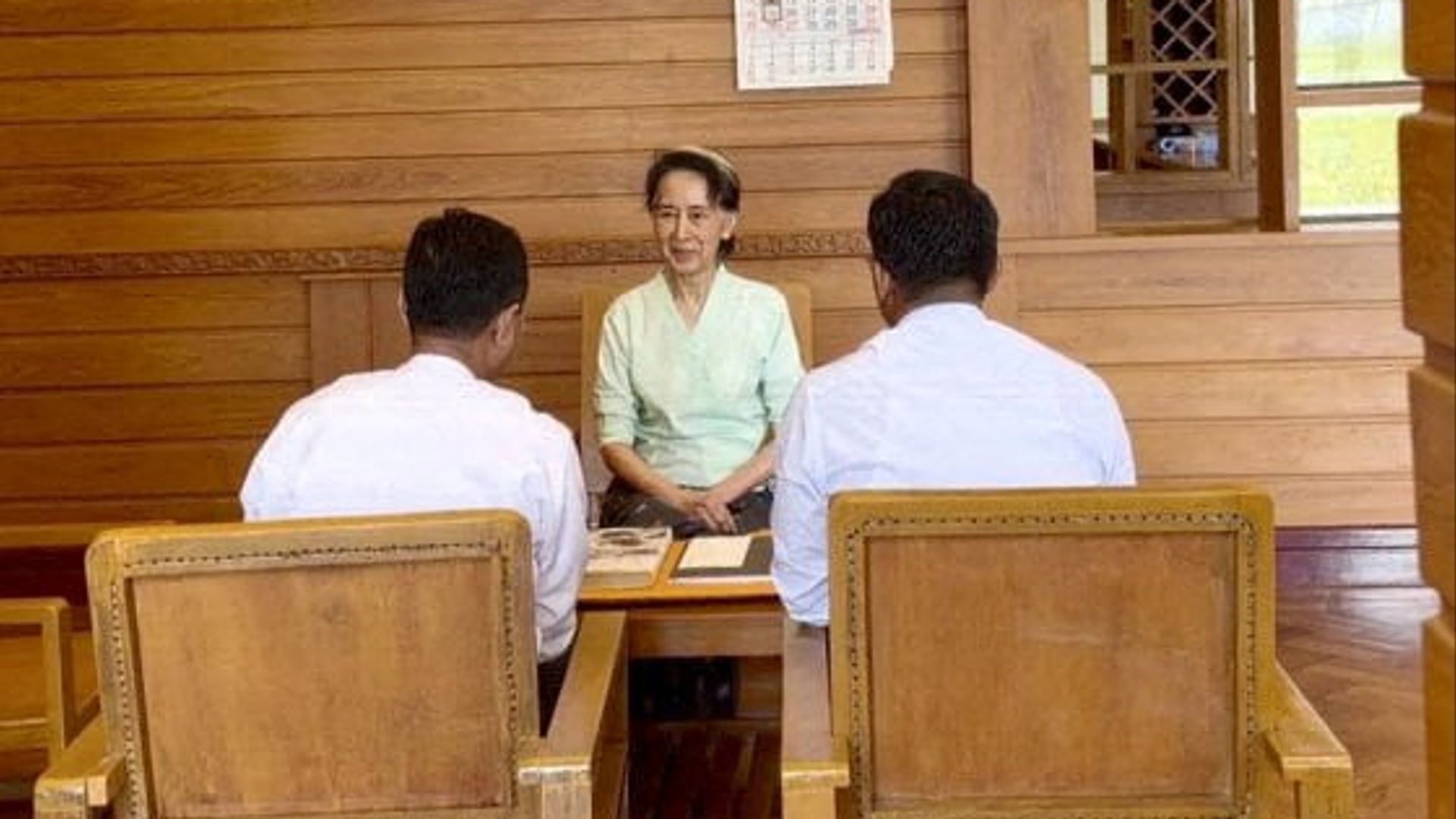
For years, headlines have reduced an extraordinary human collision to a neat, dry line: King Charles sending books about soil to Aung San Suu Kyi. A royal with a lifelong devotion to organic farming and regenerative agriculture. A political leader in Myanmar—formerly Burma—who has spent much of her adult life under detention, isolated from crowds, microphones, and ordinary movement. At first glance, the pairing sounds almost eccentric. Why send volumes on humus, microbial life, and living earth to a woman held in confinement?
Dirt.
It is the last thing people expect a prisoner to crave when freedom is the obvious prize, yet when you sit with the reality of prolonged isolation, the gift stops looking odd and starts looking sharp, almost subversive.
I have spent enough time in quiet, windowless rooms—not a prison cell, to be fair, though during a long stretch of recovery from an injury where the world shrank to a single chair and a narrow view of a brick wall—to know how hunger changes shape. When your body stays still for months, your mind goes looking for motion anywhere it can find it. You start noticing the grain of wood. You start wondering what is happening outside the glass. You realize that even small, ordinary things—rain hitting leaves, worms turning dark loam after a storm—carry a weight you took for granted when you could walk out the door.
That personal memory is only a faint echo of Aung San Suu Kyi’s reality. Her detentions have spanned years across decades, separating her from public life, from her family for long stretches, and from the open movement of her country. When someone is cut off from the world, books become more than entertainment or escape; they become corridors. A book on soil does not offer a key to a gate, yet it opens a door into a universe that never stops working, even when human politics stalls and rots.
Why Soil Is Never Just Dirt
Most of us walk over soil without giving it a second thought. We call it dirt, sweep it off our shoes, wash it from beneath our fingernails, and treat it as dead weight beneath asphalt and grass.
That habit is expensive.
Soil is not inert powder. Healthy topsoil is a bustling metropolis packed into every handful—a tangled web of fungi, bacteria, protozoa, earthworms, organic matter, and mineral particles that makes almost all terrestrial food possible. According to agricultural and environmental assessments by organizations such as the Food and Agriculture Organization of the United Nations, roughly a third of the world’s soils are already moderately to highly degraded due to erosion, nutrient depletion, compaction, and chemical overuse. Building even a few centimeters of rich topsoil can take centuries under natural conditions, yet careless plowing and bare earth can strip it away in a handful of heavy rains.
When soil dies, harvests shrink. When harvests shrink, families go hungry, migration pressures rise, and rural communities lose the ground beneath their feet—literally and economically.
Let us use a hypothetical scenario to make this concrete, clearly labeled as fiction so we do not blur fact with invention. Imagine a fictional smallholder farmer named Ko Hla in central Myanmar’s dry zone. For twenty years, Ko Hla planted the same crop season after season, leaning on synthetic inputs whenever yields dipped and leaving fields exposed between rains. One afternoon, a sudden downpour carves shallow gullies across his slope, carrying dark, nutrient-rich topsoil into a muddy stream. Nothing dramatic explodes. No siren sounds. Yet next season, the maize stalks come up thinner, the earth bakes harder in the sun, and Ko Hla has to spend more just to stand still.
That slow, silent bleeding is what soil books describe. They are manuals for paying attention to what happens beneath the surface before crisis becomes visible on the plate.
A King Who Spoke to Plants Before Crowns
Long before ascending the throne, King Charles—then Prince of Wales—was widely mocked in certain corners of the press for talking to plants and championing organic farming at Home Farm on the Highgrove estate. Critics treated his interest in soil health, heritage breeds, and chemical-free cultivation as aristocratic eccentricity, a hobby for someone insulated from hard economic choices.
Time has made those early jokes look thinner.
Decades of pushing organic methods, agroecology, and soil stewardship at Highgrove turned a personal fixation into a consistent public pillar. Whether people agree with every policy speech or royal initiative, his commitment to living soil has remained remarkably steady across changing fashions. He has long argued that industrial farming treats the land like a factory floor—extracting value while ignoring the biological engine that makes extraction possible in the first place.
If you are trying to understand why a man like that would send books about soil to Aung San Suu Kyi, it helps to look at how he views the world. To someone steeped in regenerative agriculture, soil is the foundation of resilience. You cannot build healthy communities on exhausted ground, and you cannot heal a fractured landscape with quick chemical fixes that leave the underlying biology weaker.
That is a metaphor worth naming explicitly: soil health as a mirror for social health. When you strip away diversity, poison the living web underneath, and demand endless output without rest, the system looks productive right up until it breaks. Calling that a metaphor does not make it less true in human affairs; it simply reminds us that fields and societies operate by different rules, even when they share patterns of exhaustion and renewal.
What a Prisoner Sees in Living Earth
Consider what happens next when a volume on soil lands in the hands of someone under detention.
A political prisoner lives inside tight walls and tighter scrutiny. Every day is rationed. News is filtered, delayed, or scarce. In that environment, time can feel like heavy syrup—thick, slow, and hard to push through.
A book on soil does something quiet with time. It shifts the frame from the immediate cage to deep time. A single spoonful of healthy soil holds more microorganisms than there are people on Earth, each playing a role in cycling nutrients, holding moisture, and anchoring roots. Learning how mycorrhizal fungi trade nutrients with plant roots, or how cover crops protect bare ground from scorching sun, invites the mind outward into an intricate, living system that operates without permission from any regime.
I admit something honest here: I do not know the exact private thoughts Aung San Suu Kyi has held over every year of her confinement, nor can any outsider claim full certainty about what reading any given book meant to her on a specific Tuesday afternoon. Politics in Myanmar is complex, painful, and deeply contested, and anyone writing from the outside has to resist pretending to read minds behind closed doors. Uncertainty is part of the story. Sometimes the most trustworthy thing a writer can say is: here are the facts we know, here is why they matter, and here is where our certainty ends.
Even with that humility, the human logic holds. Books have always been contraband of the spirit. During periods of house arrest and detention, reading has been a way for Aung San Suu Kyi to stay tethered to ideas, literature, history, and the wider world. A book about soil carries an added layer of meaning in a country whose economy and identity are deeply tied to land, rice paddies, river valleys, and rural livelihoods.
Reading Between the Lines of a Quiet Gesture
Why did this story travel so far despite its quietness?
Because most news about power is loud. It arrives in speeches, sanctions, troop movements, border clashes, and dramatic press conferences. A gesture involving books and soil moves at walking pace. There are no explosions in it. No instant victory. No neat political resolution.
Yet quiet gestures often expose what loud ones hide.
Sending books about soil highlights three truths that modern audiences easily overlook:
- First, survival is biological before it is political. Governments rise and fall, borders shift, and headlines churn, yet humans still depend on clean water, stable climates, and fertile ground to eat.
- Second, slow crises rarely win urgent attention. Soil degradation happens millimeter by millimeter, season by season, until one drought or flood reveals how thin the cushion has become.
- Third, intellectual and moral curiosity can survive confinement. Even when movement is restricted, attention can travel across continents and centuries through ink and paper.
People often ask whether gestures like sending books actually change anything on the ground in a place as troubled as Myanmar. That is a fair question, and a hard one. A book does not reopen a school, feed a displaced family, or resolve a deep political crisis on its own. Anyone who claims a reading list solves a conflict is selling comfort rather than candor.
Still, dismissing small acts entirely misses how influence and solidarity sometimes work. Ideas plant seeds—another classic metaphor, and an apt one here—that may sit dormant for years before conditions allow anything to sprout. Sometimes the point of a gesture is not immediate transformation; it is refusing to let a person, or a vital subject, disappear from view.
The Invisible Stakes Under Our Boots
Think about how easy it is to confuse noise with importance.
Every day, feeds flood with outrage over things that will be forgotten by next Friday. Meanwhile, the quiet foundations of life—topsoil depth, groundwater recharge, seed diversity, rural stability—receive a fraction of the care they demand. When soil loses organic matter, it holds less water during heavy rains and releases less moisture during dry spells. Farmers face sharper swings between flood and drought, driving up costs and pushing younger generations toward cities where opportunities may be scarce.
In a country like Myanmar, where agriculture has long been a central pillar of employment and food security, the health of the land is never a niche topic for hobbyists. It is tied to livelihoods, peacebuilding, and the possibility of recovery whenever stability returns.
Look again at that unlikely pair at the center of the story: a monarch known for championing organic farming and a detained leader whose name has echoed through decades of global political debate. Strip away the titles and the drama, and you are left with two profound preoccupations—care for the living earth and the endurance of a human mind under pressure.
One speaks of roots, compost, and living ground.
The other speaks of endurance, confinement, and hope held quietly in the dark.
Darkness is not the end of what grows in the earth. Seeds do their hardest, most patient work out of sight, pressing against cold soil long before a single green tip breaks the surface.