When Polish Foreign Minister Radoslaw Sikorski declared Prime Minister Donald Tusk’s visit to India "extremely successful," the diplomatic press corps dutifully transcribed the quote and moved on. They missed the real story. This was not a routine courtesy call celebrating the 70th anniversary of bilateral relations or the first visit by a Polish prime minister to New Delhi in 45 years. It was a calculated strategic hedge. Elevated to a formal Strategic Partnership, the renewed Warsaw-New Delhi axis is driven by an urgent reality: both nations are trapped between aggressive neighbors, shifting American security guarantees, and the messy fallout of fractured global supply chains.
Strip away the ceremonial banquets and the talk of shared democratic values. What remains is a hard-nosed transaction between Central Europe’s fastest-growing military power and the world’s most populous emerging economy.
The End of Diplomatic Complacency
For nearly half a century, Warsaw and New Delhi treated each other as geopolitical afterthoughts. During the Cold War, Poland sat firmly inside the Soviet bloc while India championed the Non-Aligned Movement. Even after the Berlin Wall fell and Poland joined NATO and the European Union, Polish foreign policy looked almost exclusively west toward Brussels and Washington, or nervously east toward Moscow. India, meanwhile, focused on its immediate neighborhood, the United States, and its historical defense supplier, Russia.
That mutual indifference became untenable in February 2022. Russia’s full-scale invasion of Ukraine shattered the European security architecture overnight, turning Poland into NATO’s indispensable eastern logistics hub. At the exact same moment, New Delhi found itself walking a geopolitical tightrope. India refused to condemn Moscow at the United Nations, aggressively bought discounted Russian crude oil, and maintained its decades-old reliance on Russian military hardware.
Western capitals fumed. Polish officials, who view Russian imperialism as an existential threat, were initially baffled and frustrated by New Delhi’s neutrality. Yet Tusk’s government recognized a basic truth that many smaller European states ignored: lecturing a rising superpower of 1.4 billion people achieves nothing. Engagement does.
The Defense Manufacturing Calculation
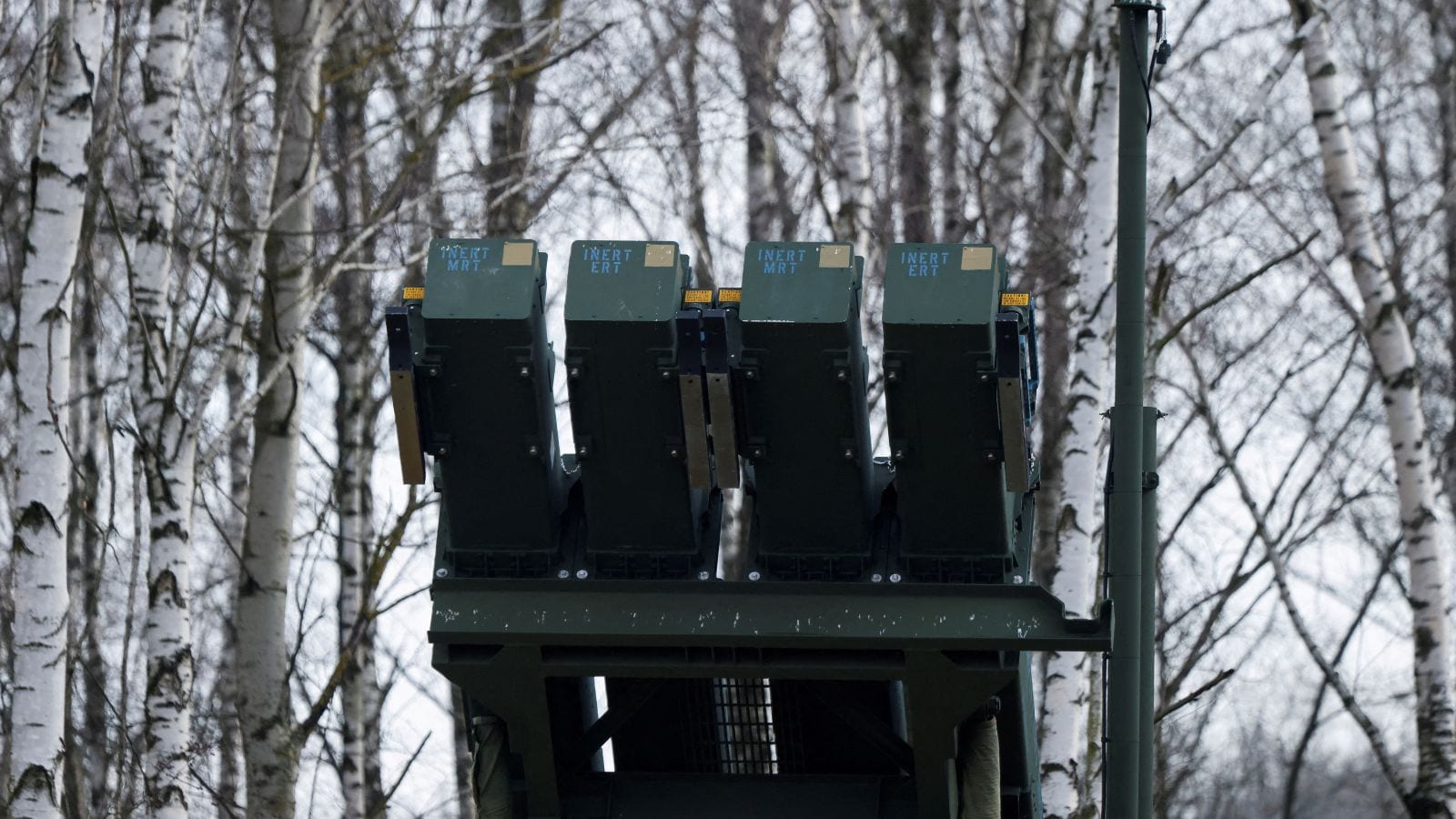
The centerpiece of this new alignment is hard power, specifically defense industrial cooperation. Poland is currently executing the most aggressive military modernization program in Europe, spending over four percent of its GDP on defense. Warsaw has signed massive contracts with the United States and South Korea for tanks, artillery, and fighter jets, but buying off-the-shelf equipment drains national coffers and leaves supply chains vulnerable to foreign bottlenecks.
Poland wants to build, not just buy. India wants the exact same thing under its Atmanirbhar Bharat (Self-Reliant India) initiative.
New Delhi has spent the last decade trying to wean itself off Russian weapons, especially as Moscow’s defense industry struggles to supply its own battered forces in Ukraine. India needs reliable European partners willing to transfer technology and co-produce components locally. Poland’s state-owned defense conglomerate, Polska Grupa Zbrojeniowa (PGZ), possesses specialized expertise in radar systems, armored vehicle components, and naval technology that fits neatly into India’s procurement gaps.
Consider a hypothetical scenario to see how this works in practice. An Indian defense contractor needs advanced thermal imaging or battlefield management software for its domestically produced infantry fighting vehicles. Buying from France or Germany comes with steep price tags and strict end-user restrictions. Partnering with a Polish firm offers NATO-standard engineering at a lower cost, with a partner eager to establish joint ventures on Indian soil.
Warsaw also holds a unique card that few other Western nations possess: deep institutional knowledge of Soviet-era hardware. For decades, Polish engineers maintained, upgraded, and reverse-engineered Warsaw Pact tanks, helicopters, and air defense systems. India still operates vast fleets of Russian-origin T-72 tanks, BMP infantry fighting vehicles, and MiG aircraft. Polish companies can supply spare parts, modernization kits, and maintenance expertise for legacy equipment that Moscow can no longer reliably service. That is not diplomatic fluff. That is immediate operational value for the Indian Armed Forces.
Supply Chains Beyond Beijing
Economics forms the second pillar of this partnership, though the numbers reveal how much ground remains to be covered. Bilateral trade between Poland and India hovers around six billion dollars. For two economies of their size, that figure is remarkably low. Poland is India’s largest trading partner in Central and Eastern Europe, yet India accounts for a fraction of Poland’s overall trade volume.
Both governments are determined to change that math because both are actively trying to reduce their economic exposure to China.
Warsaw has grown deeply wary of Beijing’s "no-limits" partnership with Moscow. Polish intelligence and economic planners view reliance on Chinese manufacturing and critical minerals as a strategic liability. At the same time, European manufacturers are looking to friend-shore production away from East Asia. Poland offers foreign investors a highly skilled workforce, modern infrastructure, and direct, tariff-free access to the entire European Union single market.
Indian conglomerates—particularly in pharmaceuticals, information technology, and automotive components—are already using Poland as their continental beachhead. Over two billion dollars in Indian capital has flowed into Polish operations, creating thousands of jobs in cities like Warsaw, Krakow, and Wroclaw. For Indian IT giants like Infosys, Wipro, and HCL, Poland has become a critical nearshore delivery hub serving Western European clients in the same time zone.
Conversely, Polish companies are eyeing India’s massive infrastructure boom. Poland is a powerhouse in green technology, mining equipment, food processing, and rail transport. As India pours hundreds of billions of dollars into modernizing its railways, expanding its electrical grid, and cleaning up its coal-dependent energy sector, Polish engineering firms see lucrative contracts waiting to be won.
The Regulatory Friction Nobody Mentions
Despite the upbeat press conferences, doing business across this corridor remains painfully difficult. European executives routinely complain about India’s labyrinthine bureaucracy, unpredictable tax disputes, and stubbornly high import tariffs. A Polish machinery exporter looking to enter the Indian market often hits a wall of protectionist regulations designed to shield domestic manufacturers.
Indian firms face their own headaches in Poland. Visa processing bottlenecks for Indian engineers and technicians have chronically slowed down project rollouts. While Warsaw has promised to streamline work permits for skilled Indian professionals, political sensitivities surrounding immigration in Poland make rapid reform tricky. Tusk’s coalition government faces constant pressure from right-wing opposition parties over border security and migration policy. Opening the doors wider to foreign labor, even high-skilled tech workers, carries domestic political risk.
Furthermore, the stalled India-EU Free Trade Agreement hangs over the entire economic relationship. Until Brussels and New Delhi resolve their disagreements over agricultural tariffs, data localization rules, and intellectual property protections, bilateral trade between Poland and India will remain constrained by red tape. Poland will assume the rotating presidency of the Council of the European Union in the first half of 2025, giving Warsaw a temporary pulpit to push those negotiations forward. Whether it can break a decade-long deadlock remains an open question.
The Ukraine Elephant in the Room
No honest assessment of Polish-Indian relations can ignore the glaring ideological divide over Russia. For Poland, the war in Ukraine is a black-and-white struggle for survival against a genocidal aggressor. For India, it is a distant European conflict that disrupts global energy and fertilizer markets.
During his stop in Kyiv immediately following his visit to Warsaw, Indian Prime Minister Narendra Modi hugged Ukrainian President Volodymyr Zelenskyy and spoke passionately about peace and sovereignty. Western commentators rushed to hail a shift in Indian policy. Veteran diplomats knew better. Modi’s trip to Kyiv was a carefully choreographed balancing act meant to appease Washington and Brussels just weeks after he drew fierce Western criticism for embracing Vladimir Putin in Moscow.
Poland understands this duality. Tusk and Sikorski did not fly to New Delhi expecting India to slap sanctions on Russian oil or join NATO’s defense posture. Instead, Warsaw’s goal is far more pragmatic: convince New Delhi to use its influence in Moscow to restrain Russian escalation, particularly regarding nuclear threats and attacks on global food supplies.
India values its reputation as the voice of the Global South. When Russian blockades in the Black Sea choke off Ukrainian grain exports, food prices spike across Africa and Asia, hurting countries India claims to champion. Polish diplomats have hammered this point home in private meetings. By framing the war not as a regional European dispute, but as a direct threat to Global South stability, Warsaw hopes to nudge New Delhi toward applying quiet pressure on the Kremlin.
There is also a crucial technology angle here. Western intelligence agencies have tracked how sanctioned dual-use components—microchips, optics, and machine tools—find their way into Russian weapons via third-party intermediaries. Poland wants ironclad assurances that Indian territory and financial networks will not become backdoors for sanction evasion. Securing New Delhi’s quiet cooperation on export controls is worth far more to Warsaw than a dozen symbolic UN votes.
Why Poland Plays the Long Game
To understand why Donald Tusk invested precious political capital in India, you have to look at the broader map of European power. For decades, Berlin and Paris dictated the European Union’s foreign policy toward Asia. Warsaw was largely treated as a junior partner expected to follow their lead.
That era is over. Brexit removed Britain from the EU table. Germany’s economic model has sputtered due to the loss of cheap Russian gas and slowing Chinese demand. France remains distracted by domestic political paralysis and the collapse of its influence in West Africa. Into that vacuum steps Poland—economically resilient, militarily formidable, and geographically central to Europe’s future.
By forging a direct strategic link with India, Warsaw is signaling that it will no longer outsource its Asian diplomacy to Western Europe. Poland intends to be the primary gateway between the Indo-Pacific and Central Europe.
This ambition extends beyond India. Warsaw has already built massive defense and economic ties with South Korea and Japan. Adding India to that portfolio completes a deliberate diplomatic triangle aimed at linking Europe’s eastern flank with Asia’s major democracies. If the United States eventually pivots its military resources away from Europe to counter China in the Pacific, Poland wants deep, independent relationships with key Asian powers already locked in place.
The Unspoken Risks Ahead
None of this guarantees smooth sailing. Strategic partnerships are easy to announce at podiums and notoriously hard to execute in ministries.
India’s foreign policy doctrine of multi-alignment means New Delhi will never be an exclusive ally to anyone. It will happily co-produce armored vehicle parts with Poland on Tuesday, sign an energy deal with Russia on Wednesday, and conduct naval drills with the United States on Thursday. Polish policymakers accustomed to the rigid collective security commitments of NATO will occasionally find India’s transactional flexibility frustrating.
At the same time, Poland’s domestic politics remain volatile. The bitter rivalry between Tusk’s Civic Coalition and the conservative Law and Justice party paralyzes institutional continuity. While both camps broadly agree on the need to counter Russia and expand trade, shifts in government often bring purges of senior diplomats and abrupt changes in procurement priorities. Indian negotiators, who operate on multi-decade timelines, despise political unpredictability.
The real test of this "extremely successful" visit will not be measured by the warmth of joint communiques or the number of cultural exchanges launched. It will be measured two years from now in hard metrics: how many Polish defense components are rolling off Indian assembly lines, whether bilateral trade has broken past the ten-billion-dollar mark, and how effectively Warsaw and New Delhi coordinate when the next global supply chain shock hits. Until those contracts are signed and the factories are running, the handshakes in New Delhi remain an expensive down payment on a future neither country can afford to take for granted.