Hong Kong has a space problem. Everyone knows about the cage homes, the subdivided flats, and the astronomical property prices. But the real crisis starts after you die.
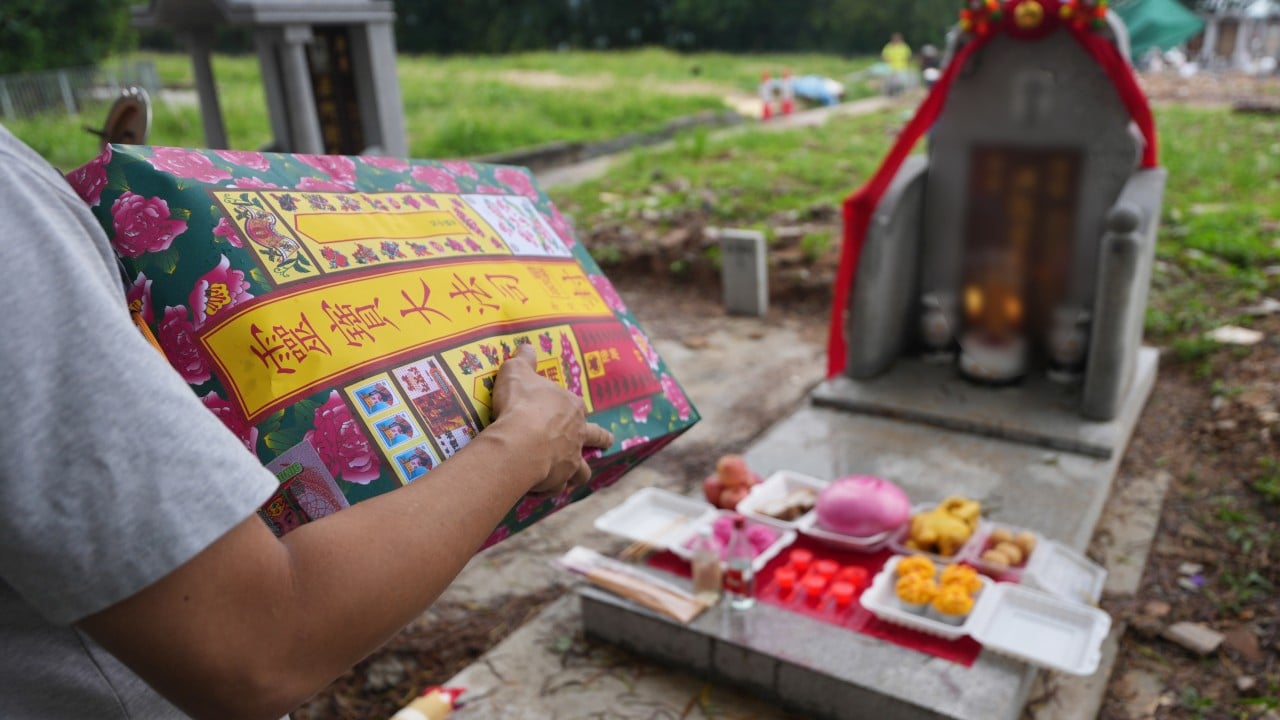
When a fire tears through a makeshift tenement or an impoverished senior passes away alone, well-meaning NGOs rush in. They offer what the media loves to call a dignified farewell. They pick up the bill for traditional ceremonies. They arrange the paper villas, the incense, and the ritual mourning. They promise to give the marginalized a final send-off that matches the cultural expectations of a society obsessed with filial piety and ancestral respect.
It sounds noble. It makes for fantastic fundraising copy.
It is also an expensive, sentimental distraction from a brutal systemic failure.
By focusing on the aesthetics of death, we are ignoring the economics of survival. The current model of philanthropic funeral aid in Hong Kong does not solve poverty. It merely subsidizes an entrenched, monopolistic funeral industry while doing nothing to alleviate the misery of the living. We are spending thousands of dollars per corpse to buy a fleeting moment of social comfort, while the neighbors of the deceased are still starving in four-hundred-square-foot firetraps.
It is time to stop romanticizing the final send-off.
The Illusion of Dignity in a Monopolized Market
Let us look at the mechanics of the Hong Kong death care industry. The cost of a basic funeral in the city easily ranges from $20,000 to over $70,000 Hong Kong dollars. For a family living on Comprehensive Social Security Assistance (CSSA), this is an insurmountable barrier. The government provides a burial grant, but it is notoriously bureaucratic and frequently falls short of commercial reality.
Enter the charities. They step in to bridge the gap. They negotiate with funeral parlors, purchase coffins, and organize the rites.
But who actually benefits here?
I have tracked urban charity budgets and seen how capital flows in these crises. When an NGO covers the cost of an elaborate ritual, that money does not stay in the community. It goes straight into the pockets of a highly consolidated network of funeral operators who control the private chapels and service monopolies in districts like Hung Hom.
By subsidizing these exorbitant fees under the guise of compassion, charities act as a financial safety valve for an exploitative market. They keep prices artificially high.
If private philanthropy consistently bails out the system, the commercial death care sector has zero incentive to lower prices or offer affordable, stripped-back options. The NGO becomes the ultimate consumer, paying retail prices for ritualistic compliance. This is not philanthropy. It is an involuntary transfer of charitable donations to private commercial interests.
The Cultural Tax on the Poor
The conventional narrative insists that a proper traditional funeral is essential for peace of mind. We are told that without a multi-day wake, paper effigies, and complex Taoist or Buddhist rituals, the deceased is dishonored and the surviving family faces immense shame.
This is a cultural tax levied most heavily on those who can least afford it.
Traditional Funeral Cost Breakdown (Typical High-End vs. NGO Subsidized)
+------------------------+-------------------+-------------------+
| Expense Item           | Commercial Rate   | NGO Subsidized    |
+------------------------+-------------------+-------------------+
| Chapel Rental          | HKD 15,000        | HKD 8,000         |
| Ritual Workers/Priests | HKD 12,000        | HKD 6,000         |
| Paper Offerings        | HKD 8,000         | HKD 3,000         |
| Coffin & Transport     | HKD 10,000        | HKD 5,000         |
+------------------------+-------------------+-------------------+
| Total Cost             | HKD 45,000        | HKD 22,000        |
+------------------------+-------------------+-------------------+
Look at those numbers. Even when subsidized, a single funeral consumes tens of thousands of dollars.
Imagine a scenario where an elderly resident dies in a subdivided flat fire in Sham Shui Po. An NGO steps in, raises HKD 25,000 from donors, and organizes a traditional burial. The community watches, nods in approval, and feels a sense of collective closure.
Now look at the surviving tenants of that same building. They are living with exposed wiring, blocked fire escapes, and no fire extinguishers. That same HKD 25,000 could have retrofitted an entire floor with smoke detectors, replaced faulty electrical mains, or provided emergency rent assistance to prevent the next tragedy.
Instead, the money went up in smoke—literally—via paper offerings burned in a furnace.
We are prioritizing the comfort of the dead over the safety of the living. We have defined dignity so narrowmindedly that it only applies once a heartbeat stops. True dignity is not a silk-lined coffin. True dignity is not breathing in toxic smoke while you sleep.
Challenging the Premise: The Flawed PAA Questions
When people look into this issue, the questions they ask reveal a deep-seated denial of the economic reality.
Do not impoverished families deserve the same funeral rites as the wealthy?
This question assumes that the value of human life is directly correlated with the complexity of a funeral service. It frames the debate around equity of consumption rather than utility. The wealthy can afford to waste capital on ostentatious displays of grief. The poor cannot. Forcing or enabling the impoverished to mimic the wasteful spending habits of the elite under the banner of equality is patronizing. It treats ritual equality as a substitute for economic justice.
How can we scale up funeral charities to meet the rising death rate?
You do not scale up a flawed charity model; you dismantle the structural bottleneck. The bottleneck is the supply of columbarium niches and public cremation slots controlled by the Food and Environmental Hygiene Department (FEHD). When charities try to scale up to meet demand, they simply create a bigger administrative apparatus to manage the backlog. The solution is policy reform and market disruption, not a larger network of donation-dependent funeral organizers.
Green Burials and the War on Ritual Waste
If we want to actually help the needy, we must strip the sentimentality away from death care. The path forward requires a radical pivot toward ultra-low-cost, zero-waste alternatives.
Hong Kong has been promoting green burials—scattering ashes in gardens of remembrance or at sea—for years. Yet, the adoption rate remains sluggish because cultural inertia and NGO messaging continue to legitimize traditional, land-hungry rituals.
- Eliminate the Wake: The traditional overnight vigil is the single largest driver of chapel rental fees. It is an unnecessary luxury in a city with a severe space deficit.
- Direct Cremation: Move the body directly from the mortuary to the crematorium. No viewing, no public gathering, no cosmetic embalming.
- Decentralized Memorialization: Hold memorial services in community centers, public parks, or digital spaces. Sever the link between remembrance and commercial funeral parlors.
This approach is highly unpopular. It offends traditional sensibilities. It angers the funeral directors who see their high-margin packages replaced by simple, low-cost services.
But look at the math. A direct green burial costs a fraction of a traditional service. By adopting this as the default standard for public and charitable assistance, we free up millions of dollars in philanthropic capital.
Shift the Capital to the Living
The hard truth is that every dollar spent on a dead body is a dollar stolen from a living child, a struggling family, or a vulnerable senior.
I have seen organizations celebrate fundraising milestones for their funeral funds while their community kitchens run out of rice. It is a twisted prioritization born out of a desire for clean, emotionally satisfying narratives. It is easy to write a newsletter about a dignified funeral. It is much harder to fund the messy, long-term, unglamorous work of structural housing reform, fire safety code enforcement, and mental health support for isolated seniors.
If an NGO wants to truly help Hong Kong fire victims, they should stop buying them coffins. They should buy them a way out of the slums.
Stop funding the smoke and mirrors of the funeral industry. Invest in concrete, steel, and fire doors. Let the dead rest simply, so the living can finally breathe.