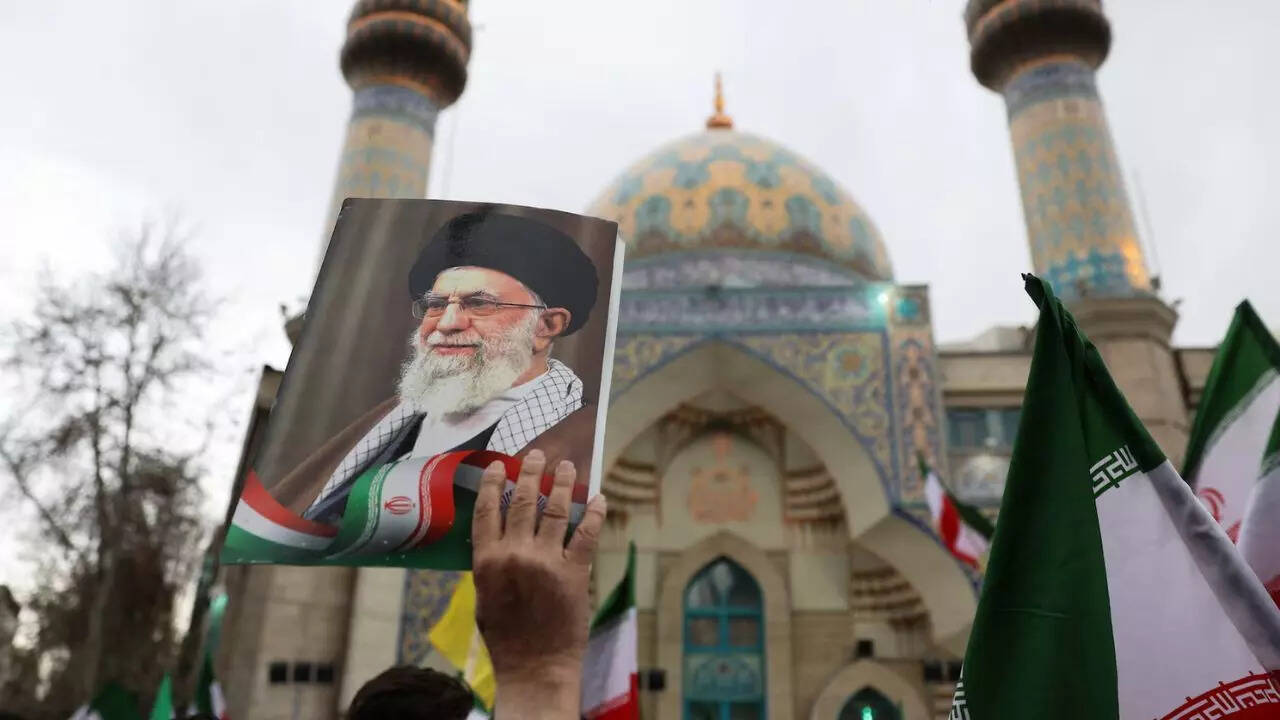
The breach of the Iranian prayer app "Gharar" represents more than a simple data leak; it is a calculated strike at the intersection of religious life and state-sponsored surveillance. When five million users found their personal data exposed and their screens replaced with calls for political rebellion, the message was clear. This was not a random act of digital vandalism. It was a sophisticated operation aimed at breaking the psychological bond between a population and the digital tools sanctioned by their government. The hack, widely attributed to Israeli-linked actors, highlights a brutal reality about the modern Middle East. In this theater, your smartphone is both a prayer book and a tracking device.
The attackers did not just steal emails and phone numbers. They hijacked the notification system to broadcast a call for "patriots" to continue protesting against the regime. This specific choice of target—a prayer app—is a masterstroke of psychological warfare. By compromising a platform used for intimate, spiritual practice, the hackers sent a shockwave through the Iranian social fabric. They proved that no space, no matter how private or pious, is beyond the reach of their intelligence services.
The Architecture of the Breach
To understand how five million people lost their privacy in a single afternoon, we have to look at the fragile infrastructure of state-mandated software. In Iran, the government heavily incentivizes, and often forces, the use of domestic alternatives to Western platforms like WhatsApp or Telegram. These "National Information Network" apps are built with a dual purpose: to provide services to citizens and to provide a back-door for the Ministry of Intelligence.
This dual-use architecture is inherently insecure. By building "hooks" for state surveillance into the application’s code, Iranian developers inadvertently create massive vulnerabilities that foreign intelligence agencies can exploit. It is a classic case of a back-door being used by the wrong person. If a government can listen in, so can a sufficiently motivated adversary.
The hack of Gharar likely utilized a compromised API or a flaw in the app's push notification server. By gaining administrative access to the server that sends out "calls to prayer" or daily verses, the attackers were able to blast their own political messaging directly to the lock screens of five million devices. It was an instantaneous, unfilterable mass broadcast.
The Israeli Signature and the Strategy of Humiliation
While official confirmation of Israeli involvement is rarely forthcoming in these scenarios, the fingerprints are familiar. This operation mirrors previous strikes on Iranian infrastructure, such as the 2021 attack on the national fuel distribution system and the 2022 breach of the state-owned Khuzestan Steel Company.
Israel’s cyber strategy has shifted. It is no longer just about gathering intelligence or sabotaging nuclear centrifuges in secret. It is now about public humiliation. By targeting everyday civilian infrastructure—gas stations, steel mills, and now prayer apps—the goal is to demonstrate the Iranian state’s inability to protect its own people.
The Weaponization of Disruption
- Psychological Displacement: Making the user feel unsafe in their most personal digital habits.
- Infrastructure Erosion: Forcing the state to divert resources from offensive operations to constant defensive patching.
- Social Agitation: Using hijacked platforms to bypass state censors and directly incite domestic unrest.
This isn't just about code. It is about the erosion of the social contract. When a government tells its citizens to use a specific app for their safety and spiritual well-being, and that app becomes a mouthpiece for a foreign enemy, the government’s credibility evaporates.
The Myth of Digital Sovereignty
The Iranian regime has spent billions of dollars attempting to create a "halal internet," a closed-loop system that gives them total control over information flow. They call it digital sovereignty. In reality, it is a digital panopticon. The Gharar hack proves that digital sovereignty is a myth in a globalized hardware environment.
Even if the software is written in Tehran, the chips, the servers, and the underlying protocols are often derived from global standards that have been picked apart by every major intelligence agency on the planet for decades. Iran is trying to build a fortress on shifting sand. Every time they consolidate their population onto a single, state-approved platform, they are effectively herding their citizens into a "kill box" for cyber-warfare.
One single vulnerability in a "super-app" like Gharar provides an adversary with a more comprehensive database of the population than ten years of traditional espionage ever could. The concentration of data is the concentration of risk.
The Civilian as a Frontline Combatant
We have entered an era where the distinction between a combatant and a civilian has been completely erased by the silicon in our pockets. The five million users of the prayer app were not soldiers. They were people looking for a way to track prayer times or read religious texts. Yet, they found themselves on the front lines of a shadow war between two of the most sophisticated cyber-powers on earth.
This breach has long-term consequences for the Iranian protest movement as well. While the hackers called for "patriots" to protest, the resulting crackdown by Iranian authorities will likely involve even more draconian surveillance. The state will argue that these apps were hacked because they weren't "secure" enough—by which they mean the state didn't have enough control.
The Technical Debt of Authoritarianism
There is a hidden cost to building software in a vacuum. Iranian developers are often cut off from the global security community due to sanctions and state policy. They don't benefit from the "thousand eyes" of open-source scrutiny that helps secure Western platforms. This creates a massive amount of "technical debt" and security rot.
When you combine a lack of global peer review with a mandate to include surveillance features, you get a product that is essentially a ticking time bomb. The Gharar hack is simply the most recent explosion.
Beyond the Screen
The immediate impact of the hack was the message on the screen. The lasting impact is the fear of what happens next. If an attacker can send a message to your phone, they can likely see your contact list, your location history, and your private messages. For a citizen in a country where political dissent can lead to imprisonment, this is a life-and-death security failure.
The Iranian government now faces a dilemma. If they continue to push citizens toward domestic apps, they remain vulnerable to these high-profile embarrassments. If they allow citizens back onto secure Western platforms like Signal, they lose their ability to monitor and suppress internal dissent. There is no middle ground that offers both total control and total security.
The war for the Iranian digital soul is being fought in the code of prayer apps and the servers of fuel pumps. It is a war where the civilian is the primary target, the smartphone is the primary weapon, and privacy is the primary casualty.
Users must realize that in the context of state-sponsored cyber warfare, there is no such thing as a "neutral" application. Every piece of software you install is a potential doorway for an intruder. Whether that intruder is your own government or a foreign power depends entirely on the geopolitical winds of the day.
The Gharar breach is a warning to every nation attempting to build a walled garden in the digital world. You cannot secure a population by confining them. All you do is make the target easier to hit.