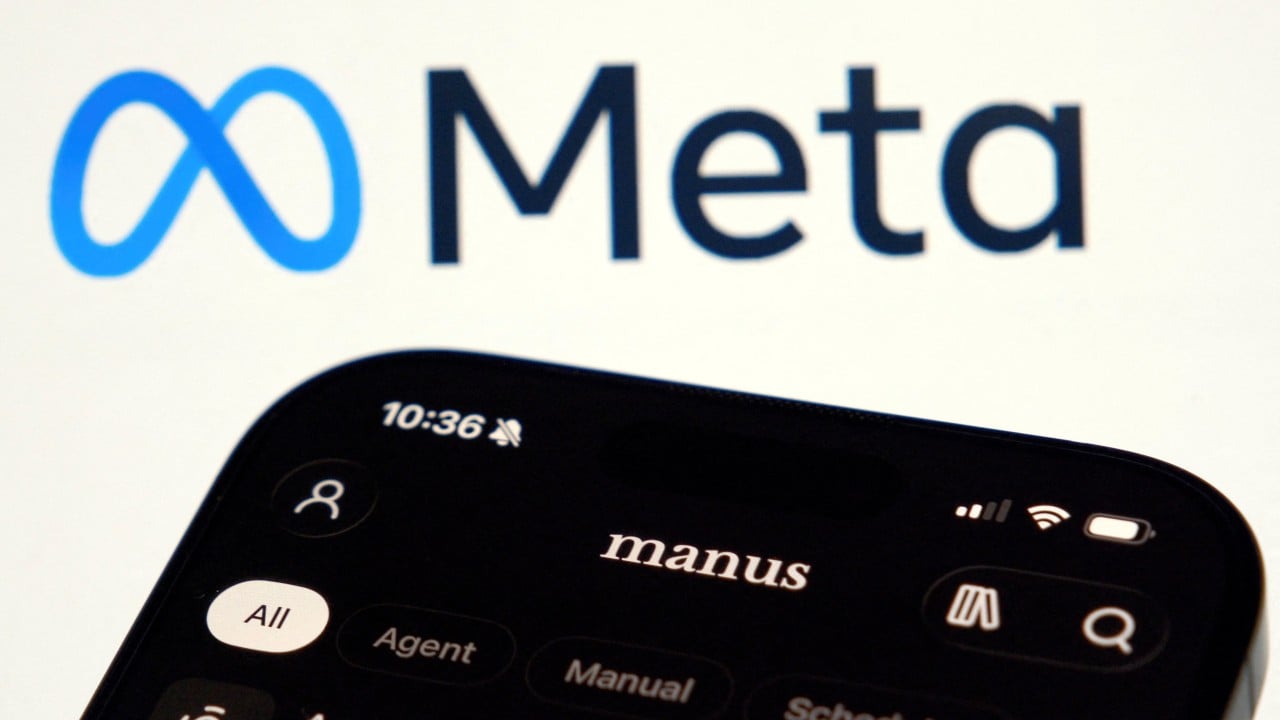
A quiet panic lives in the space between a signed contract and a line of code. In the glass-walled offices of Beijing’s Haidian District, engineers are staring at a reality that no amount of regulatory muscle can easily reshape. The recent alliance between Meta and Manus AI—a startup that has effectively cracked the code on autonomous agents—is not just another corporate handshake. It is a technological marriage that has already moved past the honeymoon phase and into the messy, intertwined reality of shared infrastructure.
Beijing is used to being the ultimate arbiter. For decades, the script remained the same: if a company grew too fast or leaned too far toward Western influence, a phone call or a "rectification" order would bring it back into alignment. But this deal is different. It is a knot. The deeper you pull on one thread, the tighter the whole structure becomes. If you enjoyed this post, you should read: this related article.
The Architect’s Dilemma
Consider a hypothetical lead developer at a firm like Manus, let's call him Chen. Chen spent three years trying to make AI do more than just predict the next word in a sentence. He wanted a system that could actually work—book a flight, research a competitor, and write the code to fix its own bugs. When Meta entered the frame, it wasn't just bringing cash. It brought the scaffolding of Llama, the massive open-source model that serves as the heartbeat of the modern AI ecosystem.
Now, Chen’s entire architecture is built on that foundation. If the Chinese government decides tomorrow that the Meta deal is a security risk and demands a full "unplugging," Chen doesn't just lose a partner. He loses his foundation. The AI becomes a lobotomized version of itself. For another angle on this development, check out the recent update from MIT Technology Review.
This is the "difficult to undo" part of the equation that has regulators pacing their offices. We are no longer talking about physical factories that can be nationalized or bank accounts that can be frozen. We are talking about weights, biases, and integrated API layers that have fused two entities together at a cellular level.
Authority in the Age of Autonomy
The Chinese Cyberspace Administration (CAC) finds itself in an unfamiliar position. Usually, power is expressed through friction—slowing things down until they comply. But slowing down AI is a death sentence in a global race that is measured in weeks, not years.
Beijing’s authority has always relied on the ability to see and the ability to stop. With the Meta-Manus deal, the "seeing" part becomes incredibly complicated. How do you audit a black box that is being constantly refined by a partner in Menlo Park? The data doesn't just sit in a silo anymore. It flows, it iterates, and it learns in ways that bypass traditional bureaucratic checkpoints.
The stakes are invisible but massive. If Beijing exerts too much pressure, they risk crippling their most promising AI champion, effectively handing the future to the West on a silver platter. If they do nothing, they allow a direct pipeline of influence and data architecture from a major American tech giant to sit at the core of their domestic industry.
The Ghost in the Regulatory Machine
There is a specific kind of coldness to a mathematical certainty. In the world of high-level AI, $Loss = f(Weight, Data)$. If you change the variables because a politician told you to, the output fails. Regulators are beginning to realize that you cannot legislate the laws of mathematics.
They are attempting to pivot. Instead of a blunt "no," we are seeing the emergence of "embedded oversight." This is the attempt to build a secondary AI—a digital commissar—that sits on top of the Manus system to watch its every move. But even this is a gamble. Every layer of oversight adds latency. In the world of autonomous agents, latency is the difference between a tool that feels like magic and a tool that feels like a chore.
The human element here isn't just about the engineers; it’s about the users. Imagine a small business owner in Shenzhen using a Manus-powered bot to manage global logistics. That bot is successful because it understands the nuances of global markets—nuances it learned, in part, through its integration with Meta’s vast datasets. If the government forces a "purely domestic" version of that AI, the business owner loses their edge. Their bot suddenly doesn't understand why a port strike in Long Beach matters. It becomes a local tool in a global game.
The Gravity of Interdependence
We often speak of the "splinternet," the idea that the digital world is fracturing into two distinct camps. But the Meta-Manus deal suggests that the fracture is not a clean break. It is more like a shattered windshield—thousands of tiny cracks, yet the glass still hangs together because of the plastic laminate in the middle.
Money is the plastic. Capability is the plastic.
The Chinese government is currently experimenting with a "Golden Share" strategy, where the state takes a small stake in these tech firms to ensure a seat at the board table. It’s an attempt to maintain the illusion of total control while the underlying technology drifts further into a globalized grey zone. But a board seat is a blunt instrument for a sharp problem. You can vote on a CEO’s salary, but you can’t vote on an algorithm’s neural pathing.
Consider the psychological toll on the leadership within these companies. They are walking a tightrope over a canyon of their own making. To one side is the demand for global competitiveness, which requires Western partnerships and open-source collaboration. To the other side is the demand for absolute domestic loyalty.
One slip, and the "difficult to undo" deal becomes a "impossible to survive" crisis.
The New Architecture of Power
Power is shifting from those who own the land to those who own the logic. Beijing’s traditional levers—land grants, tax breaks, and physical infrastructure—don't carry the same weight when the primary asset is a weight-file stored on a distributed cloud.
The real authority will likely manifest in "data residency" laws that are increasingly absurd in their complexity. We are moving toward a future where data must be "scrubbed" as it crosses a digital border, a process that is essentially like trying to take the sugar out of a baked cake. You can do it, but you’ll ruin the cake in the process.
The engineers at Manus know this. The executives at Meta know this. And deep down, the regulators in Beijing know this too. They are all participating in a grand performance of control, even as the technology they seek to govern moves at a speed that makes "control" a nostalgic concept.
The deal isn't just a business transaction; it is a hostage situation where everyone is holding everyone else's hand. If Meta leaves, Manus collapses. If Manus is suppressed, Meta loses its foothold in the most aggressive hardware manufacturing hub on earth. If Beijing intervenes too harshly, it kills the golden goose.
So, they wait. They watch. They write new rules that the old world would have understood, while the new world builds a reality where those rules are merely suggestions. The authority is there, present in the documents and the official statements, but it feels increasingly like a shadow cast by a sun that has already set.
In a quiet corner of a server farm, a processor hums. It doesn't care about borders. It doesn't care about trade wars. It only cares about the next calculation, the next optimization, the next step in a process that was set in motion years ago. The knot is tied. Now, everyone has to learn to live with the tension.