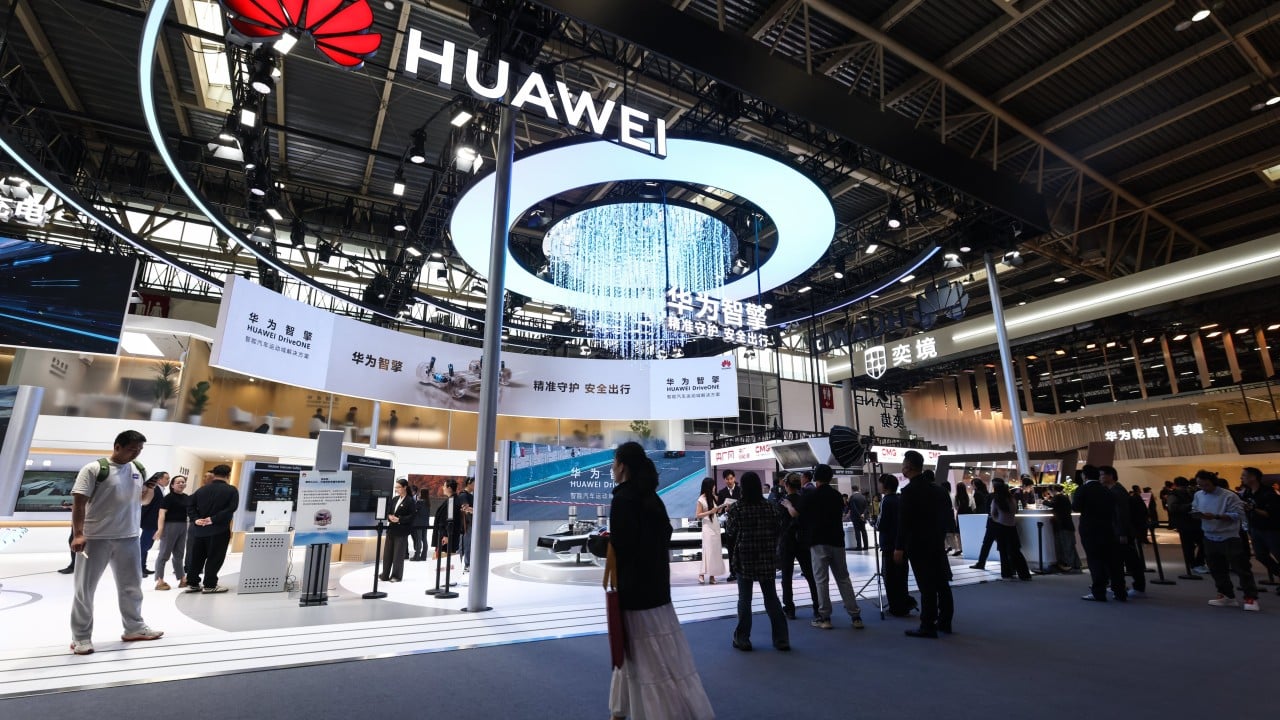
The tech world is collectively swooning over the narrative that Huawei chips refining DeepSeek models marks a historic leap for China’s AI self-reliance. It is a comforting story for Beijing, a terrifying story for Washington, and a lazy story for tech journalists. It is also fundamentally wrong.
The mainstream consensus loves a dramatic underdog triumph. The narrative goes like this: US sanctions cut off Nvidia’s top-tier silicon, forcing Chinese tech giants to innovate. Huawei stepped up with its Ascend series, DeepSeek optimized its architecture to bypass hardware bottlenecks, and suddenly, the West’s compute moat evaporated.
This view mistakes a brilliant software workaround for a sustainable hardware victory.
Optimizing software to run on subpar hardware is not "self-reliance." It is an act of desperation. While DeepSeek’s algorithmic efficiency is a masterclass in engineering, relying on Huawei’s heavily constrained silicon ecosystem is a structural trap, not a triumph.
The Efficiency Myth: Optimization Is Not Scalability
Let’s dismantle the premise that algorithmic optimization can indefinitely outrun the laws of physics and economics.
DeepSeek captured global attention by training massive models at a fraction of the cost of its Western peers. They achieved this through Mixture-of-Experts (MoE) architectures, Multi-head Latent Attention (MLA), and brilliant quantization techniques. They engineered their way around a massive hardware deficit.
But optimization has diminishing returns.
When you optimize software for constrained hardware, you are essentially squeezing water from a stone. You can get a few more drops, but the stone remains a stone. The Ascend 910B and its immediate successors are built on strained, lagging-node foundry processes. They suffer from yields that would bankrupt a Western semiconductor company if they weren’t heavily subsidized by the state.
I have watched enterprise architects burn millions of dollars trying to port complex workloads from Nvidia’s CUDA ecosystem to Huawei’s CANN software layer. The marketing brochures promise seamless migration. The reality is a nightmare of broken libraries, unoptimized kernels, and erratic compiler behavior.
To understand why this is a dead end, we have to look at the fundamental architecture of modern AI workloads.
The Memory Wall and Interconnect Bottleneck
AI training is no longer just about raw teraflops. It is about bandwidth.
- Intra-chip Bandwidth: Moving data from HBM (High Bandwidth Memory) to the processing cores.
- Inter-chip Bandwidth: Moving data across thousands of GPUs in a cluster.
Nvidia’s dominance is not protected by the H100 or B200 chip design alone; it is anchored by NVLink and InfiniBand. They built a supercomputer network architecture where data flows with minimal latency.
Huawei’s cluster interconnects simply cannot compete at that scale. When you string together tens of thousands of Ascend chips, the communication overhead eats a massive chunk of your compute efficiency. DeepSeek’s engineers did not use Huawei chips because they preferred them; they used them because they had no choice. They didn’t bridge the gap; they built a temporary bridge over a widening chasm.
Dismantling the People Also Ask Consensus
The public discourse around this topic is flooded with flawed assumptions. Let's address the questions people are asking, with the nuance the mainstream media ignores.
Can China achieve total AI self-reliance through Huawei and DeepSeek?
No. True self-reliance requires a closed-loop ecosystem from lithography to software. China lacks the advanced extreme ultraviolet (EUV) lithography tools required to manufacture sub-5nm chips at scale. Huawei can design brilliant architectures, but if SMIC cannot bake them onto silicon with viable yields, the designs are just expensive paperweights.
DeepSeek’s model is an open-source marvel, but it still relies on structural concepts pioneered in the West. If your entire strategy relies on hyper-optimizing legacy manufacturing nodes to run open-source architectures, you are always playing catch-up. You are reacting, not innovating.
Is Nvidia's dominance threatened by domestic Chinese AI chips?
Inside China, yes, but only by regulatory fiat. Outside China, absolutely not.
Nvidia’s real moat is CUDA. Over a decade of software development has locked every major AI research lab, university, and enterprise into the Nvidia ecosystem. Huawei’s CANN is a walled garden within a walled garden. No developer in San Francisco, London, or Tokyo is voluntarily choosing to build on CANN when they can use CUDA. Huawei's domestic market share is a captive market, not a competitive victory.
The Brutal Math of Yields and Subsidies
Let’s talk about the economic reality nobody wants to admit.
A semiconductor strategy built on patriotism is financially unsustainable. Rumors and data leaks from Asian supply chains suggest SMIC's 7nm and 5nm-class yields using deep ultraviolet (DUV) multi-patterning are atrocious compared to TSMC’s mature processes.
| Metric | TSMC (Advanced Nodes) | SMIC / Huawei (Equivalent Nodes) |
|---|---|---|
| Estimated Wafer Yield | 70% – 80%+ | Est. 30% – 40% (via multi-patterning) |
| Equipment Sustainability | High (Native EUV/DUV support) | Low (Tool cannibalization, lack of spare parts) |
| Software Ecosystem | CUDA (Global standard, millions of devs) | CANN (Fragmented, localized adoption) |
When your yield is low, the cost per working die skyrockets. The Chinese state can subsidize these losses for a time, throwing billions at state-backed enterprises to purchase domestic silicon. But subsidies do not create a vibrant, self-sustaining commercial ecosystem. They create dependency.
Furthermore, multi-patterning wears down DUV lithography machines at an accelerated rate. Without access to ASML’s supply chain for spare parts and maintenance, China is burning through its existing capital equipment just to stay in the race. It is a depreciating asset strategy.
The Open-Source Paradox
There is a deep irony in celebrating DeepSeek's use of Huawei chips as a win for national self-reliance. DeepSeek's models are open-source. They are downloaded, analyzed, and run on Nvidia hardware across the globe.
Western labs took DeepSeek’s architectural breakthroughs, applied them to their own datasets, and ran them on clusters of H100s and B200s. The West reaped the benefits of China’s software optimization efficiency, while running those models on hardware that is two generations ahead of anything Huawei can produce.
China spent its scarce, subsidized compute resources to optimize an architecture that the rest of the world adopted for free on superior hardware. That is not a strategic victory for China; it is a massive R&D subsidy for the global AI ecosystem.
Stop Designing Software to Fix Broken Hardware
If you are a technology leader, enterprise architect, or investor, the takeaway here is not to invest in regional fragmentation.
The Western press treats the DeepSeek-Huawei pairing as a warning shot. In reality, it is a case study in structural limitation. The moment US cloud providers adopt DeepSeek-style architectural efficiencies on Nvidia’s upcoming architectures, the performance gap will widen to a canyon.
Software optimization should be used to push the boundaries of what is possible on cutting-edge hardware, not to compensate for the political impossibility of acquiring it.
Stop pretending that a clever software workaround fixes a broken supply chain. Celebrating China's hardware self-reliance because of one model's efficiency is like praising a marathon runner for finishing the race in heavy iron boots. They deserve praise for their grit, but they are still losing the race, and their feet are bleeding.