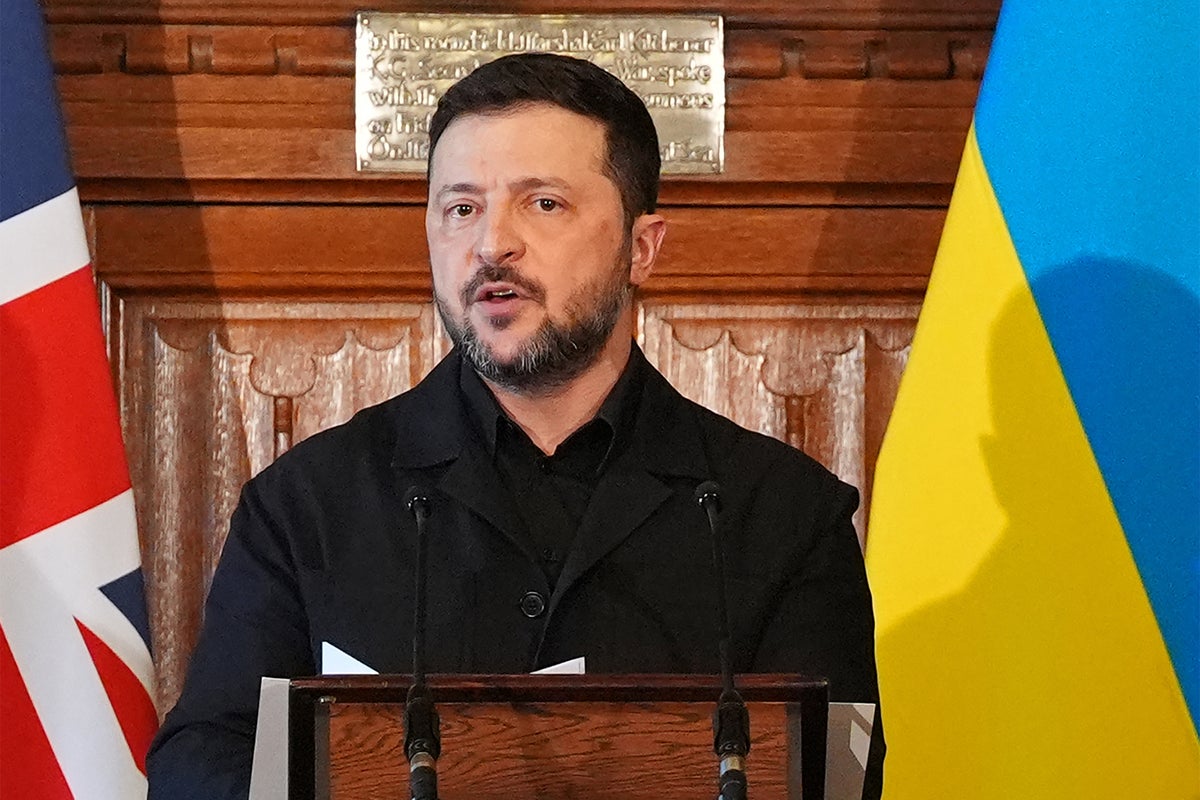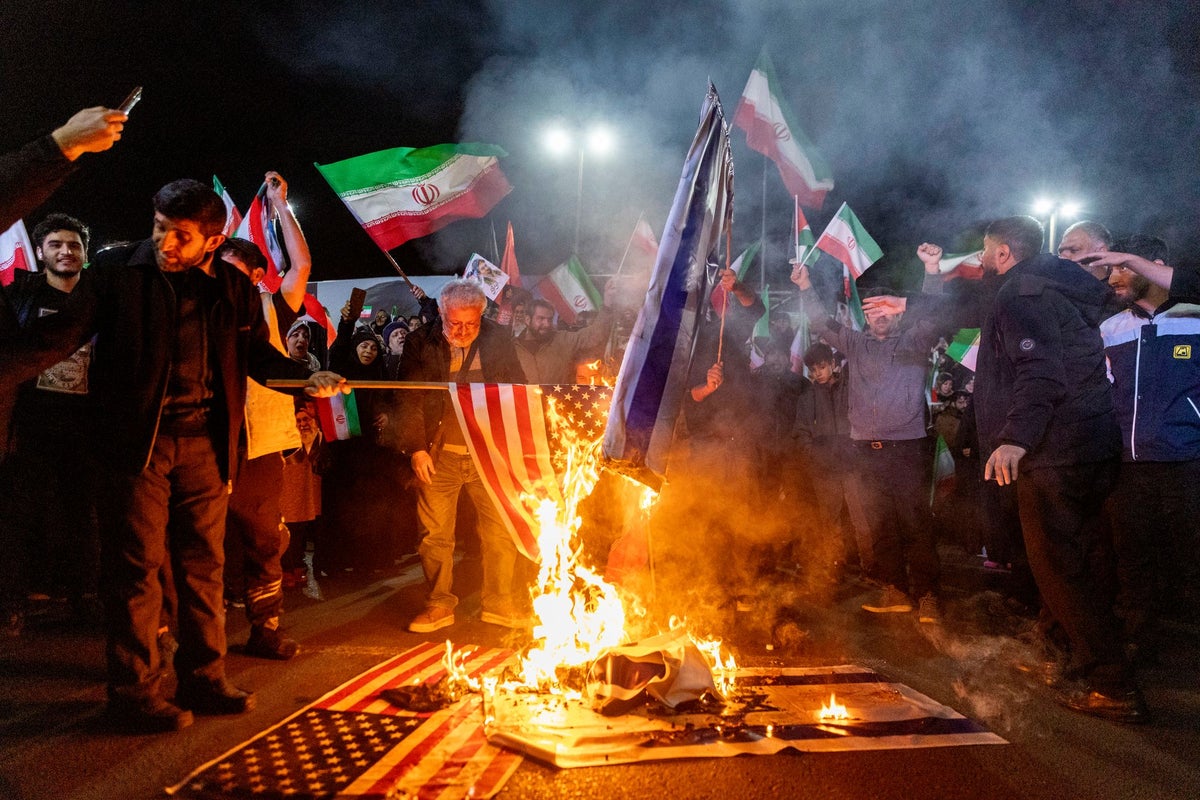
The smoke rising over Tehran is no longer a metaphor. Since February 28, 2026, the joint U.S.-Israeli air campaign has moved past tactical containment into the realm of systemic erasure. By systematically eliminating Supreme Leader Ali Khamenei, IRGC Commander Mohammad Pakpour, and most recently, the "de facto" leader Ali Larijani, the coalition has achieved a feat of intelligence and kinetic precision that would have been dismissed as a fever dream three years ago. The central nervous system of the Islamic Republic has been severed.
Yet, as the dust settles on the makeshift tent headquarters of the Basij and the ruins of the Supreme National Security Council, a colder reality is emerging. The assumption that killing a regime’s architects automatically dismantles its house is a dangerous historical fallacy. Despite the loss of its most recognizable figures, the Iranian state is not dissolving; it is hardening.
The Illusion of the Vacuum
Western intelligence has long operated on the "decapitation strike" theory—the idea that a centralized, autocratic regime cannot survive the loss of its ideological and operational head. The reality on the ground in March 2026 suggests otherwise. When the IDF confirmed the death of Ali Larijani and Basij commander Gholamreza Soleimani this week, the expectation was a total breakdown in command and control.
Instead, the response has been a shift toward "fire at will" protocols. By removing the individuals who historically balanced domestic survival with regional provocation, Israel and the U.S. have effectively removed the brakes. The new leadership, coalescing around Mojtaba Khamenei and the most radical remnants of the IRGC, is not looking for a diplomatic off-ramp. They are looking for a funeral pyre.
The Iranian government is not a single pillar; it is a tangled root system. When you cut the main stalk, the roots remain capable of sending up new, often more resilient, shoots. The current "Interim Leadership Council" is less a governing body and more a war cabinet with nothing left to lose.
The Strategic Backfire of Precision
There is a specific kind of arrogance in believing that a "global superpower" and a "regional superpower" can bomb a nation of 88 million into a moderate democracy. While Prime Minister Benjamin Netanyahu touts these strikes as the precursor to a 1979-in-reverse—a return to a pro-Western monarchy—the data from the streets of Isfahan and Tabriz tells a different story.
Internal dissent, which was at a boiling point in January 2026, has been complicated by the external nature of the threat. It is one thing to protest a tyrant; it is another to cheer as foreign missiles strike your capital’s infrastructure, including schools and hospitals. The "Twelve-Day War" of June 2025 was a warning. This current conflict is an existential struggle.
Key fractures in the decapitation strategy include:
- Radicalization of Successors: The removal of "pragmatic" hardliners like Larijani leaves only the ideologues who believe that any compromise is a death sentence.
- The Martyrdom Cycle: In the Shiite political tradition, a slain leader is often more potent than a living one. The images of Khamenei’s destroyed compound are already being repurposed as recruitment tools for the next generation of the "Axis of Resistance."
- Horizontal Escalation: Deprived of a central command to coordinate sophisticated missile salvos, local commanders are opting for cruder, more frequent attacks. The recent drone strikes on the U.S. Embassy in Baghdad and the closing of the Strait of Hormuz are the actions of a regime that has stopped caring about the morning after.
The Economic Toll of an Unfinished War
The closure of the Strait of Hormuz has already sent global oil and LNG markets into a tailspin, with 20% of the world’s supply effectively held hostage by the remnants of the Iranian navy and coastal missile batteries. While the U.S. and Israel claim total control of the airspace, they do not control the water.
The strategy of killing leaders was supposed to be a "less costly alternative" to a full-scale ground war. However, a war of attrition where the adversary is a headless, angry hydra is anything but cheap. The U.S. military buildup in the region is now the largest since 2003, and the "limited" operation has spiraled into a multi-theater conflict involving Lebanon, Iraq, and Yemen.
Beyond the High-Value Target List
The Mossad and the IDF’s Unit 8200 have proven they can find anyone, anywhere—from suitcase bombs in Tehran safehouses to airstrikes on mobile tent cities. This is a triumph of technical expertise. But it is not a political strategy.
A decapitated regime that refuses to fall creates a unique kind of chaos. Without a clear "address" for negotiations, the international community is left shouting into a void. As the UN Secretary-General and various European powers have noted, the lack of a clear endgame is turning a precision campaign into a regional wildfire.
If the goal was to weaken Iran to the point of irrelevance, the mission has succeeded on paper. But in the real world, a weakened, desperate, and leaderless Iran is proving to be a more unpredictable and dangerous actor than the one that sat at the negotiating table in Oman just weeks ago. The trap of the decapitation strike is the belief that the target is the person, when the real target is the system. And the system, though bloodied, is still breathing.
Would you like me to analyze the specific shifts in IRGC command structures following the March 17 strikes?