The air in Elmina is thick. It is not just the salt from the Atlantic or the humidity of the Ghanaian coast that clings to your skin. It is a weight. When you stand inside the whitewashed walls of the coastal slave castles, the silence is loud. You look at the "Door of No Return," a narrow gap in the stone that opens toward the sea, and you realize that for millions, this was the last piece of earth they ever touched.
Ghana is no longer asking the world to simply remember this.
The nation has moved beyond the quiet dignity of memorials. In the halls of the United Nations, a new and uncomfortable demand is echoing. Ghana is leading a charge to have the transatlantic slave trade formally recognized as the most serious crime in the history of humanity. Not a tragedy. Not a dark chapter. A crime. The distinction is not semantic; it is a seismic shift in how we value human life across centuries.
The Ledger of the Lost
Imagine a ledger. On one side, you have the industrialization of the West, the grand cities built on sugar and cotton, and the birth of global capitalism. On the other side, there is a void.
Historians estimate that at least 12.5 million Africans were funneled through those stone doors. That number is a sterile abstraction until you consider the ripples. A young man taken from his village in the 1700s wasn't just one person lost. He was the loss of his potential children, his grandchildren, the oral histories he would have passed down, and the labor that would have built his own community. Multiply that by twelve million.
The "crime" Ghana describes is the intentional, systematic extraction of a continent’s future.
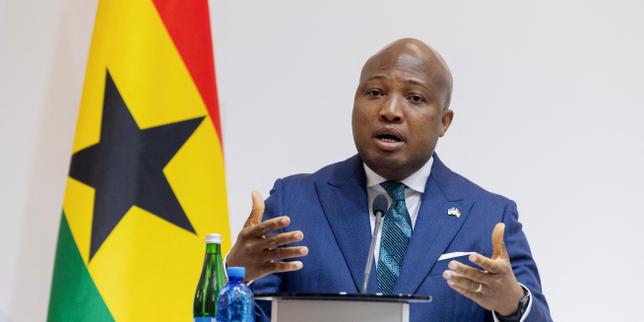
Ghana’s President, Nana Akufo-Addo, has become the vocal architect of this movement. He isn't speaking to the past; he is speaking to the present. He points out a glaring inconsistency in the global moral compass. When other horrific genocides occur, the world eventually agrees on the terminology of "crimes against humanity." There are tribunals. There are reparations. There is a formal closing of the wound.
But for the centuries-long mechanism of the slave trade, the world has largely offered a shrug and a "moving on" sentiment. Ghana is saying the clock cannot start until the debt is acknowledged.
The Ghost in the Global Economy
The resistance to this claim usually boils down to a single, panicked word: reparations.
Critics often argue that current generations shouldn't pay for the sins of their ancestors. They claim the logistics are impossible. But this perspective ignores how wealth actually works. Money is rarely static. It compounds. The profits from the slave trade didn't vanish when the ships stopped sailing; they were baked into the foundations of banks, insurance companies, and national treasuries that still dominate the globe today.
Consider a hypothetical family in Liverpool or Rhode Island in 1820. Their wealth, generated from the shipping of human cargo, was invested in the railroads of the mid-19th century. That railroad wealth funded the elite universities of the 20th century. Those universities produced the titans of the 21st.
The wealth is visible. The crime that seeded it is treated as a ghost.
By demanding the UN recognize this as the "most serious crime," Ghana is attempting to force a forensic audit of global history. It is a request to stop treating the African diaspora as a series of unfortunate events and start treating it as a victim of a coordinated, multi-national heist.
The Psychology of Acknowledgment
There is a specific kind of exhaustion that comes with being told your history is "too complicated" to rectify.
I spoke with a guide at Cape Coast Castle once. He told me that many visitors from the United States or the Caribbean break down when they reach the dungeons. They aren't just crying for the ancestors they never knew. They are crying because, for the first time, their pain has a physical address.
When a government like Ghana’s takes this to the UN, they are trying to give that pain a legal address.
The legal framework of "crimes against humanity" was largely developed after World War II. It was a necessary evolution of law to handle evils that were previously unthinkable. Ghana’s argument is that the slave trade was the blueprint for these evils. It was the first time humans were transformed into a global commodity on an industrial scale. If the definition of the "most serious crime" doesn't include the 400-year systematic erasure of a people's identity, then the definition is broken.
A New Map of Justice
This isn't just about a seat at the table. It is about who owns the table.
The African Union has rallied behind this cause, turning a national plea into a continental mandate. They are looking at the "Right to Return" and the "Right to Redress." Ghana has already pioneered the "Year of Return," inviting the diaspora to come home, to invest, and to reclaim their citizenship. But the state can only do so much on its own.
The real struggle is in the halls of power in New York and Geneva.
Success would mean more than just a plaque or a day of remembrance. It would trigger a global conversation about debt cancellation for African nations, the return of looted cultural artifacts, and a fundamental restructuring of how international aid is perceived. It would stop being "charity" and start being "restitution."
Western powers are, predictably, hesitant. To admit the scale of the crime is to admit the illegitimacy of some of their own prosperity. It requires an honesty that few empires have ever shown.
The Last Door
We often talk about history as if it is behind us. We treat it like a book we have already finished reading.
But history is more like the tide at Elmina. It keeps coming back, washing over the same stones, eroding the foundation. You can still see the marks on the dungeon floors where thousands of bodies were pressed together in the dark. You can smell the salt.
Ghana’s demand is an ultimatum to the modern world: You cannot claim to champion human rights while refusing to name the greatest violation of them.
The Door of No Return was designed to be a one-way exit. It was built to ensure that once a person passed through, their history, their name, and their humanity were stripped away. By forcing the United Nations to look back through that door, Ghana is trying to do the impossible. They are trying to bring the humanity back through.
Justice is not a feeling. It is not a gesture. It is a reckoning with the ledger, a refusal to let the numbers remain silent, and a demand that the world finally calls a crime by its true name.
The waves continue to hit the shore outside the castle walls. They are persistent. They are patient. And like the call for recognition, they aren't going anywhere until the landscape changes.