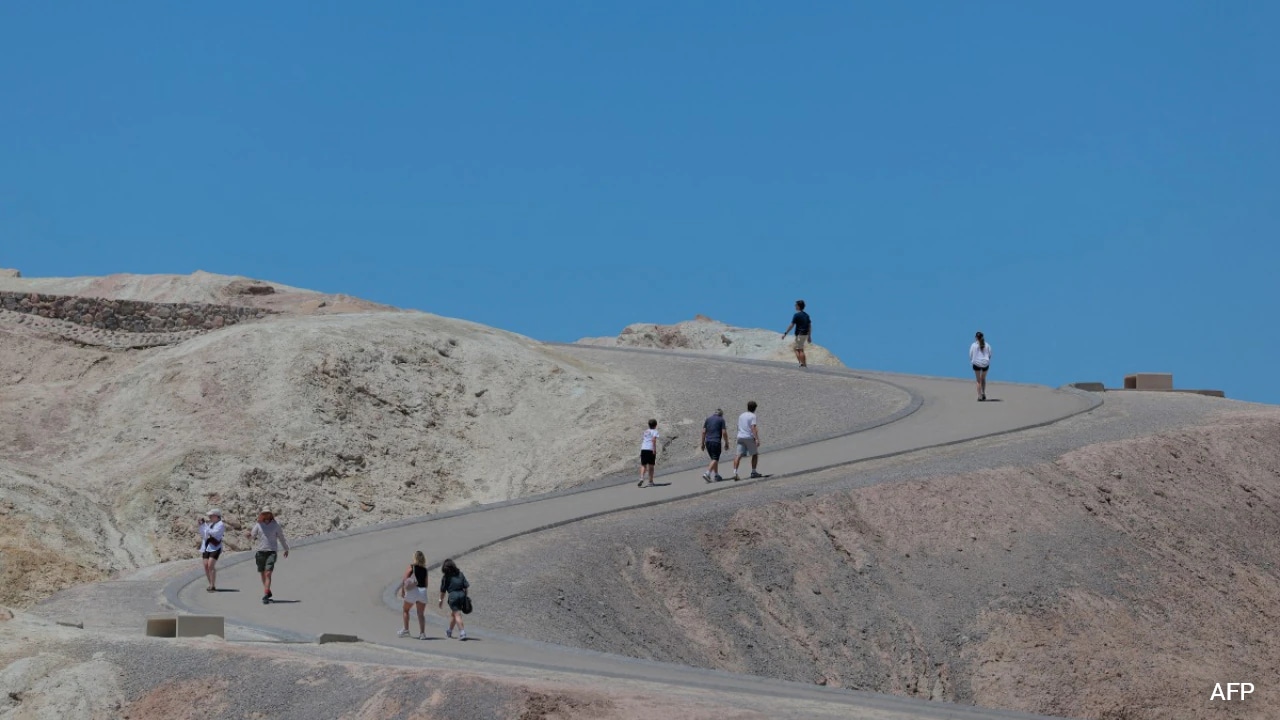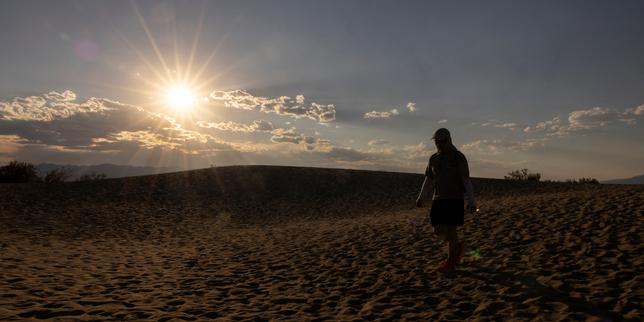
A 68-year-old French tourist named Pierre Michel Formosa died on August 17 in Death Valley National Park after his vehicle became bogged down in mud along the remote West Side Road, with ambient air temperatures searing at 116 degrees Fahrenheit, or roughly 47 degrees Celsius. Standard news coverage frames this as a tragic accident caused by extreme weather and an unfortunate mechanical mishap. Yet looking closer at the mechanics of survival in extreme environments reveals a recurring behavioral trap. When modern travelers face isolation in hyper-arid zones, they routinely violate the single most reliable rule of desert survival. They leave their vehicle.
Understanding why tourists continue to walk into lethal conditions requires looking past the weather report and examining human psychology under acute stress.
The Mechanics of Thermal Death
Death Valley does not kill slowly. At 47 degrees Celsius, human physiology shifts into a desperate state of triage. The body relies entirely on sweat evaporation to cool itself. When humidity drops near single digits and wind acts like a convection oven, sweat evaporates instantly, masking the volume of fluid loss.
A person can lose over a liter of water per hour under moderate exertion in these conditions. As dehydration accelerates, blood plasma volume drops. The heart pumps thicker blood harder to maintain core temperature and oxygen delivery, leading rapidly to circulatory collapse.
When Formosa and his companion chose to cross the salt flats toward Badwater Road, they were working against a biological clock ticking faster than they could calculate. Walking just over a mile across open terrain in midday thermal radiation multiplies heat absorption. Solar radiation bounces off the white salt flats, striking the body from above and below.
The Vehicle as a Life Support System
Park rangers repeat a singular directive across every sign and brochure in the Mojave Desert. Stay with the vehicle.
To a stranded motorist, a car looks like a static trap, especially when the engine is dead and the air conditioning fails. Cabin temperatures can outstrip the outside air, turning a stationary car into an oven. This fear drives people outward. They see a highway shimmering in the distance and believe walking is an active solution compared to sitting still.
That calculation is almost always fatal.
A vehicle provides critical shade. It blocks direct solar radiation, which accounts for a massive percentage of total heat load on the human body. Furthermore, a car is a high-profile target. Search and rescue teams scanning remote sectors from a California Highway Patrol helicopter can spot a stationary automobile from miles away. Spotting a lone human walking across vast salt flats is exponentially more difficult, akin to finding a needle in a blinding white expanse.
By abandoning his car near the Queen of Sheba Mine road, Formosa traded a visible, shaded refuge for an exposed march across open terrain. His companion managed to reach a passing motorist, but the margin between survival and fatal heat stroke in the park is measured in minutes, not miles.
The Illusion of Familiarity
International visitors often underestimate the sheer scale and hostility of American public lands. Europe features dense infrastructure, ubiquitous cellular networks, and villages punctuating even the most rural landscapes. Travelers carry an unexamined assumption that help is never more than a short walk away.
Death Valley defies this intuition. Encompassing over three million acres, it is the largest national park in the contiguous United States. Cell service is virtually nonexistent across large swaths of the backcountry. Backcountry roads like West Side Road see sparse traffic during the scorching summer months. A breakdown here transforms a scenic detour into an isolation chamber.
When rental car agencies hand over keys at McCarran International Airport in Las Vegas, they rarely provide briefings on thermal dynamics or desert driving safety. Tourists absorb the region through the lens of sightseeing, treating extreme environments like theme park backdrops rather than volatile ecosystems.
Preparing for the Furnace
Mitigating risk in extreme environments demands strict adherence to protocols built on decades of search and rescue data. Carrying a surplus of water—at least one gallon per person per day, with extra reserved specifically for radiator or emergency consumption—is baseline preparation.
Yet physical supplies mean little without the discipline to use them correctly. Satellite communication devices, such as personal locator beacons or satellite messengers, have become mandatory safety equipment for anyone venturing off paved corridors. Relying on cellular devices in the basin is a structural failure of planning.
When a vehicle fails in the desert, the correct response requires overriding the instinct to move. Secure the doors for shade, ration fluids, conserve physical energy, and wait for emergency services to bridge the distance.
The desert does not negotiate mistakes, nor does it grant second chances to those who attempt to outwalk its expanse