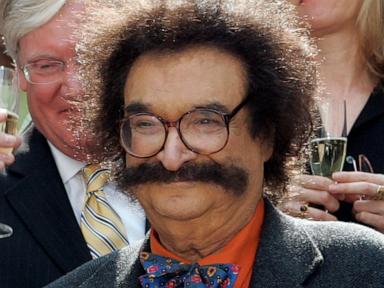
Gene Shalit, the legendary film critic who spent 40 years as the arts anchor for NBC’s Today show, died on June 12, 2026, at the age of 100. His family confirmed he passed away peacefully, capping a century of life and a broadcasting career that shaped how millions of Americans decided to spend their entertainment dollars. To the casual viewer, he was the man with the gravity-defying hair, the massive handlebar mustache, and a bottomless bucket of groan-inducing puns. Yet beneath the eccentric facade lay a foundational architect of modern media power. His passing does not just mark the end of an extraordinary life. It signals the final, definitive closure of an era when a single television personality could dictate the cultural conversation from a studio in Rockefeller Center.
To understand Shalit’s impact, you have to look past the cartoonish exterior that made him a favorite target for Saturday Night Live parodies. When Shalit joined Today as a contributor in 1970, before becoming arts editor in 1973, movie criticism was an elite, print-dominated country club. Power resided in the ink-stained pages of The New York Times, The New Yorker, and major metropolitan dailies. If Pauline Kael or Vincent Canby savaged your film, it was dead on arrival in the cultural capitals. Also making waves lately: The Billion-Dollar Migration: Why Céline Dion and Jay-Z are Claiming Paris Right Now.
Shalit changed the entire balance of power by bringing criticism to the breakfast table. He bypassed the highbrow gatekeepers and spoke directly to the suburban family eating cereal. Before Roger Ebert and Gene Siskel took their local Chicago show national on PBS, and long before Joel Siegel joined Good Morning America, Shalit proved that film criticism could be a mass-market television commodity. He democratized the medium, making the discussion of art accessible, energetic, and highly profitable for the networks.
The Economics of the Morning Show Monopolies
Morning television in the 1970s and 1980s was an absolute juggernaut. There were no streaming platforms, no social media feeds, and no decentralized internet ecosystems breaking the public into microscopic niche markets. You had three major networks. The Today show was the crown jewel of NBC’s daytime lineup, serving as a town square for the American public. Additional insights into this topic are covered by GQ.
Shalit’s "Critic’s Corner" segment was premium real estate. A positive notice from Shalit could instantly salvage an indie film or propel a studio blockbuster to a record-breaking weekend. His style was relentlessly middle-of-the-road, designed not to alienate, but to engage. He called the remake of King Kong "fabularious" and deemed Steven Spielberg's adaptation of The Color Purple so essential that "it should be against the law not to see it."
This was not high-minded academic deconstruction. It was consumer advocacy masked as entertainment. Studios understood this dynamic perfectly. They did not send their stars to talk to the austere critics of quarterly journals; they sent them to Shalit, who interviewed everyone from Steven Spielberg to Sophia Loren with a genuine, mesmerizing enthusiasm.
This structural power was highly centralized. If a movie studio wanted to reach twenty million households simultaneously, they had to go through a handful of gatekeepers. Shalit was the chief gatekeeper of the morning dial. His reviews were short, sharp, and highly quotable, engineered perfectly for the newspaper ads of the era. He knew how to construct a blurb that looked spectacular on a marquee.
The Payola Scandal and the Making of a Media Survivor
The polished persona Shalit maintained on NBC was forged in the brutal fires of mid-century media politics. Long before he became a household name, Shalit worked as a print journalist and a press agent in New York. In the late 1950s, he represented Dick Clark during the infamous Congressional investigation into payola—the illegal practice of record companies paying disc jockeys to play specific songs.
The scandal destroyed numerous careers, but Shalit emerged unscathed, possessing a deep, cynical understanding of how the gears of the entertainment industry turned. He realized early on that in media, visibility and a distinct brand were everything. When he transitioned into full-time writing for publications like Look, Ladies' Home Journal, and TV Guide, he began cultivating the look and the voice that would eventually define him.
When NBC executives first considered hiring him based on his sharp print columns, they had no idea what he looked like. According to his long-time producer, Guy Ludwig, an executive took one look at Shalit's wild hair and mustache during their first face-to-face meeting and asked, "Mr. Shalit, have you ever thought of radio?" They were terrified that his bizarre appearance would alienate the conservative morning audience of the late 1960s. Instead, that look became his trademark, rendering him instantly recognizable in an era dominated by clean-cut, square-jawed anchormen.
The Friction of Public Ideology
Shalit's long career was not entirely free of friction. Living and working through the massive cultural shifts of the late twentieth century meant that his old-school, middle-of-the-road sensibilities occasionally collided with a changing world.
The most notable fracture occurred in 2005 during his review of the film Brokeback Mountain. Shalit labeled the character of Jack Twist, played by Jake Gyllenhaal, a "sexual predator," tracking his behavior through a lens that many viewed as deeply outdated and harmful. The Gay and Lesbian Alliance Against Defamation (GLAAD) launched a fierce campaign against the network, calling the review defamatory and ignorant.
The ensuing controversy highlighted the growing gap between the traditional network gatekeepers and a rapidly evolving audience. The defense of Shalit came from an unexpected source: his own son, Peter Shalit, an openly gay man, who wrote a public letter defending his father’s character and denying he harbored any bigotry. The network weathered the storm, and Shalit remained on the air for another five years, but the incident served as an early warning sign. The era of the omnipotent, unchallenged network critic was drawing to a close.
The Fragmented Audience and the Death of the Critic
When Gene Shalit retired from the Today show in 2010, he did not just leave a job; he vacated a position that would never truly be filled again. The media landscape had fractured beyond recognition.
Today, film criticism is entirely decentralized. The institutional authority of the lone network critic has been replaced by aggregate scores on Rotten Tomatoes, letterboxd diaries, and viral TikTok reviews. No single human being possesses the cultural leverage that Shalit wielded during his prime.
| Era | Primary Critic Outlets | Cultural Impact |
|---|---|---|
| 1970s - 1990s | Network TV (Today, GMA), Major Newspapers | High centralization; single reviews could make or break a film. |
| 2000s - 2010s | Digital Publications, Early Blogs, Aggregators | Transition phase; power shifted from individuals to websites. |
| 2020s - Present | Social Media, TikTok, Letterboxd, YouTube | Total decentralization; audiences follow niche creators and algorithmic feeds. |
This shift has democratized public opinion, but it has also erased the shared cultural reference points that defined American life for decades. We no longer wake up, turn on the same channel, and listen to the same man tell us what to see at the multiplex on Friday night.
Shalit understood the theater of television. He knew that his puns and his giant mustache were the bait that allowed him to inject literacy, book reviews, and theatrical critiques into a morning show format otherwise dominated by hard news and weather reports. He was a master of a very specific, highly demanding medium. His death at 100 marks the passing of a centenarian, but more importantly, it marks the final departure of the broadcast kingmaker. The marquee lights are different now, scattered across a billion tiny screens, and we will not see his like again.