The Morning the Lens Went Dark
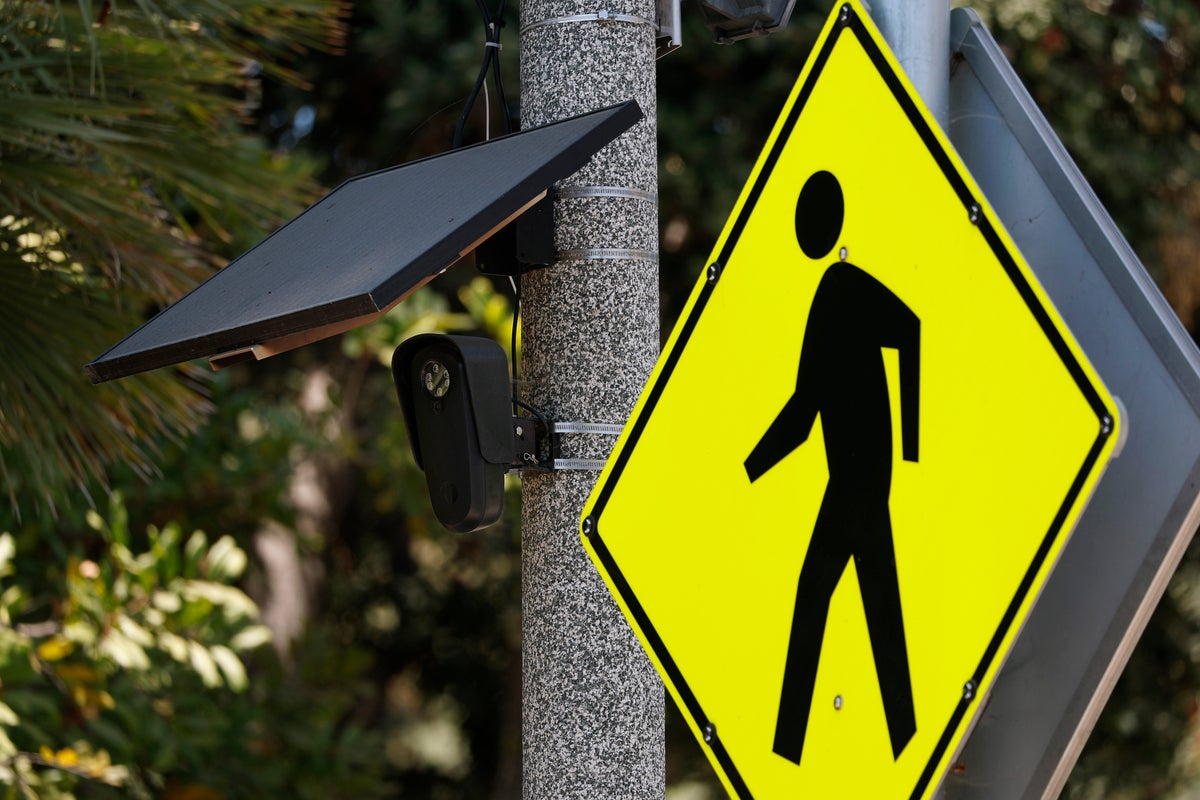
The bracket was still warm when Marcus unbolted it from the utility pole. It had been bolted there six months prior, a sleek, gray cylinder staring down with a single, unblinking glass eye at the corner of Elm and Fourth. To the city council, it had been a progress marker. To the commute traffic, it was just another fixture of the morning crawl. But to Sarah Miller, standing on her front porch with a mug of cooling coffee, that small piece of aluminum represented something entirely different: a silent tenant she never invited to live on her street.
When Sarah watched the technician drop the camera into the back of a municipal pickup truck, she felt a strange, physical lightness. The city had deflocked. Across town, other neighborhoods were doing the exact same thing, uncoupling their streets from the automated panopticon that had quietly mapped their daily routines. Meanwhile, you can explore similar events here: The Currency of Silicon and Sovereignty.
This was not a sudden riot. It was a slow, deliberate fatigue.
For years, the promise sold to suburban blocks and downtown avenues was simple: trade a sliver of privacy for an armor of absolute security. Automated license plate readers, manufactured by companies like Flock Safety and deployed in thousands of municipalities, were supposed to be the ultimate digital shield. They logged every arrival, every departure, every grocery run and school drop-off, compiling a searchable archive of local life. To understand the bigger picture, we recommend the excellent article by TechCrunch.
Then came the second thought.
Who owns the archive? Who holds the keys to the archive? And what happens when the shield starts looking inward?
The Anatomy of the Quiet Watch
To understand why communities are suddenly reaching for wrenches, you have to look at how these systems operate beneath the polished sales pitches.
Imagine living on a street where every car that passes is photographed, timestamped, and cataloged. Not just stolen cars or vehicles linked to Amber Alerts—though those are the banners under which the technology is marketed—but every single vehicle. Your neighbor driving to a late-night pharmacy. Your teenager coming home ten minutes past curfew. The cousin from out of state visiting for Sunday dinner.
All of it flows into a national database. Private companies aggregate these millions of digital breadcrumbs, creating searchable trails that can be queried not just by local police departments, but potentially shared across state lines, federal agencies, or corporate partners.
When Marcus first saw the proposal for automated cameras on his block, he didn't blink. Crime was rising in the headlines; the police department was understaffed. The pitch sounded reasonable. Let the machines watch the perimeter so we can sleep.
That was before he realized the perimeter had moved inside the living room.
The friction point—the spark that ultimately ignited the backlash—wasn't a dramatic data breach or a high-profile abuse of power. It was the quiet realization of scale. A single camera becomes ten. Ten cameras become a grid. A grid becomes a permanent, searchable history of human movement.
Privacy, as it turns out, is like oxygen. You rarely notice its composition until it becomes thin enough to make your chest ache.
The Broken Promise of Total Safety
The debate over automated surveillance is often framed as a binary choice between absolute security and total lawlessness. This is a false choice. It is a narrative constructed by vendors who profit from municipal anxiety.
Let us look at the mechanics of the claim. Proponents argue that automated plate readers solve crimes. And they do—sometimes. They provide leads, track stolen vehicles, and place suspect cars at crime scenes. But the statistical reality is far more nuanced than the marketing brochures suggest.
Consider a small town that installs fifty cameras. Over a year, those cameras generate millions of reads. The vast majority—99.9%—belong to ordinary people going about lawful, mundane lives. The yield of actual violent crime prevention, when isolated from routine police work, often sparks fierce debate among civil liberties advocates and independent auditors.
When a community trades its ambient trust for algorithmic certainty, it pays a hidden tax. The tax is paid in suspicion. When every movement is logged, the baseline assumption shifts from innocence to perpetual probation.
People change their behavior when they know they are being watched. They avoid certain meetings. They think twice before driving to a controversial rally, a labor protest, or even a sensitive medical clinic. This is the chilling effect. It doesn't arrive with sirens and heavy boots; it creeps in through the quiet hesitation of the steering wheel.
Reclaiming the Asphalt
The backlash didn't begin in academic lecture halls. It started in city council chambers at 11:00 p.m., driven by residents who had read the fine print of data-sharing agreements.
In some towns, citizens discovered that their local police data was accessible to agencies hundreds of miles away without a warrant. In others, questions arose over data retention policies: how long are these records kept, who audits the queries, and what happens when the private vendor changes its terms of service?
When answers were evasive, communities pushed back.
The deflocking movement is essentially an exercise in local self-determination. It is the physical manifestation of a profound question: Who gets to decide the character of our neighborhood?
When Marcus helped unbolt that camera on Elm Street, he wasn't doing it out of anger. He was doing it because he wanted his children to grow up knowing that public space belongs to the public, not to a proprietary server farm in another state.
The silence that followed the removal of the lens was heavy, but it was a clean silence. The streetlights still hummed overhead, casting their orange glow onto the pavement. But now, they were just lights again. Not eyes.
The cameras are gone from that corner, but the conversation they forced open is only just beginning. Every community now faces the same quiet intersection, forced to decide whether the price of modern vigilance is worth the surrender of our invisible liberties.