The silence was the first thing you noticed. At 35,000 feet, silence is a luxury, usually tucked behind the hum of a Pratt & Whitney engine or the soft clink of a beverage cart. But on a Tuesday afternoon that should have been mundane, the silence became an anchor. It wasn't the peace of a quiet cabin; it was the heavy, pressurized stillness of a cockpit waiting for a voice that wouldn't come.
Down on the ground, the Potomac Terminal Radar Approach Control (TRACON) facility in Warrenton, Virginia, is the nervous system of the Mid-Atlantic sky. It is a place of dim lights and glowing green sweeps, where controllers orchestrate a high-stakes ballet of aluminum and kerosene. They are the invisible guardians of the "D.C. Shield," the complex web of flight paths feeding Reagan National, Dulles International, and Baltimore-Washington International.
Then, a smell drifted through the vents.
It wasn't smoke. It wasn't the sharp, electrical tang of a short circuit. It was a chemical odor—acrid, foreign, and sudden. Within minutes, the very air inside the command center became an adversary. Eyes began to water. Throats tightened. In the world of aviation, where "safety first" is a mantra etched into every bolt and procedure, there is no room for a compromised mind. If the controllers cannot breathe, the planes cannot land.
The Invisible Gridlock
Imagine a hypothetical traveler named Sarah. She is sitting in 4B on a flight from Atlanta, her laptop open, her mind already in a 4:00 PM boardroom in Arlington. She feels the slight dip of the wing, the familiar sign that the descent has begun. But then, the wing levels out. The engines pitch upward. The map on the screen in front of her shows the plane entering a wide, lazy oval over the Virginia countryside.
The pilot’s voice comes over the intercom, practiced and calm, yet carrying a weight Sarah can’t quite place. "Folks, we’ve been informed of a ground stop at all D.C. area airports. We’re going to be in a holding pattern for a while."
Sarah looks out the window. She sees another silver speck a few miles away, tracing the same invisible circle. Then another. The sky, usually a highway of transit, had suddenly become a parking lot.
The decision to evacuate a TRACON facility is never made lightly. It is the equivalent of a heart surgeon walking out mid-procedure because the lights flickered. But when the chemical smell intensified, the Federal Aviation Administration (FAA) had to pull the plug. They shifted control to adjacent facilities, a move that is technically possible but logistically grueling.
It is a reminder of how fragile our hyper-connected reality truly is. We live in an age where we expect the sky to be a transparent, frictionless medium. We buy a ticket, we scan a QR code, and we expect the laws of physics and bureaucracy to bend to our schedule. We forget that the entire system relies on a few dozen people in a room in Virginia being able to take a deep breath.
The Anatomy of a Ground Stop
When the FAA issues a ground stop, the ripple effect is almost instantaneous. It starts at the epicenter—National, Dulles, and BWI—and moves outward like a shockwave. A plane sitting on a tarmac in Chicago is told to stay put. A flight departing from London is diverted to Philadelphia.
The logistics are staggering. Every minute a plane sits idling, it burns fuel. Every diverted flight creates a jigsaw puzzle of crew timing and gate availability. But the "why" behind this specific halt was uniquely unsettling. A fire is easy to understand. A power outage has a protocol. A "chemical smell" is a ghost. It is a hazard that defies immediate categorization. Was it a cleaning fluid? A leak in the HVAC system? A malicious act?
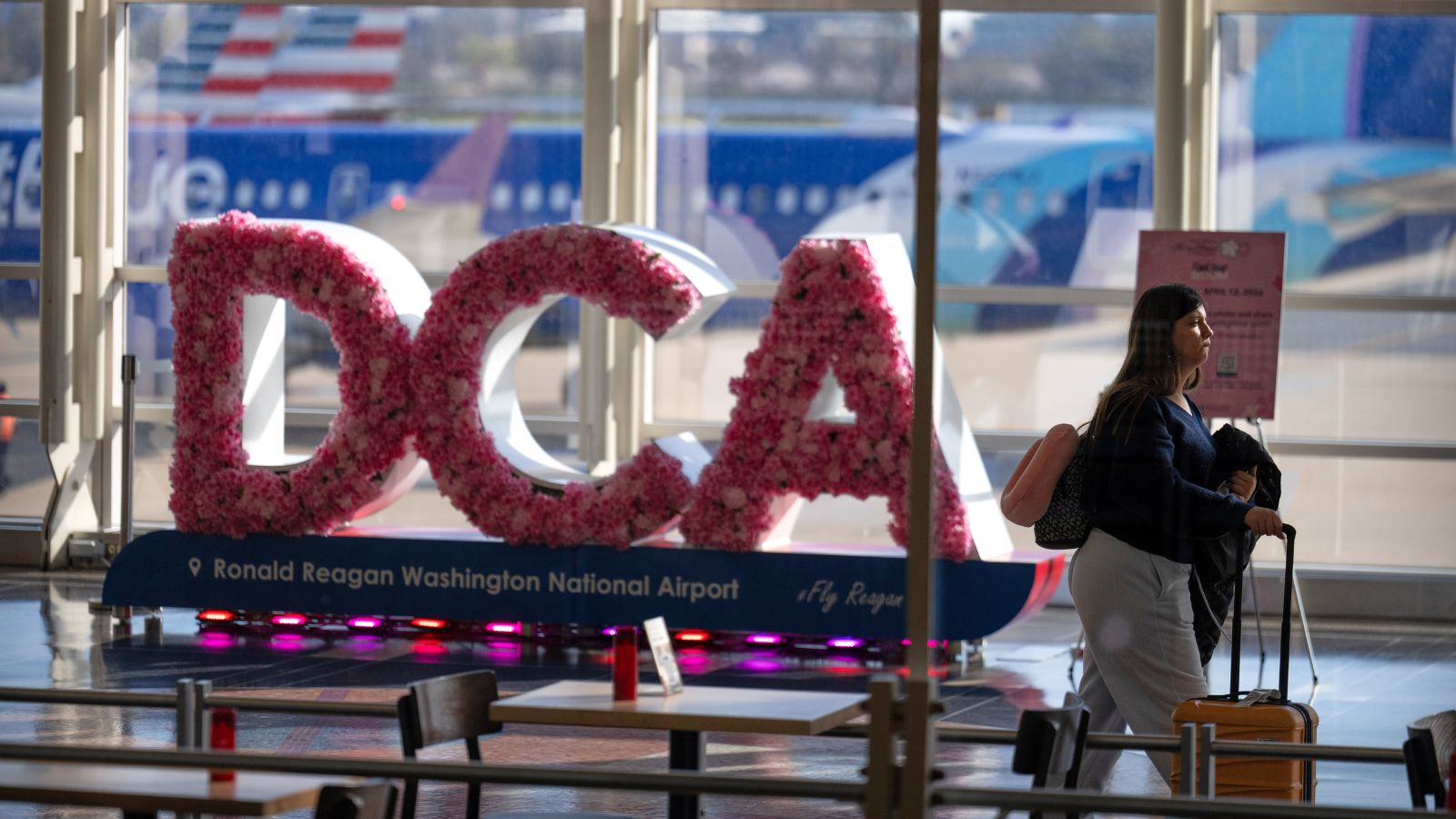
The uncertainty is what creates the friction. At the gates in Reagan National, the departure boards flipped to a rhythmic, pulsing red. Thousands of people watched their afternoon evaporate. There is a specific kind of communal sigh that happens in an airport terminal when a collective realization sets in: nobody is going anywhere.
Consider the stakes for the controllers. They are trained for engine failures, bird strikes, and catastrophic weather. They are the calmest people in the room during a crisis. But when the environment itself becomes toxic, the human element—the "wetware" of the system—fails. The FAA reported that the smell was localized to a specific area of the facility, but in an enclosed environment dedicated to high-concentration tasks, "localized" is a relative term.
The Cost of the Ghost in the Machine
We often talk about infrastructure in terms of concrete and steel. We think of runways, bridges, and fiber-optic cables. This event forced a pivot in that perspective. The most vital infrastructure in the United States isn't the pavement at Dulles; it’s the respiratory health of the people managing the airspace.
The shutdown lasted for several hours, but the ghost of that smell lingered in the schedules for days. Over 500 flights were delayed. Dozens were canceled. But the true cost isn't measured in the FAA's spreadsheets. It’s measured in the missed funerals, the botched business deals, and the frantic parents trying to find childcare because they are stuck in a terminal three states away.
In a world obsessed with automation and AI, this incident serves as a grounded, grit-in-the-teeth reality check. There is no algorithm that can replace the judgment of a controller who senses something is wrong. There is also no algorithm that can breathe for them. We are still, at our core, biological creatures navigating a mechanical world.
The source of the smell was eventually traced to construction work being done on the building. A simple sealant, perhaps, or a rogue canister of industrial adhesive. Something so small it wouldn't make the local news if it happened in a shopping mall. But in the context of the D.C. airspace, it was a wrench thrown into a global machine.
The Descent
As the sun began to set over the Chesapeake, the air at Potomac TRACON was finally cleared. The fans had done their work. The sensors gave the all-clear. The controllers returned to their stations, sliding back into their headsets, their eyes refocusing on the green dots that represented thousands of lives suspended in the air.
The "D.C. Shield" was reactivated.
Up in Sarah’s flight, the holding pattern finally broke. The wing dipped again, more decisively this time. The pilot returned to the mic, his voice a little lighter. "Good news, folks. We’ve been cleared for approach."
The landing was smooth, the tires chirping against the tarmac at National. Sarah walked off the plane, her 4:00 PM meeting long since over, her day a wash. She walked through the terminal, past the hundreds of people still curled up on their carry-ons, waiting for their own silver speck to arrive.
She took a deep breath of the terminal air. It smelled of Cinnabon, jet fumes, and floor wax. It was the smell of a system that had started breathing again.
We move through our lives assuming the air will be clear and the path will be open. We trust the invisible hands that guide us through the clouds. But every once in a while, the veil thins, and we are reminded that our entire modern existence is tethered to the simple, fragile act of a human being in a room, drawing a clean breath of air, and telling us which way to turn.
The lights of the runway stretched out into the dark, a neon welcome mat for a world that had briefly, terrifyingly, lost its way.
Would you like me to analyze the specific safety protocols the FAA uses during air traffic control evacuations?