The teacup on the wooden table didn't just slide. It jumped.
When you live in Wellington, you learn to read the liquid in your mug the way sailors used to read the stars. A gentle shimmer means a standard northerly is blowing through the gap. A sharp, rhythmic slosh means the southerly has arrived. But when the tea leaps clean over the rim and splashes onto your morning paperwork, you know the city is no longer just weathering a storm. It is under siege.
Wellington sits on the edge of the world, pinned between jagged hills and a churning, deep-blue strait that behaves less like water and more like a liquid vice. It is a city built on the stubborn premise that humanity can thrive in the path of an atmospheric wind tunnel. Most days, that stubbornness pays off. The cafes are full, the politics are sharp, and the harbor sparkles with a fierce, clean light.
Then comes a day like today. A day when the capital decides to close its gates.
The Invisible Wall at the End of the Runway
To understand what happens when a major storm hits New Zealand’s capital, you have to look at the tarmac. Wellington International Airport is essentially a strip of asphalt squeezed between two bays, exposed to the full, unrestricted fury of the Cook Strait. It is a masterclass in precision engineering, but nature doesn’t care about blueprints.
Consider what happens when sixty-knot gusts strike a modern turboprop aircraft. The wind doesn't just push the plane; it lifts it, drops it, and twists it simultaneously. Pilots call it mechanical turbulence—the chaotic air currents created when ferocious winds slam into the surrounding ridges and bounce back in unpredictable vortexes.
By mid-morning, the regional flights surrendered. Propellers spun to a halt. Soon after, the larger jets followed suit, their schedules evaporating from the departures board like mist.
For the traveler sitting in the terminal, the frustration is immediate, but the true weight of the disruption is felt miles away, in the quiet realities of ordinary lives. A grandmother sits on a plastic chair, staring at a screen that tells her she will miss her grandson’s first birthday across the Tasman. A surgeon looks at his phone, calculating the delay for a specialized procedure in a provincial hospital that only he can perform. The facts of a news report tell you that forty flights were cancelled. The truth of the event is that forty separate webs of human connection were abruptly torn apart.
The air becomes a wall. No one gets in. No one gets out.
The Great Blue Divide
If the airport is the city’s pulse, the ferries are its spine. The Cook Strait is the only physical link between the North and South Islands of New Zealand, a twenty-two-mile stretch of water that is notorious among mariners as one of the most treacherous bodies of water on the planet.
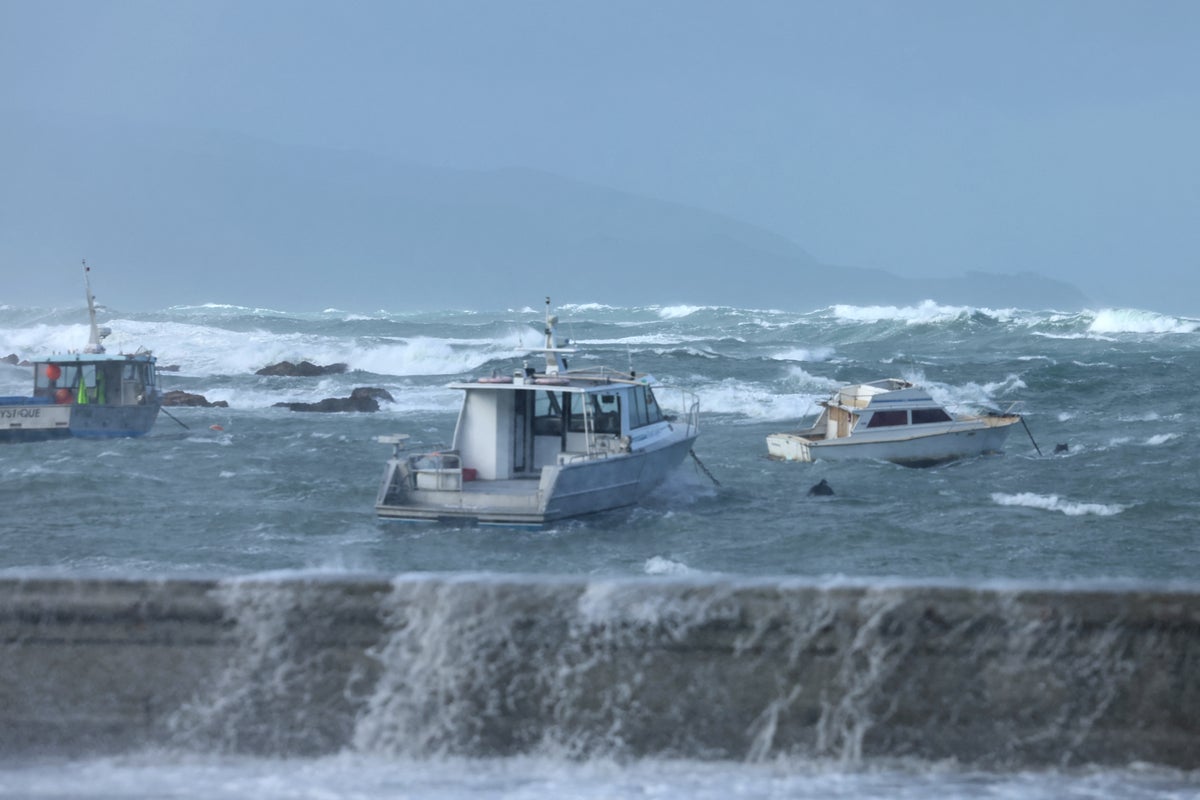
When a southerly swell rolls up from the Antarctic, it brings waves that have spent thousands of miles gathering momentum, completely unobstructed. By the time they hit the entrance to Wellington Harbor, they are towering walls of black water, easily reaching heights of seven or eight meters.
Watching a massive three-thousand-ton ferry cancel its sailing is a sobering sight. These are not weekend pleasure boats; they are floating highways, moving thousands of tons of freight, livestock, and commuters every single day. When the shipping lines call a halt, the entire nation feels the tremor.
Imagine being trapped on the wrong side of that water.
- The truck drivers parked in the gravel bays of State Highway 1, engines idling, watching their refrigerated cargo clocks tick down.
- The tourists watching their carefully planned, once-in-a-lifetime itineraries dissolve into a frantic search for an available motel room in a city suddenly bursting at the seams.
- The locals who simply wanted to get home for dinner, now standing on the wharf, watching the sea spray fly over the breakwater walls.
The cancellation of a ferry isn't a mere inconvenience. It is an economic brake, a sudden, jarring halt to the physical flow of a country.
The Anatomy of the Southerly Buster
Why does this happen with such terrifying regularity? The answer lies in the unique geography of the southern hemisphere.
When a massive low-pressure system moves up from the Southern Ocean, it drags a wall of freezing, dense polar air with it. As this air mass moves north, it encounters the formidable barrier of New Zealand’s mountain ranges—the Southern Alps on one side and the Tararua Range on the other.
The air needs an escape route. It finds it in the Cook Strait.
The strait acts as a gigantic funnel. As the massive volume of air is forced through this narrow geographic gap, it compresses and accelerates. A thirty-knot wind in the open ocean suddenly becomes a fifty-knot gale by the time it screams past Cape Terawhiti. This is the Bernoulli principle in action, a raw demonstration of fluid dynamics that transforms a standard winter storm into a localized atmospheric crisis.
Walking down Lambton Quay during one of these events is an exercise in survival. The wind catches the corners of high-rise glass towers, creating localized updrafts that can literally lift a person off their feet. Umbrellas are useless; they are shredded within seconds, their twisted metal skeletons left sticking out of public rubbish bins like bizarre urban sculptures.
The Resilience of the Grounded
But there is a strange, quiet beauty that emerges when a city is forced to stand still.
In the afternoon, when the rain hits the windows horizontally and the power lines overhead begin to sing that high, eerie pitch that every Wellingtonian knows by heart, the frantic energy of the morning begins to shift. Acceptance sets in.
People stop looking at their watches. They look out the window instead.
The cafes fill up, not with hurried business professionals doing deals, but with strangers sharing tables because there is nowhere else to go. The conversation shifts from what needs to be done to what cannot be controlled. There is a shared vulnerability in watching the elements reclaim their territory. We pride ourselves on our schedules, our digital connectivity, and our ability to transcend geography with the push of a button. A storm like this reminds us that our infrastructure is merely a polite request granted by the planet, one that can be revoked at any moment.
By evening, the harbor is a white-flecked expanse of chaos, barely visible through the driving grey mist. The streets are largely empty, save for the occasional commuter battling their way against the invisible wall of air, leaning forward at an impossible angle, teeth gritted against the sting of the salt-laden rain.
The flights will eventually resume. The ferries will eventually cast off their mooring lines and head back out into the swell. The calendars will be rewritten, the meetings rescheduled, and the birthdays celebrated late.
But tonight, the capital remains quiet, pinned to the rocks, listening to the roar of the strait reminding everyone who is truly in charge.