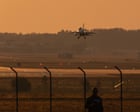
When an intruder manages to slip past the perimeter of a major defense installation, assault a service member, and make off in a stolen vehicle, everyone starts asking the same uncomfortable questions. That is exactly what went down at RAAF Base Darwin, sending shockwaves through Australia's military community and igniting a fierce public debate over perimeter safety.
Northern Territory Police launched an urgent manhunt after the breach unfolded at the Winnellie facility. The suspect unlawfully accessed the base, targeted an Australian Defence Force (ADF) member, and fled into the Top End traffic in an official security vehicle. While police pursued the stolen car along the Stuart Highway, they eventually lost sight of it, leaving the vehicle and the culprit unaccounted for as the search stretched on.
The Reality of Modern Base Vulnerabilities
RAAF Base Darwin is not some quiet, remote outpost. It serves as a vital forward mounting base, shares a runway with Darwin International Airport, and regularly hosts US Marine aviation rotations. It is a strategic hub of national security. Yet, an unauthorized civilian managed to bypass its defenses, confront personnel, and hijack a military asset.
This incident dragged long-simmering concerns out into the open. Defense personnel and security analysts have privately questioned why sensitive compounds rely heavily on outsourced private contractors rather than armed service personnel at every gate. When security relies on civilian guards who lack the mandate or operational posture of active-duty troops, gaps emerge. Critics argue that installations housing critical allied assets should maintain a deterrence level matching international counterparts, where unauthorized entry is met with immediate, decisive force.
Why This Breach Stings So Much
Timing makes this security failure even harder to swallow. The breach struck while the facility was already undergoing massive infrastructure upgrades worth roughly $160 million aimed at enhancing overall capability and security. Pouring millions into concrete, fences, and surveillance tech means very little if a single determined individual can still breach the wire, assault personnel, and drive away undetected.
Opposition figures, including Senator James Paterson, labeled the reports deeply troubling, pointing out that unauthorized access to a defense zone is a major red flag. Meanwhile, defense commentators note that the incident leaves active personnel feeling exposed—effectively acting like sitting ducks inside what should be a closed, secure ecosystem.
What Needs to Change Right Now
Fixing these vulnerabilities requires more than a temporary PR response or a routine internal memo. The Department of Defence faces mounting pressure to overhaul how it handles access control and asset tracking across all northern strategic outposts.
- Mandate Strict Access Protocols: Outsourced gate security must be rigorously audited, and response times to perimeter alarms need to be instantaneous.
- Upgrade Asset Tracking: Vehicles stationed on active bases require real-time tracking technology so stolen transport can be pinned down instantly rather than disappearing on major highways like the Stuart Highway.
- Reevaluate Armed Postures: Bringing military personnel back into primary security rotations could restore a necessary layer of active deterrence that private contractors simply cannot match.
Incidents like the Darwin base breach serve as a rude awakening. National security begins at home plate, and until the gaps in perimeter defense are sealed permanently, similar breaches remain an accident waiting to happen.