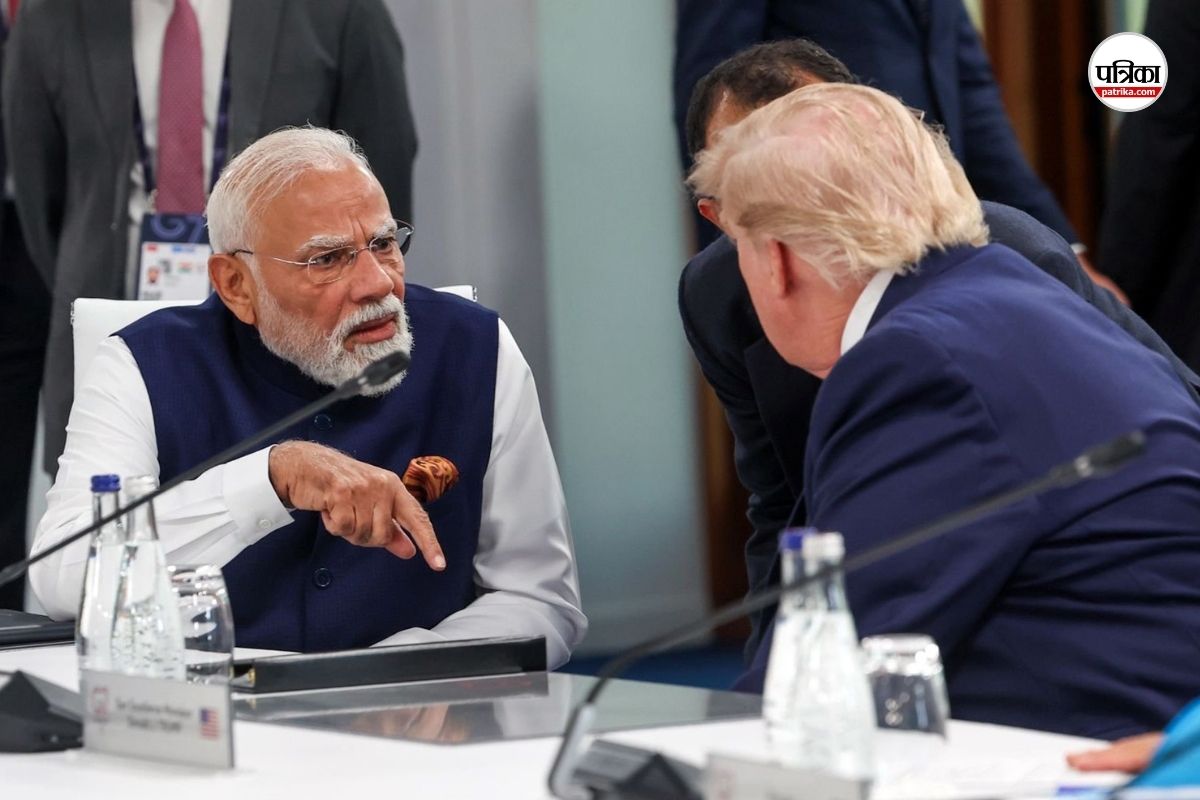
Mainstream financial media loves a predictable narrative, and nothing satisfies lazy journalism quite like the phantom of an imminent, historic trade deal between New Delhi and Washington. Every few quarters, a new wave of optimistic headlines hits the press. Anonymous bureaucrats whisper about entering the final stages. Trade ministers pose for orchestrated handshakes. Editors run breathless commentary on how a comprehensive trade agreement will fundamentally reshape global commerce.
It is a comforting illusion. It is also completely wrong.
The structural reality of global trade reveals that a comprehensive India-US Free Trade Agreement is not just delayed; it is functionally impossible under current political and economic frameworks. The mainstream consensus treats the lack of a deal as a mere diplomatic hurdle, a minor bump that can be smoothed out with enough high-level meetings. This view ignores the deep, irreconcilable friction points built into the economic DNA of both nations.
We need to stop tracking the progress of a ghost deal and start looking at why the entire premise is flawed from the ground up.
The Mirage of the Final Stages
For over a decade, trade analysts have predicted a breakthrough is just around the corner. This cyclical optimism ignores a fundamental shift in how Washington and New Delhi view economic sovereignty. The United States has fundamentally broken away from the traditional free trade consensus that defined the late twentieth century. Whether through tariff enforcement, domestic subsidies, or domestic sourcing mandates, Washington has turned inward. The political appetite in the US for opening domestic markets to massive foreign manufacturing or service sectors is practically non-existent.
On the other side, India has doubled down on economic self-reliance through initiatives like Make in India and targeted production-linked incentives. New Delhi is deeply protective of its domestic industries, particularly its massive agricultural sector and its growing manufacturing base.
When you look closely at the math, the two nations are not negotiating a standard trade agreement. They are managing a complex web of protectionist measures designed to shield domestic workers and domestic capital.
Imagine a scenario where a negotiator genuinely suggests removing tariff barriers on American dairy products entering India, or completely opening up the US visa system for Indian service professionals. Both proposals would face immediate, fatal political backlash at home. The "final stages" narrative is a diplomatic performance designed to project alignment while masking deep structural paralysis.
The Unbridgeable Chasm of Agriculture and Data
The breakdown of any serious trade talk always happens in the details, specifically within two non-negotiable sectors: agriculture and digital sovereignty.
The Agricultural Deadlock
To understand why a comprehensive deal will fail, you have to look at the scale of domestic political constituencies. In India, agriculture sustains hundreds of millions of livelihoods. Small, marginal farmers form the backbone of the rural electorate. No Indian government, regardless of its parliamentary majority, can afford to expose these farmers to highly subsidized, industrial-scale American agribusiness.
The US demands deep market access for its dairy, poultry, and grain producers. For India, granting that access is a political impossibility. Conversely, Washington routinely uses stringent sanitary and phytosanitary measures to restrict Indian agricultural exports, citing safety standards that Indian exporters view as disguised protectionism. This is not a misunderstanding that can be cleared up in a summit. It is a fundamental conflict of national interest.
The Digital Sovereignty Battleground
The conflict over the digital economy is even more severe. American trade policy is heavily driven by the interests of its major technology conglomerates. Washington pushes for the unhindered flow of global data, strict intellectual property protections, and a ban on digital services taxes.
India, however, views data as a national asset that must be guarded. New Delhi's regulatory framework prioritizes:
- Strict data localization mandates requiring financial and personal data to be stored within Indian borders.
- The implementation of equalization levies and digital taxes on foreign tech platforms generating revenue from Indian users.
- An independent digital public infrastructure that bypasses traditional Western payment monopolies.
American tech firms view Indian data localization as a direct threat to their business models. New Delhi views American tech dominance as a threat to its regulatory autonomy. You cannot split the difference on data localization. Either the data crosses the border unhindered, or it stays within the country. There is no middle ground.
Dismantling the People Also Ask Fallacies
Public discourse around this topic is filled with fundamentally flawed assumptions. Let us look at the questions driving the conversation and answer them clearly.
Will a trade deal lower consumer prices dramatically?
The short answer is no. The common belief is that a trade agreement will instantly eliminate tariffs, causing the price of American electronics, automobiles, and luxury goods in India to plummet, while making Indian textiles and pharmaceuticals incredibly cheap in the US.
This view ignores the rise of non-tariff barriers. When formal tariffs go down, governments routinely introduce complex technical regulations, product certification requirements, and administrative delays to protect domestic players. Even if a limited agreement lowers specific duties, the bureaucratic friction remains. Consumers looking for a massive price drop on imported goods are waiting for an event that will not happen.
Does a strategic defense partnership guarantee a trade deal?
This is the most common mistake made by geopolitical commentators. The logic seems straightforward: because India and the US are deeply aligned on regional security, intelligence sharing, and defense procurement, an economic alliance must naturally follow.
This assumption completely misunderstands how trade policy operates. Defense partnerships are driven by shared security concerns and state-to-state military contracts. Trade policy is driven by fierce domestic interest groups, labor unions, corporate lobbies, and agricultural federations.
A shared geopolitical stance does nothing to convince an American steelworker to accept cheaper foreign imports, nor does it convince an Indian pharmaceutical manufacturer to yield to extended Western patent protections. Security cooperation and trade negotiation run on entirely different tracks. Pretending one drives the other is dangerous wishful thinking.
The Cost of Chasing a Ghost Agreement
I have seen corporate strategists and supply chain executives burn through millions of dollars making expansion plans based on the assumption that a major bilateral trade deal is coming. They hold off on making critical investment decisions, expecting a massive tariff reduction that never arrives.
Chasing this phantom deal creates real economic damage by diverting attention from the practical, piecemeal agreements that actually matter. While negotiators waste years trying to craft an all-encompassing treaty that will never pass legislative scrutiny, smaller, actionable opportunities slip away.
A trade policy built on reality would abandon the pursuit of a comprehensive free trade agreement entirely. Instead, it would focus on narrow, sector-specific mini-deals:
- Standardizing compliance procedures for specific manufacturing components.
- Creating fast-track clearance mechanisms for critical minerals and green energy inputs.
- Establishing clear, predictable regulatory corridors for cross-border investments in specialized manufacturing.
These small wins lack the glamour of a sweeping historic treaty signed under flashbulbs, but they have the distinct advantage of being achievable.
The Price of Corporate Reality
If you are running an enterprise or managing a portfolio based on the assumption that the India-US economic relationship will soon mimic the open-market structures of the late twentieth century, you are positioning yourself for failure.
The downside of acknowledging this reality is that it forces you to build your business model around persistent friction. You have to accept that tariffs will remain high, data will remain localized, and regulatory scrutiny will remain intense. You cannot rely on a diplomatic savior to lower your compliance costs or open your markets for you.
The era of massive, multi-sector free trade agreements between major, sovereign economic powers is over. The sooner businesses and policymakers stop celebrating the imminent arrival of a mythical trade deal, the sooner they can adapt to the fragmented, transactional reality of modern global commerce. Stop waiting for a historic announcement that is always six months away. It is not coming. Build your strategy around the barriers, because they are here to stay.