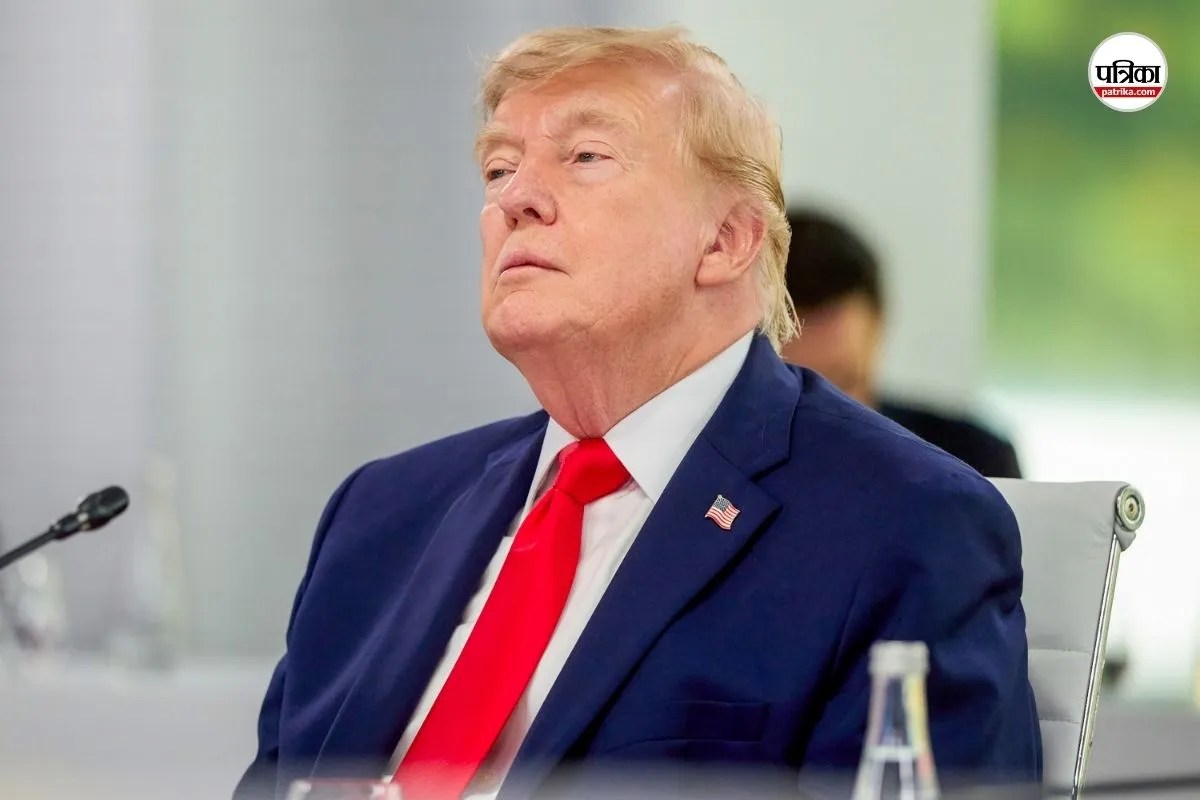
Donald Trump recently admitted he was surprised to learn that Iranian Supreme Leader Ayatollah Ali Khamenei actually commands genuine domestic support. This single admission lays bare the fundamental flaw of global foreign policy. For decades, politicians, intelligence agencies, and talking heads have operated under a comforting, childish myth: that every citizen living under an adversarial regime is secretly a pro-Western democrat just waiting for a chance to overthrow their rulers.
It is a lazy consensus. It is completely wrong.
When a leader expresses shock that a foreign autocrat isn't universally reviled by his own population, it reveals a profound ignorance of how authoritarian regimes actually survive. Washington has spent trillions of dollars across the Middle East based on this exact brand of wishful thinking. The assumption that maximum economic misery automatically triggers a popular democratic uprising is a failed hypothesis. The reality is far more brutal, nuanced, and uncomfortable for Western policymakers to accept.
The Myth of the Universally Despised Dictator
Mainstream political commentary treats Iran as a monolith of oppression where a tiny elite holds an entire population hostage by force alone. While the oppression is real, the structural mechanics of the regime's survival are completely misunderstood.
Authoritarian regimes do not subsist solely on fear. They subsist on patronage, religious conviction, and nationalistic pride.
Ayatollah Khamenei does not need 100% approval to maintain power. He needs a highly motivated, deeply loyal 15% to 20% of the population that controls the monopoly on violence and the distribution of state resources. This loyalist base includes the Islamic Revolutionary Guard Corps (IRGC), the Basij militia, and millions of families tied to state-backed charitable foundations (bonyads). To these people, the Supreme Leader is not just a political figure; he is a religious authority and the defender of the nation against foreign subjugation.
When Western leaders act shocked that these loyalists exist, they show they do not understand the enemy. I have spent years analyzing how sanctions hit target economies. The outcome is almost always the opposite of what the architects intend.
Imagine a scenario where a foreign power cuts off your country from the global financial system. The independent middle class—the very people who drive democratic reform—is wiped out. They lose their jobs, their savings evaporate, and their political voice is silenced by the daily struggle for physical survival.
Who wins in that scenario? The state.
When the private sector dies, the government becomes the only employer, the only source of food, and the only provider of healthcare. Sanctions do not weaken an autocracy; they make the population entirely dependent on the autocrat for survival.
The Nuclear Deal Fallacy: Both Sides Are Wrong
The debate surrounding the Joint Comprehensive Plan of Action (JCPOA) is trapped in a false binary. The political left argues that the 2015 deal was a masterpiece of diplomacy that would permanently neutralize Iran's nuclear ambitions. The political right claims it was a total capitulation that funded terrorism.
Both narratives are fundamentally flawed because they judge the policy by its stated intent rather than its structural incentives.
The JCPOA was built on a naive assumption that economic integration would magically transform Iran into a responsible global actor. It ignored the fact that the ruling elite’s primary objective is regime survival, not GDP growth. When billions of dollars in frozen assets were released, the money did not fund a tech boom or a vibrant free market. It went straight into the state apparatus to solidify domestic control and fund regional proxies.
Conversely, the decision to unilaterally withdraw from the deal in 2018 under the guise of "maximum pressure" was an absolute strategic disaster. The stated goal was to force Tehran back to the negotiating table to sign a "better deal" and curb its regional influence.
Let us look at the verifiable data of what actually happened next:
- Nuclear Enrichment: Iran went from遵守 the pact's strict limits to enriching uranium to 60% purity—dangerously close to weapons-grade 90%.
- Regional Aggression: Attacks on shipping lanes in the Persian Gulf and proxy strikes across the region spiked dramatically after 2018, not before.
- Hardline Consolidation: The moderate factions within Iran, who staked their political reputations on negotiating with the West, were utterly discredited. This paved the way for hardliners to sweep the parliament and presidency.
Maximum pressure did not break the regime. It broke the only domestic opposition that had any realistic chance of reforming the country from within.
How Sanctions Actually Enrich the IRGC
The most glaring blind spot in global sanctions policy is the failure to understand criminal economics. When you declare a legal economy dead, you open the door for a massive black market.
In Iran, the IRGC controls the smuggling routes, the front companies, and the illicit oil sales to buyers willing to ignore Western edicts. When legitimate businesses are banned from trading, the IRGC steps in to run the entire parallel economy. They buy up distressed domestic assets for pennies on the dollar. They control the currency exchange hubs. They become fabulously wealthy off the premium commanded by smuggled goods.
The West essentially handed a monopoly on all foreign trade to the military wing of the Iranian state, then wondered why the regime didn't collapse.
This is not a theoretical exercise. Look at the history of modern sanctions from Iraq in the 1990s to Venezuela today. Dictators do not starve. Their generals do not miss meals. The burden of economic warfare is borne entirely by the civilian population, while the ruling elite uses the external threat to stoke nationalist sentiment and justify the brutal crushing of internal dissent.
Stop Asking the Wrong Questions
The media continuously asks whether Iran will build a nuclear bomb tomorrow or if a new treaty can fix the Middle East. These are the wrong questions. They assume that Western policy is the main variable driving Iranian behavior.
The real driver is the internal survival calculus of a highly resilient, ideological state.
If the goal of foreign policy is actual stability rather than scoring cheap domestic political points, leadership must stop relying on the illusion that the next wave of sanctions or the next fiery speech will cause the Iranian public to rise up and embrace Western values.
Accept the uncomfortable reality: the regime has a deeply entrenched, heavily armed domestic base. It has built an economic model designed to thrive under isolation. Short of an all-out regional war that would devastate the global economy, the current system in Tehran is not going to vanish overnight just because a foreign leader thought everyone hated them.
Strategy requires dealing with the world as it is, not as you wish it to be. Stop expecting a collapse that data and history prove will not come. Change the strategy, or get used to losing.